
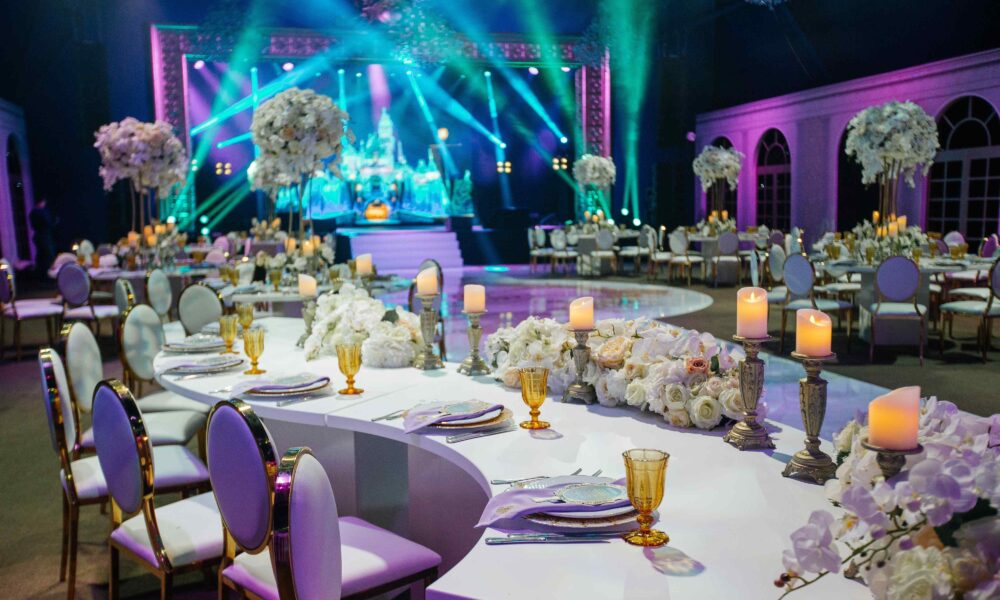
Corporate event decoration is most effective when it does more than make a venue look attractive. A branded event space should help communicate the purpose of the event, guide guests through the venue and create a consistent experience across the stage, signage, lighting, displays and content. For UK companies planning conferences, product launches, gala dinners, awards ceremonies, leadership events or employee events, the right approach is to begin with the objective and audience, then build the visual environment around the guest journey and practical production requirements.
For private sector teams
The Event Agency Procurement Guide
What Is Corporate Event Decoration?
Corporate event decoration is the use of visual and physical elements to shape how an event space looks and feels. It can include stage backdrops, scenic elements, branded signage, furniture, table styling, lighting, graphics, product displays, registration areas and other touchpoints that support the event environment.
In a corporate setting, decoration should not be treated as a separate styling exercise. Each element should have a reason for being there, whether that is reinforcing the brand, helping guests navigate the venue, framing a keynote presentation or creating a useful backdrop for photography and video.
Corporate Event Decoration vs Event Design
Corporate event decoration focuses on the visual and physical elements placed within the event space. Event design is broader. It considers how the entire experience works together, including the concept, guest journey, layout, content, staging, lighting, technology, branding and production.
For example, adding branded graphics to a stage is decoration. Deciding where the stage sits, what guests see when they enter, how the screen content works with the backdrop and how lighting changes between sessions is event design. The two are closely connected, but starting with the wider design prevents decoration from becoming a collection of unrelated branded items.
Start with the Event Objective and Brand Message
Before choosing colours, materials or decorative features, define what the event needs to achieve and what guests should understand or feel.
- Is the event designed to inform, celebrate, launch, recognise or connect people?
- What is the main message or theme?
- Which parts of the brand identity should be most visible?
- How formal or informal should the environment feel?
- What moments need the strongest visual impact?
- Where will guests spend most of their time?
- What content needs to appear on screens, stages or displays?
These decisions help establish priorities. A product launch may place greater emphasis on the reveal moment and product displays, while a leadership conference may need a restrained stage environment that keeps attention on speakers and content.
Build a Branded Event Space Around the Guest Journey
Think about the event from the moment a guest approaches the venue to the point they leave. Branding and decoration should support that journey rather than appear only on the main stage.
Arrival and Registration
The entrance is often the first opportunity to establish the event identity. Depending on the venue, this could include exterior signage, branded registration counters, digital screens, directional graphics or a simple welcome installation.
The aim is to make arrival clear and recognisable without creating unnecessary congestion.
Transition Spaces
Corridors, foyers and transition areas can help maintain continuity between different parts of the event. Directional signage, digital content, lighting or small branded touchpoints can make the experience feel connected while also helping guests move efficiently.
Main Event Space
The stage or presentation area usually carries the strongest visual identity. Consider what guests will see both in the room and through event photography, video or livestreaming.
Networking and Break Areas
These areas generally benefit from a lighter approach. Furniture, lighting and subtle branding can create a comfortable environment without making every surface feel promotional.
Exit and Follow-Up
The final part of the guest journey can also be considered. A closing screen, collection point, product display or content capture area may provide a natural conclusion without adding unnecessary decoration.
Use Branding Without Overwhelming the Space
A branded event space does not need a logo on every available surface. Repetition can quickly make an environment feel more like an exhibition stand than a considered corporate event.
A stronger approach is to use the brand system consistently across a smaller number of high-value touchpoints.
- Use brand colours selectively rather than across every surface.
- Apply typography consistently across signage, screens and printed materials.
- Choose a clear hierarchy for logos and event messaging.
- Use imagery or graphic patterns where they add context.
- Keep important presentation areas visually clean.
- Allow enough neutral space so branded elements remain noticeable.
If an event has its own campaign identity, decide how it relates to the main corporate brand. This helps prevent inconsistent colours, fonts and visual styles appearing across suppliers and production teams.
Use Lighting to Shape Atmosphere and Brand Experience
Lighting is one of the most useful tools for changing the feel of an event space without adding more physical decoration. It can highlight architecture, separate zones, support brand colours and help signal transitions in the programme.
Possible uses include:
- Stage lighting for speakers and performers.
- Uplighting around walls or scenic features.
- Feature lighting for products or displays.
- Different lighting states for arrivals, presentations, dinner and entertainment.
- Subtle use of brand colours where appropriate.
- Lighting that supports photography and video.
Brand colour accuracy can vary depending on fixtures, surfaces and ambient light. If an exact visual match matters, test the lighting and surrounding materials during production planning rather than relying on a screen mock-up alone.
For public sector teams
The Public Sector Event Agency Procurement Guide
Plan Signage, Wayfinding and Branded Touchpoints
Signage has both a practical and visual role. It should help guests understand where to go while reinforcing the event identity.
Useful touchpoints may include:
- Welcome signage.
- Registration signage.
- Directional signs.
- Room and session signs.
- Stage graphics.
- Digital screens.
- Sponsor boards.
- Menu or table information.
- Product or exhibition labels.
- Photo backdrops.
Keep wording short and legible. Directional information should take priority over decorative wording when guests need to make a quick decision about where to go.
Design for Different Corporate Event Types
The balance between branding, decoration and production will change depending on the event format.
| Event type | Design priorities |
| Conference | Clear stage design, readable screens, strong wayfinding, restrained branding and comfortable networking areas. |
| Product launch | Product visibility, reveal moment, brand storytelling, display zones and photography or video opportunities. |
| Gala dinner | Stage and table styling, lighting states, awards presentation areas and a polished transition into entertainment. |
| Awards ceremony | Stage focus, winner walk-up routes, award display area, screen graphics and camera-friendly backdrops. |
| Networking event | Comfortable furniture, clear zones, light-touch branding and easy movement between groups. |
| Leadership event | Focused stage environment, professional presentation areas and discreet branding that supports content. |
| Hybrid event | Camera-friendly stage design, screen integration, lighting for broadcast and branding that works both in-room and online. |
Venue, Layout and Accessibility Considerations
The venue influences what is possible, so decoration should be planned around the actual space rather than treated as a layer added afterwards.
Review:
- Room dimensions and ceiling height.
- Existing architecture and finishes.
- Guest capacity and seating layout.
- Entrances, exits and circulation routes.
- Sightlines to stages and screens.
- Accessible routes and seating positions.
- Loading access and installation windows.
- Venue rules for attaching, hanging or placing structures.
- Storage and backstage areas.
- Power and technical infrastructure.
Accessibility should be considered during the design stage. Signage, pathways, viewing positions and interactive elements should be planned so that the event can be experienced by as much of the audience as practical. For specific compliance requirements, work with the venue and appropriately qualified professionals.
Production, AV and Technical Requirements
Decoration, staging and AV are closely connected. Scenic elements can affect screen placement, speakers, lighting positions and camera angles, while technical equipment can influence what can physically fit within the design.
Coordinate early on:
- Stage and set dimensions.
- LED screens or projection.
- Audio equipment and speaker positions.
- Lighting fixtures and rigging points.
- Power requirements.
- Cameras and livestream positions.
- Cable routes.
- Control desks and technical operating areas.
- Installation and rehearsal schedules.
Bringing creative and technical teams together early reduces the risk of last-minute compromises, such as moving a branded feature because it blocks a camera or discovering that a scenic element interferes with a screen.
Sponsor Branding, Exhibition Areas and Product Displays
Events with sponsors, partners or exhibitors need a clear branding hierarchy. Without one, the environment can quickly become visually inconsistent.
Define:
- Where sponsor logos appear.
- Relative logo sizes and placement rules.
- Which areas are controlled by sponsors or exhibitors.
- What materials or files suppliers need to provide.
- Deadlines for final artwork.
- How sponsor branding interacts with the main event identity.
Product displays should also be considered as part of the wider space. Allow enough room for guests to view or interact with products without blocking circulation routes or creating queues in important transition areas.
Photography, Videography and Post-Event Content
A branded event space is often seen beyond the people attending in person. Photography, video highlights, livestreams and social content can extend the visual life of the event.
When reviewing the design, consider:
- What appears behind speakers in photographs.
- Whether logos remain visible in wider camera shots.
- How screens appear on camera.
- Where guests are likely to take photographs.
- Whether key branded areas have suitable lighting.
- How empty or partially filled spaces will look before and after peak attendance.
A dedicated photo moment can be useful, but it should still fit the event concept rather than feeling like a separate installation added only for social media.
Budgeting for Corporate Event Decoration
The cost of corporate event decoration varies because each project combines different design, production, venue and installation requirements. Instead of allocating the budget only to decorative items, look at the complete environment.
Potential cost areas include:
- Creative design and artwork.
- Scenic construction and staging.
- Printed graphics and signage.
- Furniture and table styling.
- Lighting.
- Screens and AV integration.
- Product displays.
- Installation and breakdown labour.
- Transport and logistics.
- Venue access time.
- Supplier coordination and production management.
Prioritise the areas guests will see and use most. A well-designed stage, clear signage and effective lighting may contribute more to the overall experience than spreading the same budget across many smaller decorative items.
United Kingdom Corporate Event Decoration Considerations
UK venues range from purpose-built conference centres and hotels to historic buildings, warehouses and temporary event spaces. Each can create different design opportunities and practical restrictions.
London and City-Centre Venues
Loading times, parking, service lifts and restricted access windows can affect how much scenery or decoration can be installed. Confirm logistics before finalising large physical elements.
Historic and Listed Spaces
Some venues may restrict how items can be fixed, suspended or attached to existing surfaces. Freestanding solutions or digital branding may be more practical, depending on the venue rules.
Outdoor and Temporary Spaces
Outdoor environments require contingency planning around weather, power, surfaces and covered areas. Any structures or technical installations should be coordinated with the venue and qualified suppliers.
Regional Events
For events outside major cities, transport and installation schedules may influence supplier selection. Compare the full logistics requirement rather than only the cost of individual decorative items.
Corporate Event Decoration Checklist
Objectives and Brand
- Define the event objective.
- Confirm the main message or theme.
- Agree the brand identity and visual hierarchy.
- Identify the most important guest touchpoints.
Guest Journey
- Plan arrival and registration.
- Review transition spaces and wayfinding.
- Define the main event environment.
- Plan networking and break areas.
- Consider the exit experience.
Venue and Layout
- Confirm room dimensions and capacity.
- Check sightlines and circulation routes.
- Review accessibility requirements.
- Confirm loading, storage and installation windows.
- Check venue restrictions before approving designs.
Stage and Production
- Confirm stage dimensions.
- Coordinate screen, audio and lighting positions.
- Review camera and livestream requirements.
- Allow time for installation, testing and rehearsals.
- Confirm responsibilities across suppliers.
Branding and Content
- Prepare final artwork early.
- Check signage wording and legibility.
- Agree sponsor branding rules.
- Test screen content in the actual format.
- Review how key areas will look in photography and video.
Budget and Delivery
- Prioritise high-impact areas.
- Include installation and logistics costs.
- Review technical requirements before approval.
- Maintain a contingency within the wider event budget.
- Create an event-day installation and sign-off plan.
Common Corporate Event Decoration Mistakes
Starting with Decor Instead of the Objective
Choosing colours, props or table styling before defining the event purpose can lead to a visually attractive space that does not support the programme or audience.
Using Too Much Branding
Repeated logos and brand colours can reduce visual impact. Use hierarchy and negative space so the most important elements stand out.
Designing the Stage Without the Production Team
A stage needs to accommodate screens, lighting, sound, speakers, cameras and programme changes. Creative and technical planning should happen together.
Ignoring the Guest Journey
Strong stage design cannot compensate for confusing registration or poor wayfinding. Review the whole experience from arrival to departure.
Leaving Signage Until the End
Signage affects both navigation and brand consistency. It should be part of the design system rather than an afterthought.
Forgetting Photography and Video
A backdrop may look good in person but perform poorly on camera. Check framing, lighting and screen placement before the event.
Focusing Only on Price
The lowest-cost decorative option may create additional production, installation or logistics requirements. Compare options based on the complete event setup.
Designing a Branded Corporate Event Space
Effective corporate event decoration should make the event easier to understand, easier to navigate and more consistent with the organisation behind it. Start with the objective and guest journey, use branding selectively, and coordinate creative decisions with the venue and production requirements from the beginning. If you are planning a corporate event in the UK and need support with event design, production, staging, AV, signage or the wider guest experience, contact Live Group to discuss your event.
For teams in APAC
The APAC Event Agency Procurement Guide

Ready to take the stress out of event planning?
Live Group helps organisations design and deliver personalised event experiences that engage audiences and achieve results. Contact us to discuss your next event.
Corporate event decoration is the use of visual and physical elements such as staging, signage, lighting, graphics, furniture and displays to shape an event environment and support the brand or event message.
Start with the event objective, audience and guest journey. Then apply the brand consistently across the highest-value touchpoints, including the stage, signage, lighting, screens and key interaction areas.
Decoration focuses on visual and physical styling. Event design considers the wider experience, including layout, guest flow, content, production, technology, branding and how each element works together.
Check the venue layout, sightlines, accessibility, technical requirements, installation access, signage, lighting, camera positions and total production implications before final approval.
Decoration and branding should be planned early enough to coordinate venue requirements, artwork, suppliers, technical production and installation rather than being added after the main event plan is fixed.