
hybrid events
are not a compromise.
When they are designed with intent, not assembled as an afterthought, hybrid events reach further, produce richer data, and deliver measurable impact at scale.
Live Group, a leading global event agency, has delivered hybrid event programmes for global enterprises, FTSE 100 organisations, government departments and regulated industries for five decades. This page sets out how we work, what we deliver, and what enterprise and public sector procurement teams should understand before commissioning hybrid event management services
GET IN TOUCH.
What Is Hybrid Event Management?
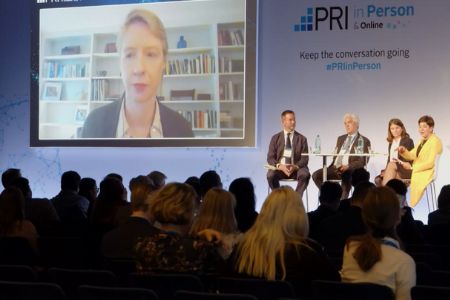
Hybrid event management is the end-to-end planning, production and technology delivery of events that serve in-person and remote audiences simultaneously — not sequentially, and not as two separate events. It covers audience design, platform integration, parallel production, real-time facilitation, and post-event analytics.
For FTSE 100 companies, large enterprises and public sector organisations, the operational requirements of a managed hybrid event are materially different from a standard webcast or streamed conference. A global leadership summit, an investor day, a regulated industry briefing, or a multi-day internal communications event cannot tolerate technical failure, passive remote audiences, or engagement data that stops at headcount. This is the delivery context Live Group works within.
What full-service hybrid event management covers
- Audience design and profiling before format or platform selection
- Dedicated production for both in-person and remote streams
- Platform configuration, integration and on-day technical management
- Real-time facilitation, moderation and interaction design
- Post-event analytics aligned to stakeholder reporting requirements
- A single agency accountable for the whole programme
Hybrid events Built for Enterprise and Public Sector Briefs
Our hybrid event clients share a set of common characteristics: large or geographically dispersed audiences, senior stakeholder scrutiny, compliance or communications governance requirements, and a need to demonstrate measurable return on event investment.
| Sector | Typical programme type |
| Financial and professional services | Investor days, client engagement events, regulatory communications |
| Technology and SaaS | Global product launches, partner summits, multi-region roadshows |
| Energy and infrastructure | ESG communications, global leadership conferences, technical summits |
| Government and public sector | Policy conferences, departmental communications, sector roundtables |
| Regulated industries | Compliance briefings, governance communications, stakeholder engagement |
| Multi-site enterprise | Complex campaign activations, internal alignment events, multi-day events |
live group hybrid event services.
As a full-service hybrid event company with fifty years of experience, Live Group manages every element of a hybrid programme — from initial brief to post-event measurement. Services cover the full planning and delivery lifecycle.
Hybrid Event Strategy and Consultancy
Working with senior event, communications and procurement leads to define the right format, audience design and success metrics before any platform or venue is selected. For complex briefs — multi-day events, global conferences, regulated industry communications or complex campaign activations — this strategic phase is where delivery risk is reduced and programme value is established.
AudienceDNA Audience Profiling
Our proprietary AudienceDNA framework profiles in-person and remote attendees to map preferences, communication styles, learning habits and engagement patterns. This insight drives every design decision — from session format to networking architecture — producing events that are appropriate to the actual audience rather than a generic delegate persona.
HYBRID
PRODUCTION
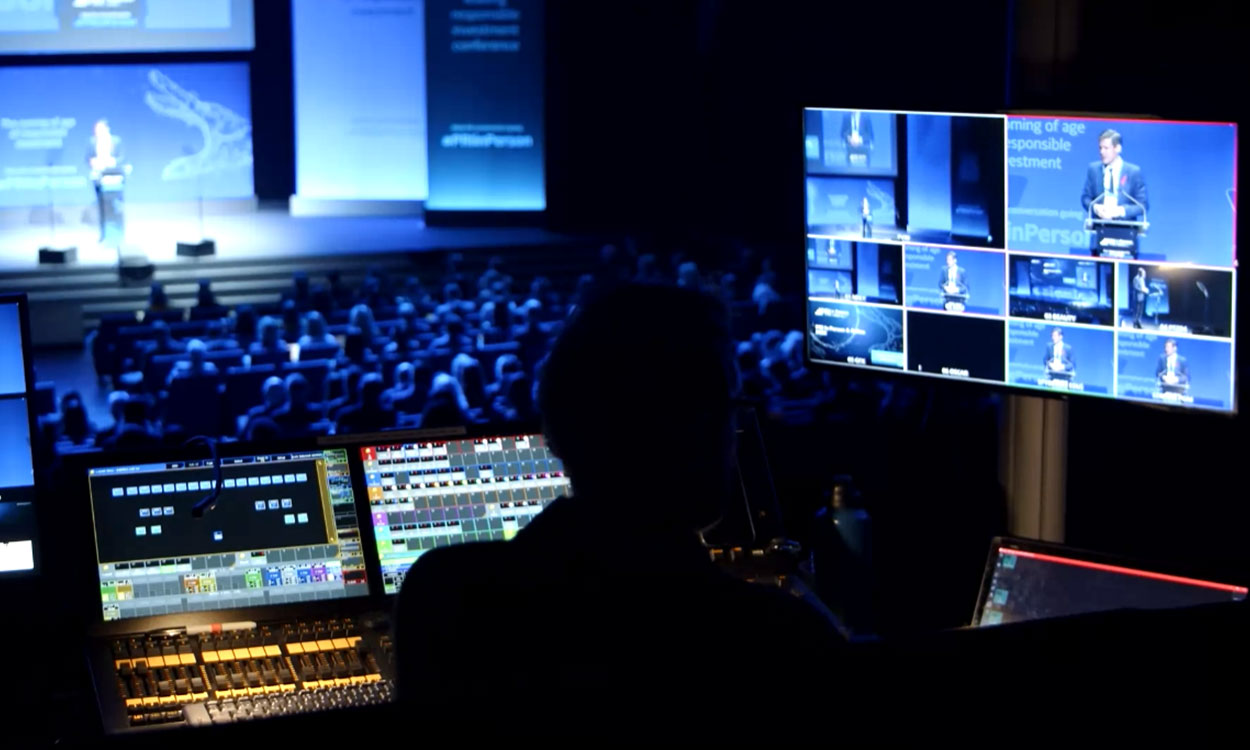
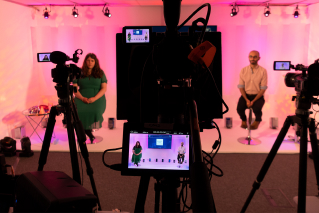
Full technical production for both audience streams: broadcast-quality staging and AV for the physical event, and optimised streaming infrastructure for remote participants. Our production teams are experienced in multi-day events, simultaneous multi-location delivery and the live contingency management that complex programmes require.
bespoke hybrid
PLATFORM
Envoku is Live Group’s hybrid event platform, designed for personalised, data-rich audience experiences. It supports dynamic agenda personalisation, cross-audience interaction, live and on-demand content delivery, and stakeholder analytics reporting. For enterprise clients it integrates with existing CRM and data systems. For public sector clients it supports the access controls, accessibility standards and data governance requirements of government-grade delivery.
Sustainable Events Planning
Hybrid events reduce the environmental footprint of equivalent in-person-only programmes. Live Group integrates sustainability planning from the outset, supporting organisations with ESG reporting requirements, sustainable events commitments and net-zero targets. Environmental impact data is provided alongside standard event analytics.
POST EVENT
ANALYSIS
Every hybrid programme includes post-event analytics covering engagement rates, content consumption, audience interaction data and satisfaction benchmarks. Outputs are formatted for senior stakeholder review — not raw data exports — and calibrated to the success metrics agreed at the briefing stage.
Talk to our experts.
We’re here to make your hybrid event a success.
Which Hybrid Event Solutions Work Best for Professional Services Firms?
Professional services firms — legal, consulting, accounting and financial advisory organisations — have requirements that commodity hybrid platforms do not satisfy. Their audiences are senior, time-pressured and resistant to passive formats. Their content frequently carries compliance implications. Their client relationships depend on quality at every interaction point.
The hybrid event solutions that perform best for professional services share four characteristics:
- Controlled, secure environments. Content delivered to named attendees only, with audit-ready access logs and role-based permissions.
- Precision facilitation. Structured Q&A, moderated interaction and managed speaker logistics that reflect the seriousness of the brief.
- Personalised delegate journeys. Senior partners and junior associates should not receive the same agenda. Platforms that adapt content by seniority or practice area consistently outperform generic broadcast models on engagement and post-event satisfaction.
- Actionable engagement outputs. Session-level participation data, interaction rates and content consumption metrics — not attendance certificates — so the event can be assessed against business objectives.
Live Group’s AudienceDNA framework profiles attendees before the event, mapping communication preferences, learning styles and engagement patterns across the delegate group. The Envoku platform then delivers a personalised experience to both in-room and remote participants simultaneously — so a senior partner and a newly qualified associate can attend the same hybrid corporate event and receive a programme that is appropriate to each of them.
How Do Hybrid and Virtual Event Solutions Impact Client Engagement Metrics?
Hybrid events generate engagement data that in-person-only events cannot produce at equivalent depth. Remote audiences create a continuous behavioural record: session dwell times, polling responses, chat participation, content revisits and on-demand viewing patterns. When structured correctly, this data gives event owners precise intelligence on what worked and what did not — by audience segment, geography and seniority.
Across well-designed hybrid programmes, organisations typically observe:
- Higher aggregate participation rates. Remote access removes travel cost and time barriers, bringing in audiences that would otherwise be excluded.
- Richer post-event analytics. Engagement data segmented by audience type, geography and role — rather than a single headcount figure.
- Extended content lifecycle. On-demand access through Envoku allows gated replay libraries that generate measurable interaction for weeks after the live event.
- Cleaner feedback loops. Digital attendees complete post-event surveys at significantly higher rates than in-person delegates, producing more statistically reliable satisfaction data.
For client-facing events, this data is commercially material. Understanding which content streams drove the most engagement among a target client segment informs future programme investment, content strategy and relationship development. For internal communications events, the same analytics support the business case for continued hybrid investment against cheaper but less measurable alternatives.
How Do Hybrid Event Solutions Affect Audience Engagement Compared With In-Person Only?
The direct comparison between hybrid and in-person-only event engagement is often misframed. The relevant question is not whether hybrid can match in-person on every measure — it is whether a well-designed hybrid event can match in-person engagement for the attending audiences while simultaneously reaching those who cannot be in the room.
The answer is yes, provided the design principles are applied correctly:
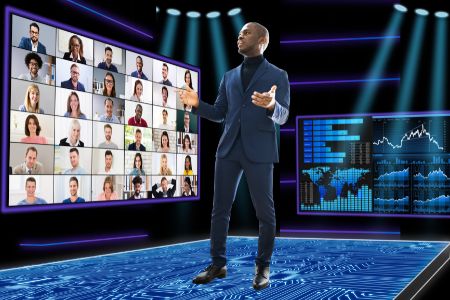
- Mutual visibility. Remote and in-room audiences must see each other. Live chat walls, video mosaics and moderated cross-audience interaction are structural requirements of a parity experience, not optional enhancements.
- Format parity. Networking, breakout sessions and informal interaction must be designed for both audiences simultaneously. Events that default to in-room networking with a passive livestream for remote participants produce consistently lower satisfaction scores from virtual attendees — and justify the criticism that hybrid events treat remote delegates as second-class.
- Hybrid-first content design. Speakers, moderators and stage production should treat the camera as an audience seat. Graphics, pacing and Q&A formats need to be calibrated for screen alongside the physical room.
- Personalisation. Hybrid events that adapt content and interaction to individual attendee preferences consistently outperform fixed-format events on engagement metrics, satisfaction scores and post-event recall.
| The engagement gap is a design problem, not a format problem Organisations that report poor engagement from hybrid events almost always identify the same root causes: remote audiences treated as viewers rather than participants, no structured cross-location networking, and content designed solely for the physical room. These are solvable design problems. Live Group’s approach establishes audience design before platform selection, because the technology should serve the experience — not define it. |
Which Hybrid Event Platforms Best Support Global Participation for Enterprises?
Enterprise organisations running global conferences at scale require platforms built for operational complexity, not just reliable streaming. The criteria that distinguish enterprise-grade hybrid event platforms from consumer-grade tools are:
- Multi-region infrastructure. Content delivery networks that maintain stream quality across geographies, including markets with variable connectivity.
- Language and accessibility support. Live translation, closed captioning and accessibility features that enable genuine global participation without a separate technical overlay.
- Security and data governance. GDPR-compliant data handling, role-based access controls and audit-ready participant logs — essential for regulated industries and government clients.
- Enterprise system integration. CRM, registration and analytics integration so event data flows into existing business intelligence frameworks without manual extraction.
- Personalisation at scale. The ability to serve different content tracks, languages and interaction formats to different audience segments simultaneously, without manual intervention per participant.
Live Group’s Envoku platform is purpose-built for this delivery context. Unlike off-the-shelf event SaaS tools that require significant customisation to meet enterprise requirements, Envoku is designed around complex audience structures, personalised content journeys and the data outputs that enterprise and public sector stakeholders require. It is delivered as part of Live Group’s full-service event planning model — meaning platform capability and event management expertise are integrated from brief through to post-event reporting.
What Should I Consider When Planning a Hybrid Event?
Hybrid event planning is more demanding than either in-person or virtual planning individually, because it requires two parallel production and audience management streams to operate as one coherent experience. The considerations that most often determine whether a hybrid programme succeeds or underperforms are:
1. Define the role of each audience before selecting a format
The most common planning error is selecting a platform before defining what in-person and remote audiences are expected to do. If remote participants are intended to be active contributors rather than passive viewers, the platform, production design and facilitation model must all be configured to support that from the outset. Starting with audience intent produces a more coherent brief.
2. Set realistic timelines for each production stream
Multi-day events and global conferences require longer lead times than equivalent in-person programmes. Platform configuration, delegate communications, content personalisation setup and technical rehearsals add planning time that is frequently underestimated. For complex briefs, a four-to-six month planning horizon is realistic. For straightforward hybrid events, eight to twelve weeks is a practical minimum.
3. Build accessibility in from the start
Accessibility requirements — closed captioning, screen-reader compatibility, language support, inclusive interface design — are significantly more expensive and disruptive to retrofit than to build in at the design stage. For public sector organisations and regulated industries, accessibility compliance is not discretionary. For enterprise clients, it is increasingly a procurement requirement.
4. Agree engagement KPIs before the event, not after
Post-event reporting is only useful if success metrics were defined in advance. The KPIs relevant to a client-facing event (interaction rates, qualified lead generation, content consumption by segment) differ from those relevant to an internal communications programme (alignment scores, knowledge retention, leadership credibility ratings). Establishing these at the briefing stage ensures the platform and analytics framework are configured to capture what matters.
5. Plan for sustainability from the brief
Hybrid events carry a material sustainability advantage over equivalent in-person-only programmes: fewer delegate journeys, reduced accommodation footprint, lower on-site catering requirements. Organisations with ESG commitments and sustainable events targets should capture this data as part of the standard event analytics package, not as a retrospective calculation.
6. Assign clear accountability across the full programme
The most common operational failure in hybrid event management is divided accountability — one supplier responsible for the venue and physical production, another for the platform, a third for content, and no single point of responsibility for the integrated experience. For enterprise and public sector procurement, full-service event planning with a single agency accountable for the whole programme substantially reduces delivery risk.
| Hybrid event planning checklist for enterprise procurement Audience intent defined before platform or venue selection Realistic timeline established for each production stream Accessibility requirements confirmed and built into the design brief Engagement KPIs agreed and analytics framework configured accordingly Sustainability data capture included in the event analytics package Single-agency accountability confirmed across strategy, production and technology Security and data governance requirements reviewed against platform capability Post-event reporting format aligned to senior stakeholder requirements |
Why Choose Live Group as Your Hybrid Event Company
For enterprise procurement teams evaluating hybrid event management providers, the differentiators that consistently determine programme quality are:
- Integrated capability. Strategy, creative, production and technology delivered by one agency with shared accountability — eliminating the coordination risk that fragmented supplier models create.
- Proprietary platform. Envoku is Live Group’s own platform. Deeper customisation, faster issue resolution and data governance that sits within the client relationship.
- Audience intelligence. AudienceDNA is a structured methodology, not a survey. It produces actionable insight that informs every design decision before the event begins.
- Global delivery network. Production capability and supplier relationships across key markets, supporting global conferences and multi-region programmes.
- Sector experience. Deep familiarity with the governance structures, compliance requirements and audience expectations of regulated industries, financial services, and public sector organisations.
- Communications reach. Full-service event planning includes post-event communications strategy and media distribution, ensuring the programme generates external visibility alongside internal impact.
DISCUSS YOUR
HYBRID BRIEF
WITH LIVE GROUP.
Whether you are planning a single global conference or a multi-event programme across regulated markets, we work with you from strategic brief through to post-event reporting.
Contact our team to discuss your requirements.

GET IN
TOUCH.
Whatever your question or enquiry,
we’d love to hear from you and help.

A hybrid event company has dedicated production infrastructure, platform capability and audience design methodology for simultaneous in-person and remote delivery. A standard events agency may offer hybrid as an option but typically relies on third-party platforms and does not carry the integrated production teams that complex hybrid programmes require. For enterprise and public sector clients, accountability for the remote audience experience needs to sit with a single provider — not be divided across a platform vendor and a separate production agency.
Hybrid event management costs vary according to audience scale, production complexity, platform requirements and programme duration. Single-location hybrid events with contained audiences and standard platform requirements cost significantly less than multi-site global conferences with personalised content tracks and enterprise system integration. Live Group provides detailed cost frameworks at the briefing stage, with transparent breakdowns across strategy, production and technology components.
Yes. Envoku supports closed captioning, live translation, screen-reader compatibility and accessible interface design. For government and public sector events, we build accessibility requirements into the programme design from the outset rather than applying them retrospectively. We are familiar with the standards applicable to UK public sector communications and advise on compliance at the briefing stage.
ROI measurement depends on the objectives agreed at briefing. For client-facing events, relevant metrics typically include session engagement rates, content interaction data, qualified lead generation and post-event relationship activity. For internal events, metrics focus on engagement scores, knowledge retention and strategic alignment indicators. Live Group provides post-event reporting in formats appropriate to the senior stakeholders reviewing outcomes — not raw analytics exports.
Envoku is built around audience personalisation rather than broadcast delivery. Rather than streaming a single experience to all remote participants, Envoku adapts content, session recommendations and interaction formats to individual attendee profiles — informed by AudienceDNA data collected before the event. This produces measurably higher engagement from remote audiences than standard streaming platforms, and generates the richer post-event analytics that enterprise and public sector stakeholders require.
By enabling participation without travel, hybrid events reduce delegate journey volumes, accommodation demand and associated carbon output relative to equivalent in-person programmes. Live Group captures environmental impact data as a standard component of post-event reporting, supporting ESG disclosures, sustainable events commitments and net-zero target reporting. For organisations that need to demonstrate progress against environmental goals, hybrid formats offer a practical and measurable route to reducing the footprint of their event programme.
The event management services that excel at hybrid corporate events share four characteristics: audience design that precedes platform selection, integrated production across both the in-room and remote streams rather than a webcast bolted onto a live event, a proprietary platform paired with structured audience profiling rather than generic broadcast tools, and single-agency accountability for the whole programme rather than a fragmented supplier model. Live Group applies all four as standard — AudienceDNA profiles the audience before format decisions are made, Envoku delivers the personalised platform experience, and production, technology and reporting sit under one accountable team from brief to post-event analytics. For FTSE 100, large enterprise and public sector buyers, this integrated model is what distinguishes a hybrid event company from a standard events agency offering hybrid as an add-on.