
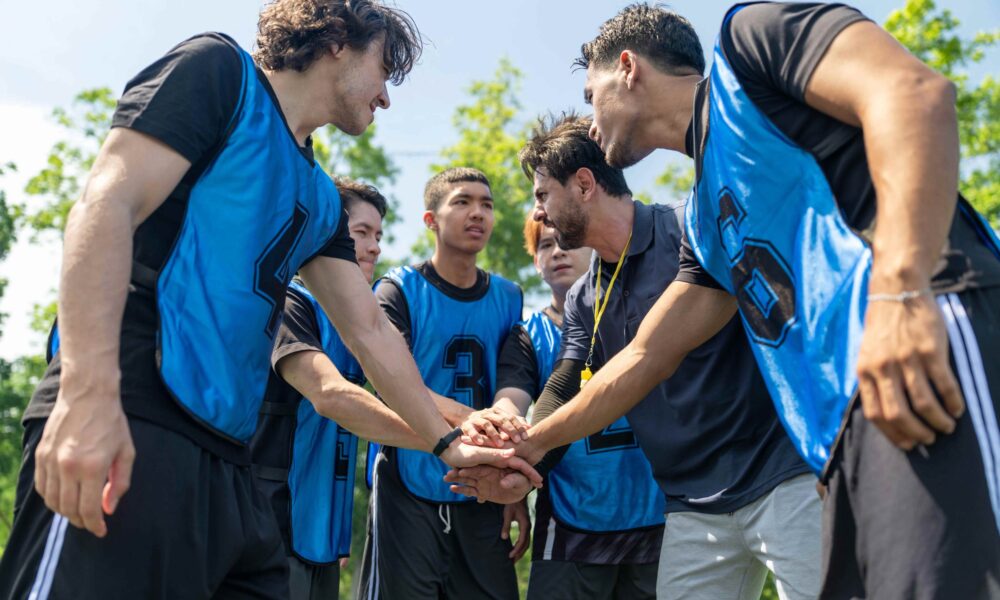
A corporate sports day can bring colleagues together in a format that feels very different from a conference, meeting or formal company event, but it still needs careful planning. The strongest events balance participation and friendly competition with inclusivity, venue suitability, clear communications, weather contingency, equipment, catering and reliable event-day operations. This guide explains how UK organisations can plan a corporate sports day that works for different teams, abilities and business objectives without making athletic performance the only focus.
The Guide Every Internal Comms Professional Needs
The 2026 Guide to Virtual Townhalls
What Is a Corporate Sports Day?
A corporate sports day is an employee or business event built around a programme of physical, social and team-based activities. It can be held as a standalone staff event, form part of a company away day or summer party, or sit within a wider employee engagement programme.
The format does not need to replicate a traditional school sports day. Some companies may choose familiar races and team games, while others may combine light physical activities with problem-solving challenges, creative tasks, networking and hospitality. The aim is to create a format that fits the workforce rather than forcing every attendee into the same level of competition.
Why Companies Host Corporate Sports Days
Companies use sports days for different reasons, so the event should be designed around a specific objective rather than a generic set of activities. Common objectives include:
- Bringing teams together away from the normal workplace.
- Creating an informal setting for colleagues to interact.
- Supporting a company celebration or summer event.
- Encouraging cross-team participation.
- Adding a team-building element to an away day.
- Giving employees different ways to participate in a shared event.
- Creating photography and video content for internal communications.
A sports day can support these aims, but it should not be treated as a guaranteed solution for culture, wellbeing or team performance. The event format, management follow-up and wider employee experience all influence what people take away from the day.
Start with the Objective, Audience and Participation Style
Before booking a venue or choosing activities, define what the day needs to achieve and who will attend. This is especially important because a workforce can include very different levels of mobility, fitness, confidence and interest in competitive sport.
Questions to answer early include:
- How many people are expected to attend?
- Is participation optional, encouraged or built into the event format?
- How competitive should the day feel?
- Will people take part as existing departments or mixed teams?
- Do you want short activity stations or longer matches?
- How much of the day should be active versus social?
- Are senior leaders participating alongside employees?
- What accessibility or participation needs should be accommodated?
- Is the event primarily a sports day, or part of a wider summer party or away day?
For many companies, a mixed format works well: some activities can be energetic, while others focus on coordination, problem solving, accuracy or teamwork. This gives attendees more ways to contribute and reduces the risk of the day being dominated by the most athletic participants.
Choose the Right Venue and Format
The venue shapes almost every other planning decision. A large outdoor field gives you flexibility, but it also creates more exposure to weather, infrastructure and equipment requirements. A venue with indoor and outdoor space can make contingency planning easier, while an urban venue may be more convenient for guests but offer less space for traditional sports.
Check the following before confirming a venue:
- Usable outdoor and indoor activity space.
- Capacity for the expected number of participants and spectators.
- Accessibility around the site.
- Changing or washroom facilities where relevant.
- Shelter and covered areas.
- Catering and refreshment areas.
- Power and AV access if required.
- Loading access for equipment and suppliers.
- Space for registration, first-point information and team assembly.
- Restrictions on structures, sound, equipment or specific activities.
- Transport links, parking and coach access where relevant.
The format should also match the space. A rotation of small activity zones may suit a compact venue better than several full-size team sports, while a larger field can support multiple activities running at the same time.
Corporate Sports Day Activity Ideas
A good activity mix gives people different ways to take part. Instead of building the programme entirely around speed or strength, combine several types of challenge.
| Activity type | Ideas | Why it can work |
| Relay-style activities | Short relays, baton challenges, walking relays, team transport challenges | Easy to run in heats and can be adapted to different intensity levels. |
| Team games | Rounders-style games, soft-ball games, tug-of-war where suitable, small-sided team challenges | Creates a clear team focus and works well when the rules and timings are simple. |
| Accuracy challenges | Target throwing, putting, bowls-style challenges, beanbag or ring targets | Rewards accuracy rather than speed and can broaden participation. |
| Problem-solving stations | Puzzle relays, construction tasks, route challenges, communication games | Adds collaboration and decision-making to the activity mix. |
| Low-intensity activities | Walking challenges, tabletop games, precision tasks, seated or adapted activities | Provides alternatives for people who do not want or are not able to take part in high-intensity activities. |
| Social challenges | Team quizzes, scavenger-style challenges, photo tasks, themed checkpoints | Useful for mixing teams and creating conversation alongside physical activity. |
Team-Building Ideas for a Corporate Sports Day
Team-building does not have to mean putting everyone through the same challenge. The event can be structured so that different people contribute in different ways.
Useful formats include:
- Mixed-team rotations: participants move through several short challenges and collect points across the day.
- Department versus department: useful when existing teams enjoy friendly competition, provided the format does not become overly serious.
- Cross-functional teams: employees are deliberately mixed so they work with colleagues outside their usual group.
- Role-based challenges: some activities need a captain, timekeeper, strategist, scorer or communicator as well as active participants.
- Collaborative targets: teams work towards a shared total rather than competing only for first place.
- Choice-based participation: guests select from activity zones and contribute points or achievements in different ways.
Keep scoring simple. If participants cannot understand how points are awarded, the competitive element becomes distracting. A visible scoreboard can add energy, but recognition can also include teamwork, creativity or participation rather than only overall winners.
How to Make the Sports Day Inclusive and Accessible
Inclusivity should influence the activity design from the beginning, not be treated as an adjustment after the programme has been finalised. Employees may have different physical abilities, health considerations, religious or cultural needs, confidence levels and preferences around participation.
Practical planning steps include:
- Offer activities with different levels of physical intensity.
- Provide alternatives to running, jumping or contact-based games.
- Allow people to contribute through scoring, strategy, team support or non-physical challenges.
- Check routes, surfaces, toilets and activity areas for accessibility with the venue.
- Make participation expectations clear before the event.
- Avoid putting employees under pressure to disclose personal medical or accessibility information publicly.
- Provide suitable rest areas, shade or shelter and access to water.
- Use clear signage and briefings so people understand where to go and what each activity involves.
Where specific accessibility, medical or participation requirements need specialist input, involve the venue and appropriately qualified professionals rather than relying on assumptions.
Plan the Schedule and Run of Show
A sports day needs a clear running order even if the atmosphere is informal. Without one, queues build up, teams miss activities and suppliers may not know when they are needed.
A typical structure might look like:
- Guest arrival and registration.
- Welcome, event briefing and team allocation.
- First activity rotation.
- Short refreshment break.
- Second activity rotation.
- Lunch or longer social break.
- Final activity block or team challenge.
- Results and recognition.
- Drinks, food or wider summer-party activity.
- Event close and departures.
Build transition time into the schedule. Moving several hundred people from one part of a venue to another can take longer than expected, especially when teams need instructions or equipment changes between rounds.
Assign a central event lead or host who can communicate schedule changes, announce results and keep participants informed throughout the day.
Plan Logistics, Equipment and Supplier Coordination
The operational requirements grow quickly once multiple activities are running at the same time. Create a site plan showing every activity zone, registration point, catering area, storage location and guest route.
Your logistics plan may need to cover:
- Activity equipment and spares.
- Tables, chairs, shelters and temporary structures.
- Team bibs, wristbands or identifiers.
- Score sheets, timing equipment or digital scoring.
- Radios or another communication method for event staff.
- Directional and activity signage.
- PA or microphone requirements.
- Power for sound, registration or catering where required.
- Waste and recycling points.
- Supplier arrival and loading schedules.
- Equipment storage before and during the event.
Each activity should have a clearly identified owner who understands the rules, timing, equipment and what to do if the schedule changes. A central production or event-management team can then coordinate across the whole site rather than solving every issue independently.
Weather, Safety and Contingency Planning
Outdoor events in the UK need a realistic weather plan. The contingency should be agreed before the event rather than improvised on the day.
Consider:
- Which activities can continue in light rain.
- Which activities need to stop or move if conditions change.
- Whether indoor or covered space is available.
- How guests will be told about programme changes.
- How equipment and electrical items will be protected.
- Whether the timetable can be shortened, reordered or moved.
- How heat, sun, wind or wet ground may affect guest comfort and activity suitability.
Safety planning should also be proportionate to the activities and venue. Work with the venue, activity suppliers and appropriately qualified professionals on risk assessment, first-aid provision, equipment use and any specialist requirements. Avoid introducing higher-risk activities simply because they look more exciting; suitability for the audience and site should come first.
Catering, Hospitality and Guest Comfort
Food and drink are part of the event experience, particularly when people are outdoors and active for several hours. Plan catering around the running order so that teams are not asked to move straight from a meal into a demanding activity.
Useful considerations include:
- Water available throughout the event.
- Clearly timed refreshment breaks.
- Dietary requirements collected in advance where needed.
- Food service that can handle the full guest volume.
- Shaded, covered or indoor seating depending on the venue.
- A clear approach to alcohol if drinks are served later in the event.
- Separate social space for guests who are taking a break from activities.
If the sports day forms part of a summer party, consider how the atmosphere changes once the formal activity programme ends. Music, informal food, entertainment or networking can create a natural second phase without making the whole day feel like one long competition.
Branding, Communications and Employee Engagement
The event should feel recognisably connected to the organisation without covering every surface with logos. Use branding where it helps people navigate, understand the format or feel part of the event.
Branding can appear through:
- Team names and visual identities.
- Registration materials.
- Activity signage.
- Scoreboards.
- Stage or presentation areas.
- Staff clothing or team identifiers.
- Photo backdrops.
- Screens and event graphics.
- Trophies, medals or other recognition items where appropriate.
Communications before the event are equally important. Tell employees what the day involves, what to wear or bring, how teams will work, whether participation is optional, what food is provided and what happens if the weather changes. This reduces uncertainty and helps people arrive prepared.
Photography and video can also extend the value of the event for internal communications, provided content capture is planned appropriately. Decide in advance what moments matter, where photographers can work safely and how teams or winners will be photographed without delaying the programme.
Budgeting for a Corporate Sports Day
Corporate sports day costs vary widely depending on guest numbers, venue, activities and production requirements. Build the budget around the complete event rather than comparing activity prices in isolation.
Typical budget areas include:
- Venue hire.
- Activity suppliers and equipment.
- Event management and staffing.
- Catering and refreshments.
- Temporary structures, furniture and shelter.
- AV, PA and power.
- Branding and signage.
- Photography and videography.
- Transport or accommodation where relevant.
- First-aid or other specialist support arranged with qualified providers.
- Weather contingency and replacement items.
- Contingency allowance.
Prioritise the elements that make the day function properly. A well-managed schedule, appropriate venue, sufficient equipment, clear communications and good guest facilities usually contribute more to the experience than adding extra activities that the timetable cannot comfortably support.

United Kingdom Corporate Sports Day Planning Considerations
UK corporate sports days are often planned for spring and summer, but weather remains unpredictable. A venue that offers a credible wet-weather option can reduce the operational risk of relying on one outdoor programme.
For London events, access, parking and outdoor space can be more constrained, so activity formats may need to be adapted to the venue rather than based on traditional field sports. Regional venues can provide more space, but travel time and transport arrangements may become more important for employees coming from several offices.
Venue rules also vary. Confirm what equipment, structures, sound systems and activities are permitted, along with supplier access times and any site-specific requirements. Where activities raise safety, insurance, accessibility or other specialist considerations, use the venue and qualified suppliers as the primary source of guidance.
Corporate Sports Day Planning Checklist
Use this checklist to keep the main workstreams aligned.
Objectives and audience
- Define the purpose of the event.
- Confirm guest numbers and workforce profile.
- Decide how competitive the day should be.
- Plan participation and team allocation.
- Identify accessibility and inclusion needs.
Venue and activities
- Confirm venue capacity and usable areas.
- Choose a balanced mix of activities.
- Check equipment and space requirements.
- Confirm indoor or covered contingency options.
- Map guest routes and activity zones.
Operations
- Build the running order.
- Assign activity owners.
- Confirm supplier arrival times.
- Prepare signage, scoring and communications.
- Plan registration and team briefings.
Guest experience
- Plan catering and water.
- Provide rest and social areas.
- Communicate clothing and participation guidance.
- Plan branding and recognition.
- Arrange photography or video if required.
Contingency and event day
- Agree weather decision points.
- Confirm appropriate professional safety and first-aid support.
- Brief staff and suppliers.
- Prepare a way to communicate schedule changes.
- Review the site before guests arrive.
Common Mistakes When Planning a Corporate Sports Day
Making the day too competitive
If every activity rewards only speed, strength or athletic ability, some employees may disengage. Use a broader mix of challenges and give people several ways to contribute.
Choosing activities before understanding the audience
An activity can look entertaining in isolation but still be unsuitable for the workforce, venue or event objective. Start with the audience and participation style first.
Ignoring the weather until event week
A contingency plan needs to work operationally. Confirm alternative spaces, activity changes and guest communications before the event.
Overloading the schedule
Too many activity stations can create queues and rushed transitions. Leave enough time for movement, refreshments and natural breaks.
Not providing enough information beforehand
Employees should know what to expect, what to wear, how participation works and what happens in poor weather. Clear communications reduce avoidable confusion on arrival.
Treating logistics as secondary
Equipment, supplier access, scoring, signage, catering and communications all need owners. A good activity idea can still fail if the operational plan is weak.
Planning a Corporate Sports Day That Works
A successful corporate sports day is less about creating the longest list of games and more about designing a day that suits the workforce, venue and business objective. Build a varied activity programme, make participation inclusive, plan the logistics and weather contingency early, and give teams clear information before they arrive. If you are planning a corporate sports day in the UK and need support with the venue, activities, event management, production, branding or guest experience, contact Live Group to discuss your event.
Get the latest guide on virtual town hall meetings.
Ready to take the stress out of event planning?
Live Group helps organisations design and deliver personalised event experiences that engage audiences and achieve results. Contact us to discuss your next event.
Set the objective and participation style first, then plan the venue, activity mix, team format, schedule, equipment, catering, communications and weather contingency as connected workstreams.
Use a balanced mix of team games, relays, accuracy challenges, problem-solving stations and lower-intensity activities so employees have different ways to participate.
Offer activities with different physical demands, provide alternative roles and challenges, check venue accessibility and make participation expectations clear before the event.
Look for a venue with enough usable activity space, suitable guest facilities, good access and a realistic weather contingency. The right format depends on your group size and activity plan.
Agree in advance which activities can continue, which can move or be replaced, what covered or indoor space is available and how schedule changes will be communicated to guests.