Corporate entertainment can transform an event, but choosing the right option requires more than finding something impressive. The entertainment needs to suit your audience, support the purpose of the event and work within the venue, programme and production setup. Whether you are organising a conference, gala dinner, awards ceremony, product launch, client event or employee celebration, the best entertainment should feel like a natural part of the overall experience.
The Guide Every Internal Comms Professional Needs
The 2026 Guide to Virtual Townhalls
Why Corporate Entertainment Matters
Entertainment can influence the atmosphere, pace and memorability of an event.
Depending on the format, it can help you:
- Create energy as guests arrive.
- Break up information-heavy sessions.
- Encourage networking and conversation.
- Support a theme or brand message.
- Celebrate employees or achievements.
- Create memorable shared experiences.
- Improve transitions between programme sections.
- Finish the event on a high note.
The important thing is to give entertainment a clear purpose.
For example, a short performance before an awards ceremony can create excitement and signal that the next part of the programme is beginning. At a networking event, an interactive experience can give guests a natural reason to start conversations.
Entertainment should support the event rather than distract from it.
Start with Your Event Objectives
Before looking at acts, performers or activities, decide what you want the entertainment to achieve.
Ask yourself:
- Is the event designed to educate, celebrate or inspire?
- Do you want guests to network?
- Are you launching a product or campaign?
- Are you recognising employees or customers?
- Is entertainment a supporting element or a main attraction?
- How do you want guests to feel at that point in the event?
The answers will quickly narrow down your options.
A leadership conference, for example, might benefit from a thought-provoking speaker or short energiser. An awards evening may need a professional host, live music and a headline performance.
Understand Your Audience
Entertainment needs to work for the people in the room.
Consider:
- Age range.
- Professional background.
- Seniority.
- Cultural expectations.
- Audience size.
- How well guests know one another.
- How formal the event is.
- How comfortable guests are likely to be with participation.
A team celebration involving colleagues who already know each other can support much more interactive entertainment than a formal dinner involving clients, senior executives and external stakeholders.
Accessibility should also be considered from the start. Guests should be able to enjoy the experience regardless of mobility, hearing, sight or other accessibility requirements.
Corporate Entertainment Ideas by Event Type
Different event formats call for different entertainment styles.
| Event type | Entertainment ideas |
| Conferences | Keynote speakers, short energisers, interactive hosts, musicians |
| Gala dinners | Live bands, magicians, musicians, headline performers |
| Awards ceremonies | Professional hosts, live music, opening performances, DJs |
| Product launches | Immersive experiences, digital installations, reveal performances |
| Networking events | Live musicians, interactive activities, photo experiences |
| Client events | Premium performances, speakers, live music, experiential activities |
| Employee events | Bands, DJs, comedians, team activities, interactive games |
| Leadership events | Speakers, facilitators, understated live entertainment |
| Hybrid events | Interactive hosts, online activities, digital performances |
These should be treated as starting points rather than fixed formulas.
Your final choice should depend on the audience, objectives, venue, programme and available budget.
Live Entertainment Ideas
Live entertainment remains one of the most flexible options for corporate events.
How do government teams coordinate complex event production?
Live Bands
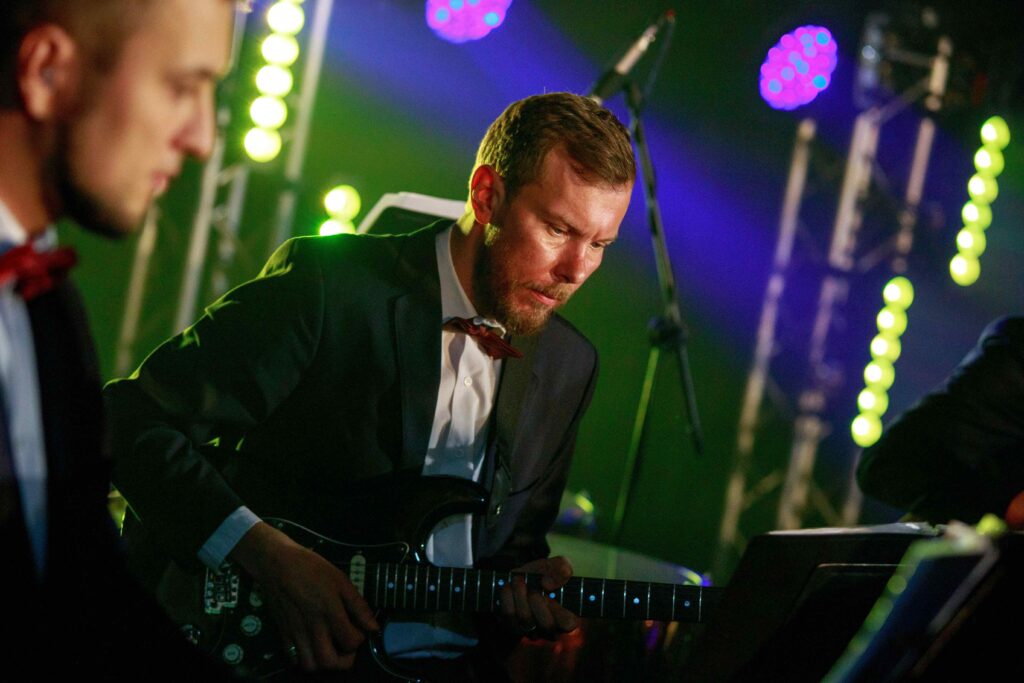
Live bands can create atmosphere during gala dinners, awards evenings, company celebrations and post-event parties.
Think about when the band will perform.
You may want:
- Background music during dinner.
- A short headline performance.
- Music during an awards ceremony.
- A full set after the formal programme.
The style of music should match the audience and the tone of the event.
Solo Musicians and Small Ensembles
Solo performers, acoustic musicians, string groups and other small ensembles work well when you want entertainment without overwhelming conversation.
They can be particularly effective during:
- Drinks receptions.
- Networking sessions.
- Guest arrivals.
- Dinner.
- VIP hospitality.
DJs
DJs work well when the event needs different levels of energy throughout the day or evening.
Music can begin as background during arrivals and gradually become more energetic once the formal programme has finished.
Comedians
Comedy can work well for employee events, awards evenings and informal celebrations.
However, the performer needs to understand the audience.
Make sure they are properly briefed about:
- The organisation.
- The attendees.
- The tone of the event.
- Topics that should be avoided.
Magicians
Close-up magicians can move between groups during receptions and networking sessions, making them useful when you want entertainment without stopping the rest of the event.
Larger illusion performances can also work as a scheduled stage act.
Cultural Performances
Cultural entertainment can add meaning to international events or programmes connected to a particular location or community.
The performance should be selected thoughtfully and presented in an appropriate context rather than used simply as decoration.
Interactive and Experiential Entertainment
Entertainment does not have to mean watching a performance.
Interactive experiences can encourage attendees to participate and connect with each other.
Ideas include:
- Interactive quizzes.
- Audience challenges.
- Team activities.
- Photo experiences.
- Digital installations.
- Live polling.
- Creative workshops.
- Branded experiences.
- Immersive environments.
- Collaborative digital displays.
These formats can be particularly effective for networking events and product launches.
At a networking event, an activity can give guests an easy conversation starter. At a product launch, an interactive experience can allow people to explore the product or campaign directly.
Participation should generally feel optional rather than forced.
Guests are more likely to engage when the experience is easy to understand and they can choose their own level of involvement.
Entertainment for Gala Dinners and Awards Ceremonies
Gala dinners and awards ceremonies often already contain several programme elements, including dinner, speeches, presentations and awards.
Entertainment therefore needs to be carefully timed.
A typical running order might include:
- Arrival entertainment.
- Welcome from the host.
- Dinner.
- Awards or presentations.
- Short entertainment segment.
- Final awards or closing remarks.
- Music or entertainment after the formal programme.
A professional host can help keep the event moving and connect each part of the evening.
Production elements such as walk-up music, lighting cues and winner announcements can also make the awards feel more polished without adding significant time.
Avoid filling every available gap with entertainment. Guests need time to talk, eat and enjoy the event naturally.
Entertainment for Conferences and Seminars
Conference entertainment should refresh the audience rather than compete with the content.
Useful options include:
- Short energisers.
- Relevant keynote speakers.
- Interactive hosts.
- Music between sessions.
- Brief performances.
- Audience activities.
Placement is important.
A five-minute energiser after several presentations may help refocus the audience. The same activity inserted immediately before an important keynote could interrupt the flow.
Keep conference entertainment focused and relatively short.
Entertainment for Product Launches
At a product launch, entertainment can become part of the reveal itself.
Music, lighting, video, performers, staging and digital content can work together to build anticipation before the product is introduced.
Possible ideas include:
- Interactive digital installations.
- Projection or screen-based content.
- Immersive environments.
- Choreographed reveal performances.
- Live demonstrations.
- Brand-related interactive experiences.
The strongest ideas usually connect directly to the product or campaign.
Entertainment that feels unrelated to the launch may be memorable, but it may not strengthen the message you want guests to take away.
Entertainment for Client Events
Client entertainment should help strengthen relationships.
Depending on the audience, this might include:
- Live music.
- Premium performances.
- Guest speakers.
- Interactive experiences.
- Hospitality-led activities.
- Small-group entertainment.
Avoid concepts that make conversation difficult if networking is one of the main objectives.
Entertainment should support the environment you are trying to create, not dominate it.
Entertainment for Hybrid Events
Hybrid events create an additional challenge because entertainment needs to work for both the in-person and online audience.
Consider:
- How the performance appears on camera.
- Whether remote attendees can hear it clearly.
- Whether online participants can take part.
- How the host addresses both audiences.
- Whether online attendees need a separate interactive element.
- How chat, polling and audience responses are managed.
Entertainment that works brilliantly inside a venue may not automatically translate through a livestream.
Production quality is especially important. Camera angles, audio, lighting and screen content should all be considered when planning the experience.
How to Choose Entertainment That Fits Your Brand
Entertainment becomes part of how guests experience your organisation.
It should therefore reflect your brand rather than feeling like a separate addition.
Match the Tone
Consider whether the event is:
- Formal.
- Informal.
- Premium.
- Creative.
- Energetic.
- Educational.
- Celebratory.
A financial services conference may require a different approach from a technology product launch, even if both audiences are corporate.
Consider the Event Story
If the event has a theme or creative concept, use entertainment to reinforce it.
Music, performers, speakers and interactive experiences can all help create a consistent journey from arrival through to the final session.
Keep It Appropriate
Consider how the entertainment will be perceived by:
- Employees.
- Customers.
- Senior leadership.
- Partners.
- International guests.
- External stakeholders.
The aim is not necessarily to choose the safest option. It is to make sure the creative choice feels intentional and suitable for the people attending.
Check the Venue Before You Book
A strong entertainment idea still needs to work physically inside the venue.
Before confirming anything, check the practical requirements.
Stage Space
Ask how much space the performer needs and what else will be on the stage.
This might include:
- Podiums.
- Screens.
- Instruments.
- Furniture.
- Set pieces.
- Award displays.
- Technical equipment.
Sound Requirements
The entertainment provider may need:
- Handheld microphones.
- Headset microphones.
- Instrument microphones.
- Monitor speakers.
- Mixing equipment.
- Playback systems.
Do not assume the venue’s existing sound system will cover everything.
Lighting
Stage lighting can dramatically improve a performance.
Even relatively simple entertainment may require additional lighting rather than relying on the venue’s standard setup.
Screens and Video
If the entertainment involves video, graphics or interactive content, confirm:
- Screen sizes.
- Aspect ratios.
- File formats.
- Playback systems.
- Connectivity requirements.
Loading Access
If equipment needs to be brought into the venue, check:
- Loading times.
- Access restrictions.
- Lift dimensions.
- Storage.
- Parking.
- Setup windows.
These details are particularly important at city-centre venues where access may be limited.
Dressing Rooms
Performers may need a private preparation area.
Ask the venue what spaces are available before the event.
Plan Rehearsals and Technical Checks
Entertainment should be included in the production schedule.
Depending on the complexity of the event, you may need time for:
- Equipment setup.
- Sound checks.
- Lighting checks.
- Video testing.
- Performer rehearsals.
- Full programme rehearsals.
Complex performances may also need specific cues for lighting, sound, video and stage movement.
A detailed running order helps production teams, performers, hosts and event managers stay coordinated.
For larger events, a show caller may manage these cues throughout the programme.
Budget for the Complete Entertainment Requirement
Do not look only at the performer’s fee.
The total cost of entertainment can include:
- Performer fees.
- Travel.
- Accommodation.
- Technical equipment.
- Lighting.
- Sound.
- Staging.
- Screens.
- Crew.
- Rehearsal time.
- Extended venue access.
- Event management.
- Production support.
Some entertainment concepts require very little additional production. Others may need specialist equipment and significant technical support.
Request a technical rider or list of production requirements before confirming the booking.
This allows you to understand the true cost early in the planning process.
UK Corporate Entertainment Considerations
Corporate events across the UK can involve different logistical challenges depending on the venue and location.
London Events
London provides a huge range of venues and entertainment suppliers, but access can be challenging.
Check:
- Loading restrictions.
- Travel times.
- Parking.
- Venue access times.
- Noise restrictions.
Build enough time into the schedule for setup and sound checks.
Events Outside London
For regional events, travel and accommodation may affect supplier costs.
Compare the total cost rather than choosing an entertainment provider based only on their headline fee.
Historic and Unusual Venues
Historic buildings and unusual event spaces may have restrictions relating to:
- Noise.
- Power.
- Rigging.
- Lighting.
- Stage construction.
- Access.
- Operating hours.
Discuss entertainment requirements with the venue before confirming the concept.
Outdoor Events
British weather needs to be part of your contingency planning.
If entertainment is taking place outside, consider:
- Covered performance areas.
- Weatherproof equipment.
- Alternative indoor locations.
- Revised running orders.
Have a clear backup plan rather than waiting until the event day.
Corporate Entertainment Planning Checklist
Before booking entertainment, work through the following points.
Event
- Define the objective.
- Decide what role entertainment should play.
- Confirm where it fits into the programme.
Audience
- Understand who is attending.
- Consider audience size and seniority.
- Review cultural considerations.
- Consider accessibility.
- Decide how much participation is suitable.
Entertainment
- Shortlist appropriate options.
- Check the tone fits the brand.
- Review the content.
- Confirm the performance duration.
Venue
- Check available performance space.
- Review venue restrictions.
- Confirm loading access.
- Check setup times.
- Confirm dressing-room requirements.
Production
- Review sound requirements.
- Review lighting requirements.
- Check screen and video requirements.
- Schedule rehearsals.
- Confirm technical responsibilities.
Budget
- Confirm performer costs.
- Include production requirements.
- Include travel or accommodation if needed.
- Maintain a contingency allowance.
Briefing
Provide performers and suppliers with:
- Event objectives.
- Audience information.
- Brand background.
- Venue details.
- Running order.
- Technical information.
- Important sensitivities.
- Key contacts.
Common Corporate Entertainment Mistakes
Choosing Based Only on Novelty
An unusual idea is not automatically the right one.
Start with your objectives and audience before looking for something different.
Ignoring the Audience
Entertainment should be chosen for attendees rather than the personal preferences of the organising team.
Booking Too Late
Popular performers can be booked months in advance.
Complex entertainment may also need additional planning time for staging, AV and rehearsals.
Underestimating Technical Requirements
Always request technical requirements before confirming an act.
Production costs can significantly change the overall budget.
Providing a Weak Brief
Performers should understand the event, organisation and audience.
A clear brief reduces the risk of content or delivery that feels inappropriate.
Overloading the Programme
More entertainment does not necessarily create a better event.
Allow enough time for networking, conversation and natural transitions.
Forgetting Accessibility
Consider how all guests will watch, hear and participate in the entertainment.
Accessibility should be planned from the beginning.
Choosing the Right Corporate Entertainment for Your Event
The right corporate entertainment should complement the purpose of the event, engage the audience and work naturally within the venue, programme and production setup. Start with your objectives, understand who will be attending and involve your production team early so that creative ideas remain practical as well as memorable. If you are planning a corporate event and need support bringing entertainment, production and the wider guest experience together, contact Live Group to discuss your event.
Get the latest guide on virtual town hall meetings.
Ready to take the stress out of event planning?
Live Group helps organisations design and deliver personalised event experiences that engage audiences and achieve results. Contact us to discuss your next event.
The best option depends on the audience, objectives and format. Live music, interactive experiences, speakers and performers can all work when they support the wider event.
Consider the audience, venue, budget, brand tone and programme before choosing an act. The entertainment should have a clear purpose within the event.
Live bands, musicians, professional hosts, magicians and short headline performances can all work well when carefully timed around dinner, speeches and awards.
Confirm technical requirements, performance space, setup time, venue restrictions, accessibility and the total production cost.
Entertainment should be considered early in the planning process, particularly when it requires specialist AV, staging or rehearsal time.