A successful media launch event isn’t just about the content.
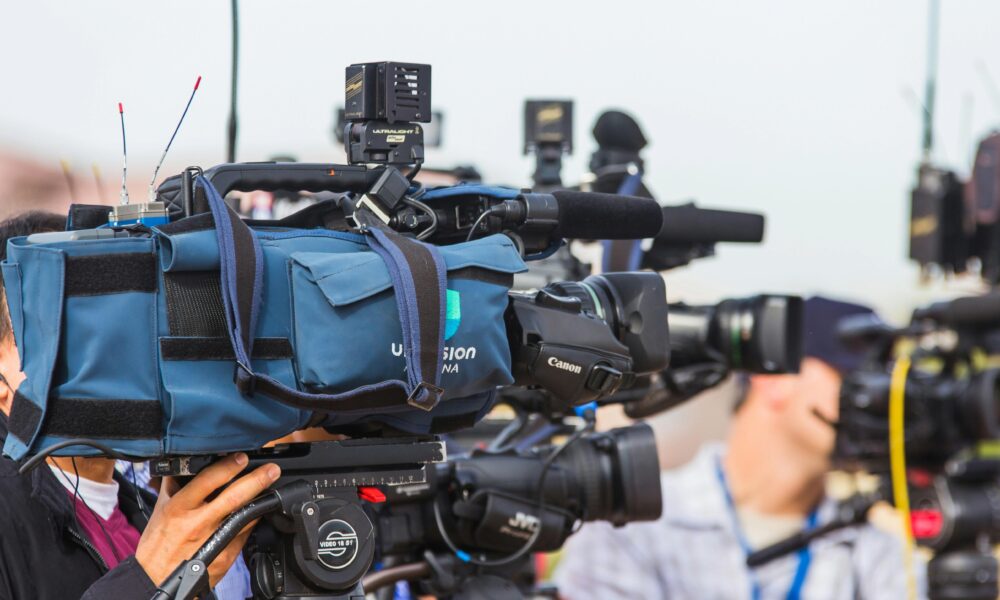
A media launch in 2026 succeeds or fails on production coordination. The media launch event itself is now one output among several – livestream, press capture, social content, executive interviews – all of which you have to produce simultaneously, to television broadcast standard, without a single point of failure.
For enterprise communications teams and the agencies producing launches on their behalf, that means treating the launch like a content operation with a physical venue attached, rather than a physical event with a camera in the corner.
The audience for a media launch was never really “the room.” It’s the journalists filing within the hour, the social team clipping the session before it’s even concluded, and the teams reviewing coverage the next morning. Every one of those audiences has a different production requirement, and all of them have to be met from the same event.
The Guide Every Internal Comms Professional Needs
The Internal Comms Bible 2026
What Is a Media Launch Event?
A media launch is usually a blend between an event and PR campaign, created to introduce a new product, service, or brand to a relevant audience including journalists, influencers, and the wider public. The goal is securing coverage and market awareness from day one. Unlike an internal event or a client conference, its audience is deliberately external, the people who will write about it, post about it, and shape how the market first hears the story.
Most media launches share a similar shape, even when the scale and format differ:
- A “reveal” – a presentation, where leadership or product teams unveil the news and set out the brand story behind it.
- Press materials – the press release, marketing collateral and approved imagery shared with press organisations so they can report accurately and quickly.
- Early media and influencer access – embargoed previews given to journalists and creators ahead of the public reveal, so coverage is ready to publish the moment the embargo lifts.
None of this is unusual on its own, most launches follow roughly this pattern. What’s changed is the production demand sitting underneath it. Every one of those three components now has to be produced to broadcast quality, in parallel, because the people covering the story expect usable content, not just an invitation. Like many events in 2026, its what attendees do afterwards that matters the most.
What Does Event Production for a Media Launch Involve in 2026?
Event production for a media launch spans strategy, live production, content capture, and distribution coordination, delivered as one connected workstream rather than separate supplier contracts. It covers the physical staging and AV, the broadcast-quality capture of every key moment, the press logistics (embargoes, briefing rooms, interview slots), and the handoff of usable content to PR, social, and marketing teams before the day is over.
That’s a wider brief than a standard corporate event. A leadership summit needs a good room and a clear agenda. A media launch needs all of that, plus a production team that understands what a press desk needs, what a social team can use within the hour, and how to light and film a live stream and mixed differently to a stage designed purely for the people in the seats.
The organisations that get this right treat the production brief as a single document from the outset, one plan covering the stage, the stream, the press room, and the content capture schedule, rather than assembling it from whichever suppliers happen to be available on the day.
Why Are Media Launches Becoming More Content-Heavy to Produce?
Media launches are becoming more content-heavy because the distribution window has shrunk and the number of channels expecting a feed from the event has grown. Press coverage, executive social posts, short-form video, and on-demand replay libraries all draw from the same few hours of live production, and each has its own format, pacing, and turnaround expectation.
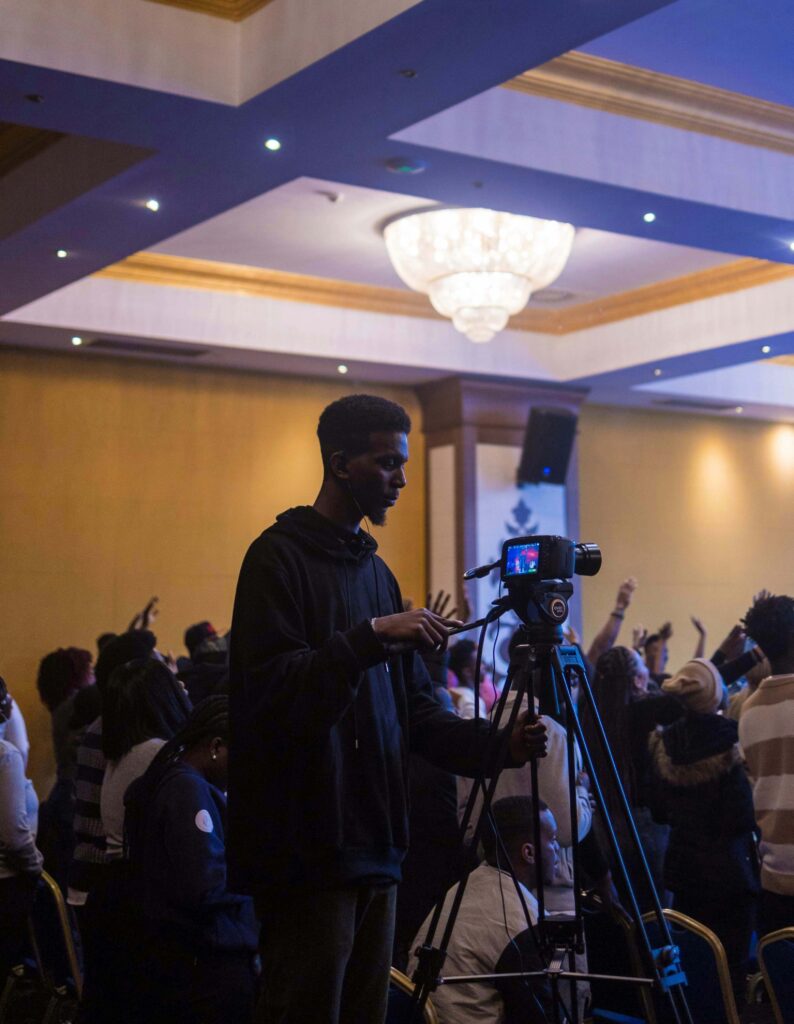
Remember when a press release used to be the primary output of a launch? Now it’s one item on a longer list that includes b-roll, highlights reels, and a full on-demand recording for anyone who couldn’t attend live. Producing all of that from a single event means building the capture plan, camera positions, audio feeds, interview slots, around the outputs you need, not just the moment itself.
This is where a lot of launches fall short of what they’re really supposed to achieve. The stage looks right, the room is full, but nobody planned for a clean isolated audio feed for the press interviews, or a b-roll camera that isn’t also the main broadcast camera. Content-heavy production has to be designed in at the brief stage, because it’s expensive and disruptive to retrofit once the run of show is locked.
How Should Teams Coordinate Vendor and Production Workstreams for Media Launches?
Communications and agency teams should coordinate a media launch through a single accountable production lead, rather than managing venue, AV, press logistics, and content capture as separate supplier relationships. Media launches typically involve more moving parts than an internal event. Press registration, embargo management, broadcast crews, social capture teams, interview scheduling, and each additional supplier relationship is another point where the plan can fall out of sync on the day.
In practice, that means one team holding the full run of show: who’s on stage and when, which interviews are scheduled against which embargo, where the press briefing room sits relative to the main stage, and how content moves from capture to the social and PR teams waiting for it.
When those workstreams sit with a single production lead, the inevitable changes on the day, delayed interview or reworked running order, can all be absorbed without every supplier needing to be individually briefed and re-briefed.
For event agencies producing a launch on behalf of an enterprise client, this coordination role often sits with the agency itself. For enterprise communications teams commissioning directly, it’s worth asking any production partner, at the briefing stage, exactly who is accountable for the whole day.
What Role Does Full-Service Event Production Play in De-Risking a Media Launch?
Full-service event production reduces risk on a media launch by giving one team ownership of the whole activation, strategy, staging, content capture, and contingency planning, instead of splitting accountability across a venue, an AV supplier, and a separate content agency. Media launches carry more reputational exposure than most corporate events: press are in the room, the clock is running on embargoes, and a technical failure can influence the story that comes after.
A full-service approach typically covers:
- Contingency planning for the failure points specific to press events (delayed embargo, a no-show interviewee, a stream drop)
- Vendor and supplier management from a single point, so a change to the running order doesn’t require re-briefing four separate teams.
- Content capture built into the production plan from the brief
- Post-event reporting that connects the launch back to the communications objectives it was meant to serve
None of this removes the need for a strong story or a credible spokesperson, that part is still down to the comms and PR strategy. What full-service production does is make sure the story actually gets captured, distributed, and reported on cleanly, rather than being undermined by a production gap on the day.
What Should Enterprise and Agency Buyers Look for in a Media Launch Production Partner in 2026?
Enterprise and agency buyers evaluating a production partner for a 2026 media launch should look for integrated capability across strategy, production, and content delivery, held by a single accountable team.
For agencies procuring event production on behalf of their own clients, the same criteria apply, with one addition: confirm how the production partner handles confidentiality and white-label delivery, since the agency’s relationship with its own client is usually the one that has to stay front and centre throughout.
Media Launch Production Checklist for 2026
- Production brief covers press, social, and on-demand outputs separately, not as a single generic feed
- Single accountable production lead confirmed across staging, streaming, and press logistics
- Content capture plan (camera positions, audio feeds, interview slots) agreed before the run of show is locked
- Contingency plan covers embargo delays, no-show interviewees, and stream failure specifically
- Post-event reporting mapped to communications objectives agreed at the briefing stage
Full-Service Production vs. a Fragmented Supplier Model
A quick comparison of what changes when one team holds the whole media launch, versus managing it across separate suppliers:
| Production Element | Fragmented Supplier Model vs. Full-Service Production |
| Accountability | Divided across venue, AV, and content teams vs. one team accountable for the whole day |
| Content capture | Added once the stage design is finished vs. built into the brief from the outset |
| Running order changes | Require rebriefing multiple suppliers vs. absorbed by a single production lead |
| Contingency planning | Improvised on the day vs. agreed in advance for press-specific failure points |
| Reporting | Attendance and satisfaction scores vs. outcomes mapped to communications objectives |
Live Group’s Approach to Media Launch Production
Live Group has produced events, including press and media launches, for enterprise organisations and communications agencies for five decades. Production, content capture, and press logistics are managed by a single accountable team from brief through to post-event reporting, rather than split across separate suppliers.
Live Group’s Envoku event management platform supports the content distribution and on-demand delivery side of a media launch like: gated replay libraries, personalised content pathways for different stakeholder audiences, and analytics that go beyond attendance numbers. The AudienceDNA framework informs how content and interaction are designed for the different audiences a launch serves, whether that’s press, internal stakeholders, or the wider public.
If you’re planning a media launch for 2026 and want a single team accountable for the strategy, the production, and the content that comes out of it, get in touch with Live Group to discuss your brief.
Planning your next media launch? Share your brief with Live Group. From ambitious concepts to complex campaigns, they bring ideas to life through creativity, expertise and flawless delivery.
Get the latest report on internal communications in 2026.
A media launch has to produce broadcast-quality content for press, social, and on-demand audiences simultaneously, alongside the in-room experience. A standard corporate event is designed primarily for the people in the room; a media launch is designed for several audiences who will never set foot in it.
For a content-heavy launch involving press logistics, interview scheduling, and multi-format content capture, a realistic planning horizon is eight to twelve weeks for a straightforward launch, and longer where multiple markets, languages, or embargoed announcements are involved.
Ideally, one party holds accountability for the entire day, regardless of which organisation that party sits within. Splitting accountability across a venue, an AV supplier, and a separate content team is the most common source of on-the-day breakdowns at media launches.
Embargo and interview scheduling failures tend to cause the most reputational damage, followed closely by content capture gaps, a missing clean audio feed, or no dedicated b-roll camera, that only become apparent once the press and social teams try to use the footage afterwards.
Ready to take the stress out of event planning?
Live Group helps organisations design and deliver personalised event experiences that engage audiences and achieve results. Contact us to discuss your next event.