Why Does Face-to-Face Still Matter So Much?
Digital tools have proliferated every aspect of our working and personal lives. There’s almost nothing left that you can’t automate or distil into an app or platform. This is happening in events and office environments. But amid all the digital buzz, it’s worth remembering: sometimes the best way to capture someone’s attention is to meet them in person.
The downsides are palpable: a Zoom meeting where half the attendees are working on something else, muted with their cameras off. A webinar operating as mere background noise while registrants sift through their inbox. A company-wide e-mail that ends up at the bottom of the pile barely seconds after its sent.
Digital communication is efficient, scalable and measurable. But it competes with everything else happening on the same screen.
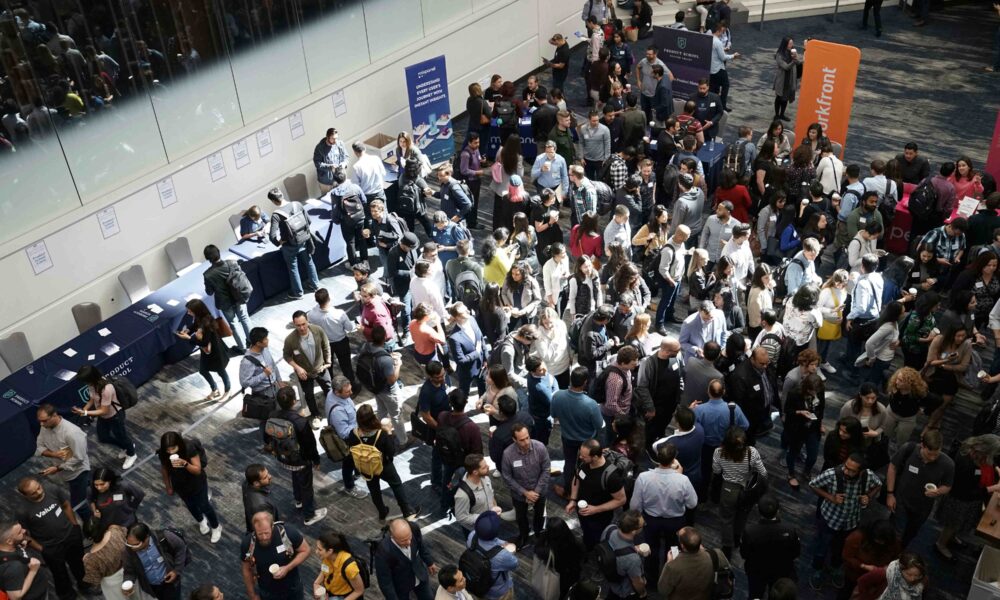
In-person events are different, there’s no shying away from them, because they demand presence – both physical and mental.
When people are physically there in the same room, attention sharpens and becomes socially reinforced. You’re part of a shared moment because you’re not just another Chrome tab. That’s the difference, and it is far more powerful than many organisations realise.
In short: physical presence creates focus in a way digital channels rarely can.
What Does the Research Say About In-Person Communication?
If goes deeper than common sense, it’s backed by verifiable evidence too.
Studies on persuasion have found that asking someone to do something face-to-face can be dramatically more effective than asking via email. In a frequently cited study, Harvard Business Review suggested that in-person requests were up to 34 times more successful than the same request sent digitally (2017).
But why is face-to-face so much more effective than digital messaging? Because communication is more than just words. Body language, eye contact, tone, pace – all these signals carry meaning. They help people interpret nuance and understand urgency and intent. It also leaves less potential for implicit meaning to be gleaned or taken out of context. In-person communication doesn’t leave anything up for interpretation.
People rarely multitask in a live meeting the way they do online, because the social contract changes. You listen differently when someone is standing in front of you.
For event professionals, marketers, and public sector teams, this matters – because when the message is important, whether strategic change, sensitive topics, or a new direction, the channel can shape the outcome.
The more complex or emotionally charged the message, the stronger the case for an in-person event.
The Attention Economy & Modern Audiences: How to Cut Through the Noise
Download the Attention Economy Report 2026
When Should You Choose an In-Person Event?
Not every communication requires a stage and a lighting rig. But some absolutely benefit from live engagement.
In-person events are particularly effective when:
- You need discussion rather than passive consumption
- Emotional nuance matters
- Immediate feedback is valuable
- Collaboration is required
- Commitment to action is the goal
Many organisations have found that convening people face-to-face for a key announcement or training session can achieve in one hour what weeks of email updates struggle to deliver.
The benefit of live event engagement is that it compresses understanding, accelerates alignment and reduces misinterpretation.
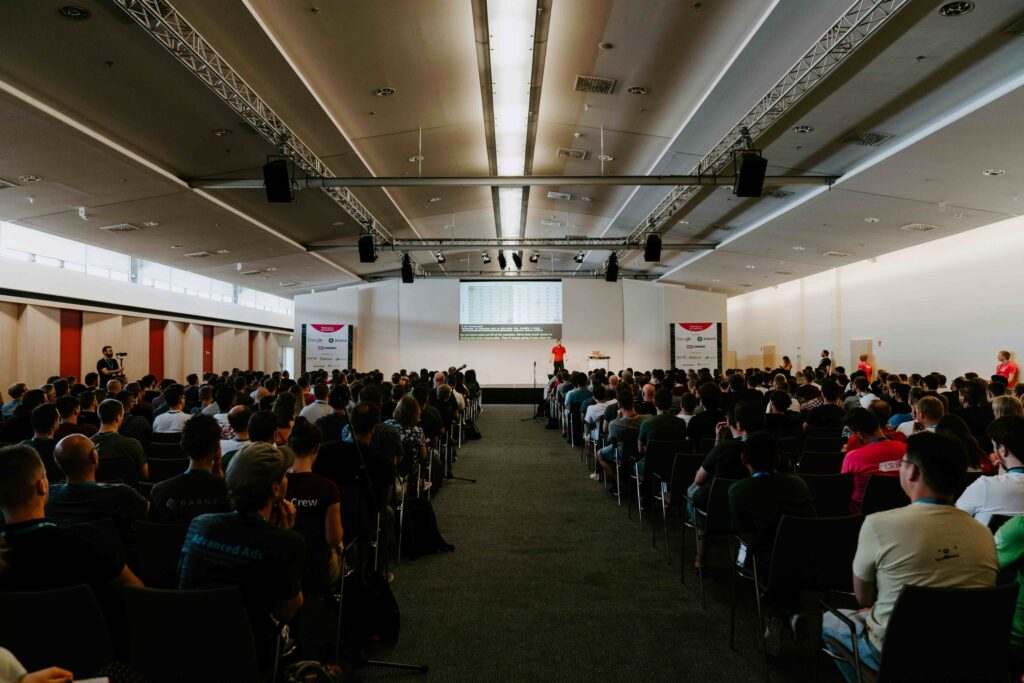
And importantly, an in-person event doesn’t have to mean a 2,000-person conference. It might be a focused workshop, an offsite strategy session, or an interactive town hall. The scale matters less than the design.
The real objective is to create a moment where people step out of the daily digital noise and give their undivided attention.
Does Simply Getting People in the Room Guarantee Event Engagement?
Many organisations get this wrong. Bringing people into a room isn’t a magic fix for poor communication and engagement. A badly structured in-person session can feel just as disengaging as a long webinar.
Strong design determines whether your event cuts through or becomes just another meeting – or, worse, something your people say “could have been an email”.
One thing we know about human attention is that it fluctuates. To work with natural ebbs in engagement, experts recommend changing the format every 10–15 minutes to reset focus. That might mean interspersing presentations with live polling, Q&A, table discussions, or short video segments. Keeping your sessions varied keeps energy high.
Storytelling helps in-person event engagement too. As does humour, where appropriate. Interactive elements encourage participation rather than passive listening.
Even sensory considerations matter. Visuals, props and live demonstrations can make ideas tangible and memorable. Breaks are equally important. Short pauses, or even encouraging attendees to step outside briefly, can recharge focus for the next session.
Venue choice plays a role. For example, spaces with natural light or access to outdoor areas can noticeably improve mood and concentration.
Beyond attendance, successful in-person events are engineered for engagement.
Can an In Person Event Platform Strengthen Live Engagement?
Live doesn’t have to mean analogue. An in-person event platform can support real-time interaction without undermining focus. For example, polling tools can gather instant feedback. Event apps can manage personalised agendas or facilitate networking between attendees with shared interests.
Used carefully, technology enhances event engagement. It encourages participation from those who might hesitate to speak up publicly. It supports data collection without disrupting the flow of the room.
The key is intent. Technology should augment and serve the live experience rather than distract from it.
When digital tools amplify presence rather than compete with it, the result is a more inclusive and measurable in person event.
Event Engagement: What About Hybrid and Virtual?
Live engagement doesn’t always mean fully in-person. Well-produced hybrid or even virtual events can create a sense of immediacy that static communications lack. The goal is presence and participation, whether physical or digital.
Transforming a standard webcast into a talk show-style panel with live Q&A, for example, can significantly increase retention and responsiveness. The difference lies in interactivity.
However, even in hybrid formats, the energy of a live audience often anchors the experience. Speakers respond to real reactions, applause changes pacing, and audience dynamics shape delivery.
Digital channels are excellent for breadth because they extend reach and improve accessibility. But when depth of attention is required, thoughtfully crafted live interaction – whether fully in-person or hybrid – remains a powerful ally.
Why Do In-Person Events Strengthen Employee Engagement?
Employee engagement events are rarely about information alone. Perhaps even more than that, they are about connection.
Recognition ceremonies, leadership town halls, collaborative workshops, these create shared experiences and foster a sense of belonging.
When employees can gather physically, everything else that comes with it reinforces culture. Applause, laughter, spontaneity, informal conversations during breaks – all these are subtle cues that genuinely bring people together. These moments also humanise leadership and strengthen trust.
An email can inform, but a live event can reassure, inspire, and mobilise. For organisations navigating change or growth, that distinction is significant.
Why Partner with a Full-Service Events Agency?
Delivering high-impact in-person events requires more than booking a venue.
Content design, production, staging, technical support, audience flow, and contingency planning all influence outcomes. A full-service events agency brings these elements together coherently.
They understand how to structure sessions for attention, integrate technology effectively, and maintain energy throughout the day.
Crucially, their role can extend beyond the event itself. A full service agency can draft and distribute a press release to relevant outlets through established media contacts, ensuring your in person event generates external visibility as well as internal impact.
That amplification reinforces credibility and extends the life of the message.
Why Do In-Person Events Still Win Engagement?
In person events are irreplaceable because presence matters. Digital communication is still indispensable. It’s efficient, accessible, and far-reaching. But when the message carries weight, and when you need clarity, commitment, and genuine engagement, in-person events consistently deliver stronger outcomes. And in an environment saturated with noise, that shared experience is often what makes the difference.
When attention is scarce, the most powerful move may be the simplest one: bring people into the same room.
Get the latest report on what’s causing the attention recession, and how to win it back.
Ready to take the stress out of event planning?
Live Group helps organisations design and deliver personalised event experiences that engage audiences and achieve results. Contact us to discuss your next event.