If you work in government, communications, or events, you’ll know public sector gatherings are rarely just gatherings.
A conference about infrastructure may be often about signalling investment priorities. A policy launch might quietly double as an industry roundtable. A civil service awards ceremony celebrates people, but it also shapes culture.
Government events operate on several levels at once. They communicate policy, build relationships, strengthen communities, and occasionally, change the direction of a sector.
This is why governments run events at all levels, from local councils hosting community forums to national departments organising major conferences or international summits. And in the UK public sector, the impact of those events is huge.
The events industry contributes billions to the economy and supports hundreds of thousands of jobs. But government involvement in events isn’t purely economic. It’s about visibility, influence, and connection with the public.
So with that in mind, why does government need events in the first place?
Why do governments run events?
At its core, a government event is a moment of focus. Policies can sit quietly in documents for years. Reports circulate internally. Consultations drift through inboxes. But bring people together in a room, physically or digitally, things become much more real and momentum picks up.
When a government department gathers stakeholders, civil servants, businesses, and experts in one place, discussion becomes immediate and visible. Meaning decisions feel closer and sharpen.
There are several reasons governments rely on events as part of their toolkit:
- Policy communication: explaining new initiatives or legislation
- Industry engagement: working directly with sectors affected by policy
- Public engagement: listening to communities and gathering feedback
- International diplomacy: hosting delegations and global forums
- Recognition and culture: celebrating public sector achievements
None of these functions are entirely new. Governments have convened assemblies and forums for centuries. What’s changed is the scale and sophistication of modern events.
Today’s government events might include hybrid conferences, digital town halls, policy hackathons, or sector summits. The aim is still the same: bring the right people together at the right moment.
The Attention Economy & Modern Audiences: How to Cut Through the Noise
Download the Attention Economy Report 2026
How do UK government events influence the economy?
One of the most visible reasons governments support events is economic impact.
Large events bring attention, visitors, and spending into a region. Hotels and restaurants suddenly get much busier, as do local transport networks. The ripple effect reaches well beyond the venue itself.
The UK has demonstrated this repeatedly. Major events, from international summits to global sporting competitions, have placed cities firmly on the world stage.
The economic footprint of the UK events industry alone has been estimated at more than £39 billion, supporting over half a million jobs, many within small and medium-sized businesses.
But the long-term benefits often matter more than the immediate ones.
When a city hosts a major conference or trade show, the global spotlight turns briefly in its direction. Take major political party conferences held outside London. Cities like Manchester, Liverpool, and Birmingham regularly become the centre of national media coverage for several days.
Investors notice, students consider studying there, businesses explore partnerships. A location that might once have been a dot on a map suddenly has a story attached to it.
In short, government events help shape economic perception, and perception influences investment.
Why should a government department hold events?
Sometimes the purpose is far more practical. Government departments oversee policies that affect industries, services, and communities. But policy written on paper doesn’t automatically translate into understanding. Events help bridge that gap.
Imagine a new environmental regulation affecting manufacturing. A department could simply publish guidance online. Eventually, organisations may get around to reading it.
Or the department could host an industry conference. Suddenly there’s a space for questions, interpretation, and debate. Regulators and businesses talk directly. Challenges surface early rather than months later.
Events also help government departments gather intelligence. Civil servants might hear insights from industry leaders, academics, or frontline practitioners that never appear in official reports. These conversations can quietly influence future policy.
There’s another, often overlooked reason departments hold events: internal culture.
Large organisations, including the civil service, need moments where people step away from routine tasks and reconnect with the mission of their work. Conferences, learning festivals, and awards ceremonies play an important role here. They reinforce identity and purpose.
For many departments, these internal events are just as important as public-facing ones.
Why does government need events to promote industries?
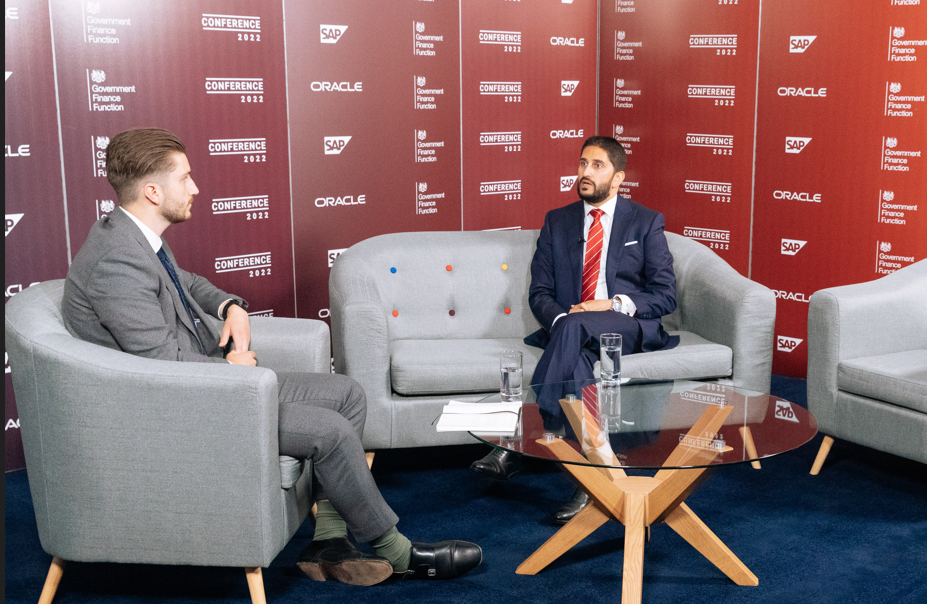
Certain industries rely heavily on events to grow. Take aerospace, technology, or financial services. Conferences and exhibitions are where partnerships start, deals are discussed, and innovations are showcased. Governments understand this – major industry events send a signal that a sector matters.
Trade shows, sector summits, and innovation conferences often become annual fixtures for exactly that reason. They reinforce a country’s strengths and attract international interest.
A well-known example is the aerospace sector, where industry gatherings have become deeply tied to regional economies and national reputation. These events are more than marketing exercises. They’re strategic platforms that connect policy, research, and business.
Without them, industries would still operate, but the collaboration would be slower, quieter, and less visible.
How does the government hire event managers?
What may surprise some is that governments rarely organise large events independently. Instead, they often commission specialist agencies and suppliers.
This reflects a broader shift in how public services operate. Governments increasingly act as commissioners, bringing together external expertise to deliver complex programmes.
When planning a government event, departments typically follow procurement processes to select partners. These processes ensure transparency, value for money, and compliance with public spending rules.
External event agencies may be responsible for:
- venue sourcing
- logistics and production
- delegate management
- digital platforms for hybrid events
- programme design and speaker coordination
- communications and marketing support
For government teams, this partnership model allows them to focus on strategy and policy while event specialists manage delivery.
It also helps ensure events meet professional standards. Large conferences, ministerial visits, or international summits involve complex logistics, security considerations, and stakeholder management.
Experienced event professionals bring that operational expertise.
How much funding can the government give an event?
Funding varies widely depending on the type of event.
Some events are fully government-funded, particularly those focused on policy engagement or public sector operations. Others receive partial support, sponsorship, or collaboration with industry partners.
For major international events, such as global summits or large exhibitions, government funding may be combined with private investment and regional support.
The important point is that governments rarely approach event funding in a uniform way. Instead, they consider several factors:
- the potential economic impact
- the relevance to national or regional priorities
- the expected public value
- the scale of international attention
Smaller events can be just as valuable as high-profile ones. A local government forum discussing regional infrastructure might have limited media coverage but significant policy impact.
Ultimately, the success of a government event isn’t measured purely by its size.
What makes a government event successful?
The fundamentals in successful government events are quite simple. Whether it’s a policy conference for 300 delegates or a virtual briefing for 20 stakeholders, the same principles apply.
Experienced public sector event teams tend to focus on a few essentials:
Clear objectives
Why is the event happening? What should change as a result?
Strong timing
Stakeholders need time to plan attendance and engage properly.
Thoughtful logistics
Venues must be accessible and suited to the audience.
Clear communication
Speakers, volunteers, and attendees all need to understand the plan.
Adaptability
Unexpected changes happen. Successful events absorb them without panic.
These principles sound obvious, and in many ways they are. But when applied consistently, they make government events far more effective. The result is an event that supports policy goals rather than simply filling a calendar slot.
Why government events matter more than people realise
Public sector events don’t always generate headlines, they’re not usually designed for spectacle. But they play a subtle and important role in how governments function.
Events help translate policy into conversation, by creating space for industries and communities to respond and allowing governments to listen as well as speak.
In many ways, they act as the connective tissue between public institutions and the people affected by their decisions.
Without events, communication becomes slower and more distant. Engagement becomes transactional rather than collaborative.
Bringing people together, even for a single afternoon, can change the tone of a conversation. That’s exactly why government events remain essential to broader strategy and policy-making.
Get the latest report on what’s causing the attention recession, and how to win it back.

Ready to take the stress out of event planning?
Live Group helps organisations design and deliver personalised event experiences that engage audiences and achieve results. Contact us to discuss your next event.