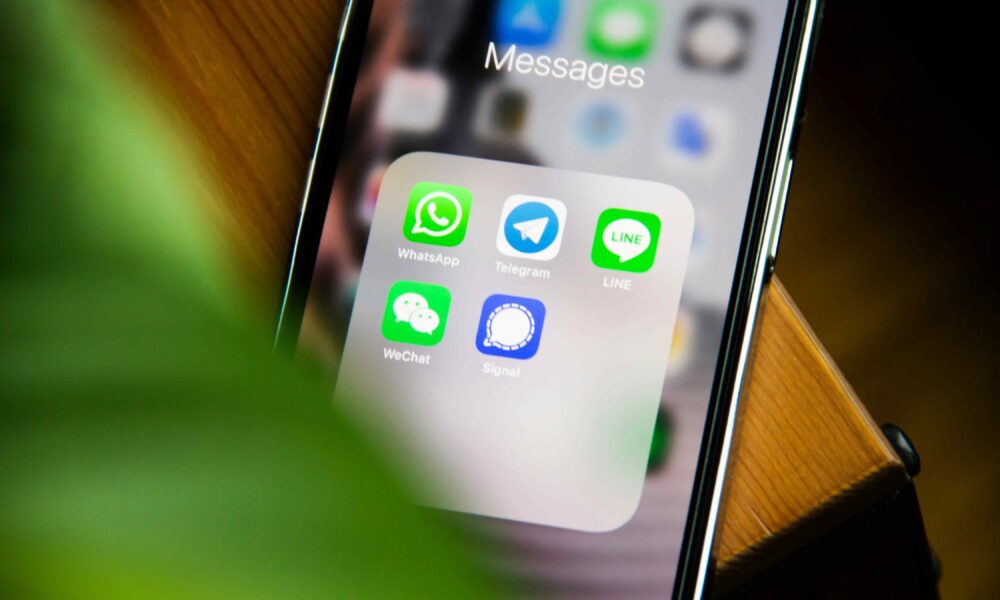
Are internal comms the answer to communication overload?
We talk a lot about the skills gap. We talk about engagement, hybrid working, and productivity. But there’s a more fundamental problem sitting underneath all of those conversations, one that internal communications teams feel every day:
It’s an attention recession, and most internal communications haven’t reacted accordingly.
Not a recession in the economic sense, but a sustained decline in our collective ability to focus, absorb information, and act on what matters. And in today’s workplaces, that recession carries real, measurable consequences.
What Is the Attention Recession that Internal Comms Professionals are Fighting?
For internal communications teams, the attention recession shows up as a widening gap between what’s sent and what’s actually absorbed.
Employees are receiving more information than ever across multiple channels, but their capacity to process it meaningfully hasn’t increased. As volume rises, attention fragments, and even well-crafted messages struggle to land.
The economist Herbert Simon captured this dynamic decades ago: a wealth of information creates a poverty of attention. In today’s workplace, that tension sits at the heart of internal communications.
The result is an environment where sending a message is no longer enough.
Internal communications has to work harder, not just to inform, but to earn attention and drive action.
The Attention Economy & Modern Audiences: How to Cut Through the Noise
Download the Attention Economy Report 2026
How Bad Is the Attention Problem at Work?
The scale of the problem becomes clearer when you look at the numbers.
The average employee receives around 117 emails and 153 Teams messages per day. That figure excludes Slack, WhatsApp, project management notifications, calendar alerts, and all the other channels that now compete for the same finite bandwidth. Bad internal communications adds to the noise, whereas well-meaning internal communications is competing with it.
Research suggests workers are interrupted roughly every two minutes, amounting to approximately 275 interruptions across a working day.
The impact on meaningful work is significant. Tasks that require sustained concentration, such as writing, analysis, planning, negotiation, and decision-making, are precisely the ones most damaged by constant context switching.
The cost of poor internal communications
When internal communications doesn’t cut through the noise or further compounds the problem of fragmented attention spans, the impact is operational.
Time lost to interruptions: Studies suggest it takes around 23 minutes to fully regain concentration after a disruption. Each notification, therefore, represents not just a moment lost but a far longer recovery.
Productivity impact: Constant task-switching has been estimated to reduce productivity by up to 40% in certain work contexts.
Financial cost: Information overload and persistent interruption have been estimated at around £12,000 per employee per year in lost productivity.
Wellbeing and retention: Excessive digital communication is widely cited as a driver of burnout. A significant proportion of employees considering leaving their organisation have identified inadequate or overwhelming internal communication as a factor in that decision.
These figures make the attention recession a strategic risk, not just an operational inconvenience.

Why Is Attention So Easily Disrupted?
The answer lies in cognitive architecture, not personal discipline.
The human brain is not designed to process dozens of simultaneous inputs. It performs best with sustained focus on one thing at a time. The modern workplace, however, is structured to produce the opposite.
Digital interruptions exploit the brain’s novelty-seeking tendencies, triggering a small dopamine response that encourages checking, scanning, and switching. The result is what researchers call continuous partial attention: a state of constant scanning where nothing ever receives full concentration.
There is also the concept of attention residue. When a person moves from one task to another, part of their cognitive attention remains attached to the previous task. Over the course of a fragmented day, this accumulates: the brain carries unfinished contexts forward, reducing the quality of focus on everything it touches.
This is why people can spend an entire day feeling busy while making little meaningful progress.
Internal Communications Strategies that Earn Attention at Work
Addressing the attention recession requires a shift from assuming attention to earning it. That means your communication stratgy should focus on treating attention as a finite resource and communicating with corresponding discipline.
1. Prioritise communications Not every update deserves broadcast. A simple framework of need-to-know, nice-to-know, and noise helps teams make sharper decisions about what gets sent and to whom. When everything is high priority, nothing is.
2. Lead with clarity and brevity Front-load the point. Put the purpose or request in the first sentence. Use plain language, short sentences, and a single topic per message where possible. Clarity is not just considerate. In an attention-scarce environment, it is a competitive advantage.
3. Use storytelling and emotional resonance Facts alone rarely cut through. The brain is wired for narrative, and messages that feel human get read while messages that feel corporate get skimmed. Give people a reason to care: what problem is being solved, who benefits, and what changes if it goes well or badly.
4. Segment and target Blanket messages train audiences to tune out. A message that matters deeply to fifty people should not be sent to five thousand. Relevance is the fastest route to attention. When people feel a message was genuinely written for them, they engage.
5. Build trust through consistent value People pay attention to sources they trust. Trust is earned through consistency: useful messages, honest tone, transparent context, and visible respect for the recipient’s time. If an organisation floods people with low-value communications, it teaches them to ignore the channel entirely.
Practical Internal Communications Habits That Protect Attention
Strategy translates into behaviour through daily internal communications habits.
Smart message design includes: descriptive subject lines, a key point or request in the first sentence, one topic per message, a clear call to action (what is needed, from whom, by when), and where relevant, an expiry date indicating when the information stops being relevant.
Timeboxing and batch processing means setting defined windows for checking messages rather than responding to a constant stream. At team level, agreeing shared norms around response times reduces the ambient anxiety that drives people to check compulsively.
Focus signals are simple cultural cues, whether a Teams status, agreed quiet hours, or headphones as a convention, that tell colleagues: this person is in deep work, do not interrupt unless it is genuinely urgent.
Communication audits involve reviewing how much goes out, across which channels, and with what duplication. Reducing noise increases the signal value of everything that remains.
The Culture Behind Internal Communication
Tools and templates will not survive a culture that rewards constant responsiveness.
In many organisations, fast replies became a proxy for commitment, and always-on became a mark of seriousness. The attention recession reveals the hidden cost of that mindset: a workforce that is perpetually busy and frequently burnt out, but rarely doing its best work.
Leaders have a particular role here. Modelling longer response windows, avoiding unnecessary urgency, using delayed send for out-of-hours messages, and never scheduling meetings without an agenda are all small behaviours that collectively shift culture.
At team level, attention contracts, explicit agreements about what goes where, what warrants interruption, and how focus time is protected collectively, are a practical and underused tool.
Signal or Noise? A Simple Test for your Internal Comms Strategy
Before sending any communication, ask one question: is this signal or noise?
Signal is clear, relevant, and actionable. Noise is information that demands attention without delivering value.
The most attention-friendly message is sometimes the one that never gets sent at all.
Final Thought: Rethinking the Event Planning Timeline
The question is no longer just how long does it take to plan an event.
A better question is: how effectively can you deliver impact within the time available?
Because in today’s environment, the ability to work within a compressed event planning timeline is not a contingency skill. It is a competitive advantage.
And those who master how to plan an event quickly will not just keep up with demand, they will set the standard for what modern events look like.
Get the latest report on what’s causing the attention recession, and how to win it back.
Ready to take the stress out of event planning?
Live Group helps organisations design and deliver personalised event experiences that engage audiences and achieve results. Contact us to discuss your next event.
The attention recession is the growing gap between the volume of information people receive at work and their capacity to process it meaningfully. It describes a sustained decline in collective focus driven by digital overload, constant interruptions, and fragmented working patterns.
The primary causes are information volume, notification frequency, and the structure of digital work tools that reward constant responsiveness. Cognitive factors including attention residue and the brain’s novelty-seeking tendencies mean that even brief interruptions carry disproportionate costs.
Estimates suggest information overload and constant interruptions cost around £12,000 per employee per year in lost productivity. The productivity reduction associated with constant task-switching has been estimated at up to 40%.
Key strategies include prioritising what gets communicated and to whom, writing with clarity and brevity, targeting messages by relevance rather than broadcasting widely, establishing team norms around response times and notifications, and protecting uninterrupted focus time through cultural signals and leadership behaviour.
Attention residue is a cognitive phenomenon in which part of a person’s attention remains attached to a previous task after they have moved on to something new. It reduces the quality of focus on subsequent work and accumulates over a fragmented day, explaining why heavy multitasking often leaves people feeling exhausted despite limited meaningful output.