

In-person
events FOR MORE
meaningful meetings.
In-person events are not an alternative to digital communication. They are a different category of experience, one that compresses understanding, accelerates alignment, and produces the kind of commitment that no email campaign or webinar can replicate. When the message carries weight, when leadership needs to be seen and trusted, when an organisation has to move as one — in-person is the format that delivers.
Live Group has designed and delivered in-person events for global enterprises, FTSE 100 organisations, government departments and regulated industries for fifty years.
This page sets out how we work, what we deliver, and what enterprise and public sector procurement teams should understand before commissioning in-person event management services.
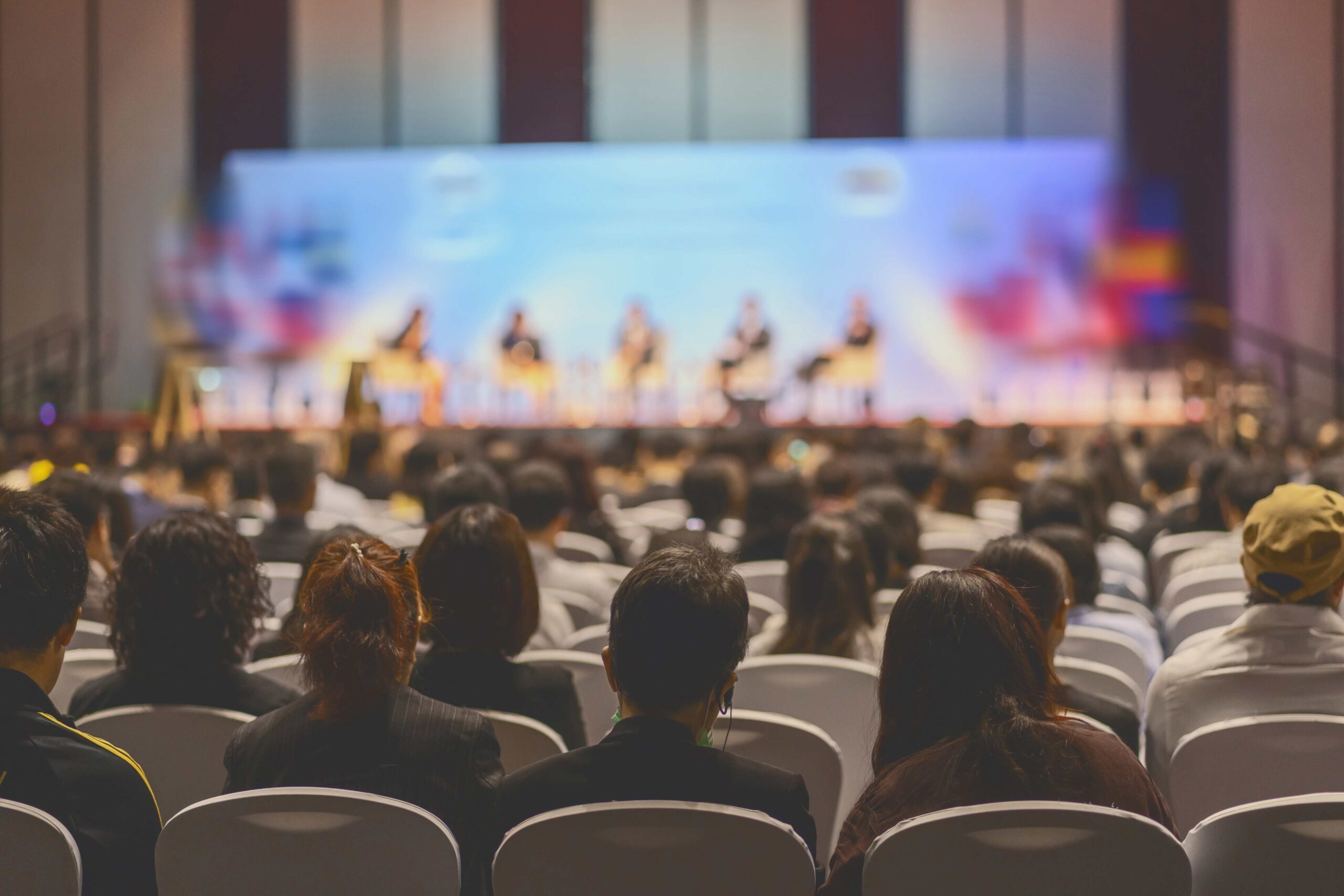
EVENTS REIMAGINED
POTENTIAL UNLOCKED.
Case Study
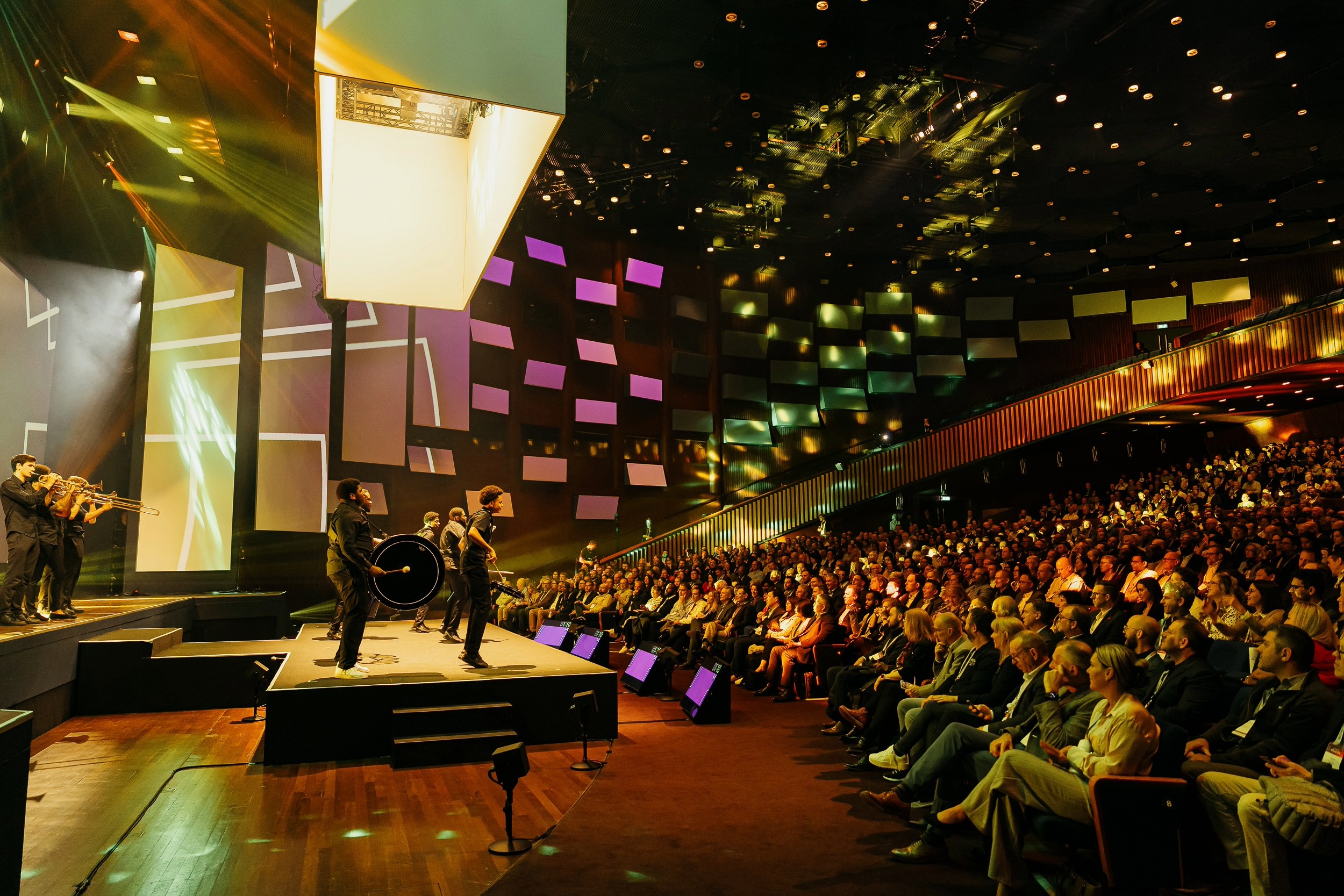
AVEVA
Over five action-packed days in The Hague, 1,700 attendees came together for an immersive experience designed to inspire, educate, and energise AVEVA’s global workforce.
Case Study
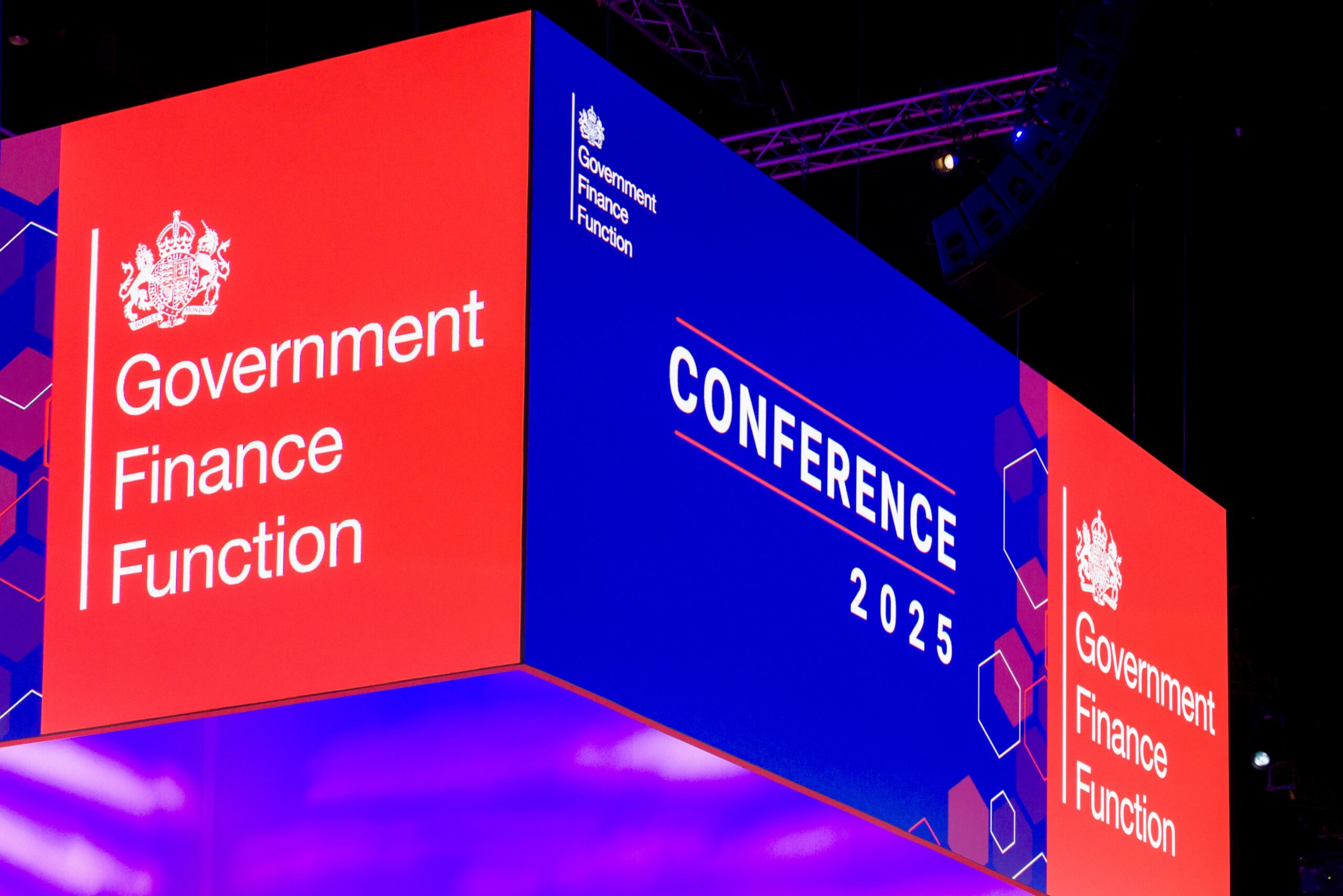
Government Finance Function
When the Government Finance Function (GFF) set out to launch a bold five-year strategy, Live Group was on hand to design an event that not only aligned various departments on shared goals but also redefined the conference experience.
Case Study
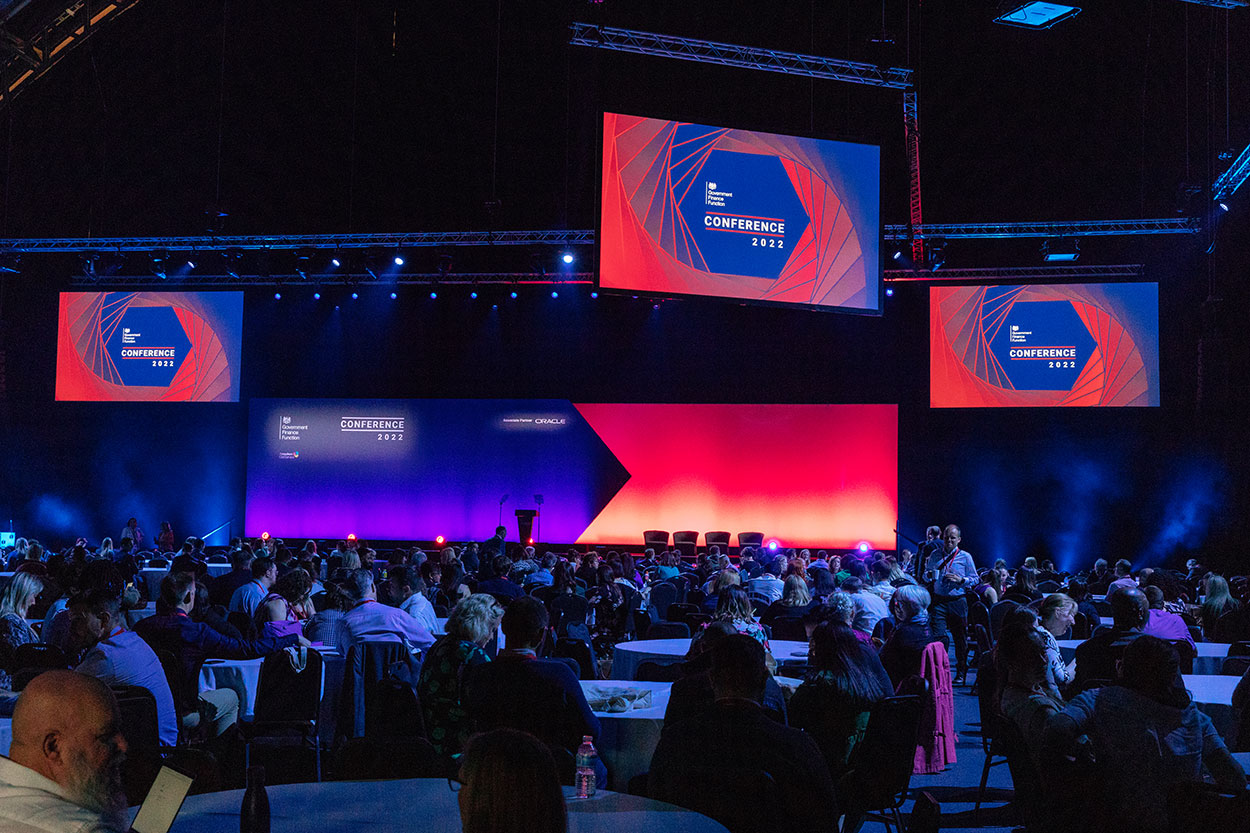
HM Treasury
Find out how we used audience profiling to create the ultimate hybrid experience for the Government Finance Function.
Case Study
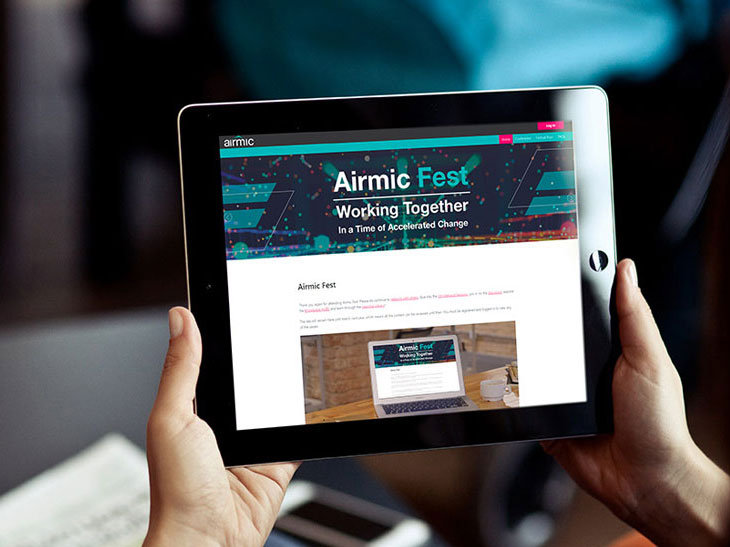
Airmic
Go behind the scenes to find out how we responded when Covid-19 put a stop to in-person events.
View more case studies…
What Is In-Person Event Management?
In-person event management is the end-to-end planning, production and delivery of live events that bring audiences together physically — whether that is two hundred delegates in a single venue or three thousand attendees across a multi-day, multi-location conference programme.
The demands of an in-person event extend well beyond venue hire and catering. A global leadership summit, a regulated industry briefing, a public sector policy conference, a national sales kick-off, or a flagship awards ceremony involves audience design, content architecture, production management, logistics, supplier coordination, technical delivery and post-event measurement. These are not administrative tasks. They determine whether the event achieves its strategic purpose.
What full-service in-person event management covers.
- Design and audience profiling before venue or format selection
- End-to-end production: staging, AV, lighting, set design and technical management
- Venue sourcing, contract negotiation and supplier coordination
- Content architecture and speaker management
- Delegate registration, communications and logistics
- On-site facilitation and live contingency management
- Post-event analytics, feedback collection and stakeholder reporting
- Single agency accountable for the whole programme
WHY WORK WITH LIVE GROUP ON YOUR NEXT IN-PERSON EVENT.
Our in-person event clients share a set of common characteristics: large or geographically dispersed audiences, senior stakeholder scrutiny, compliance or communications governance requirements, and a need to demonstrate measurable return on event investment.
We also work with central government departments, regulators and public bodies, where discretion, accessibility and message consistency are not optional requirements — they are baseline expectations.
| Sector | Typical programme type |
| Financial and professional services | Investor days, leadership dinners, client engagement events, regulatory communications, executive summits |
| Technology and SaaS | Global sales kick-offs, partner summits, product launches, multi-region roadshows, annual conferences |
| Energy and infrastructure | ESG leadership conferences, executive summits, technical seminars, stakeholder engagement events |
| Government and public sector | Policy conferences, departmental town halls, sector roundtables, awards ceremonies, gala dinners |
| Regulated industries | Compliance briefings, governance communications, stakeholder engagement, leadership dinners |
| Multi-site enterprise | Annual conferences, brand activations, experiential marketing events, complex multi-day programmes |
live group in-person event services.
As one of the oldest and premiere full-service event agencies, Live Group manages your entire in-person event programme — from initial strategic brief to post-event measurement. Services cover the full planning and delivery lifecycle.
In-person Event planning
and consulting
Working with our expert event team to define the format and success metrics to design an experience that delivers for you and your audience. No matter the brief complexity, this phase is where we reduce delivery risk and make sure the whole programme is delivering value.
AudienceDNA Audience Profiling
With AudienceDNA, we profile your audience and map preferences and unique learning, networking & communication styles. This informs every design decision that comes after, from content design to floorplan to networking opportunities, creating an event experience that works for exactly who is in the room. For corporate clients managing a range of delegates across all levels of seniority, language and function, AudienceDNA is the industry-first tool that brings everyone together.
EVENT PRODUCTIOn & technical management
Full AV & production for in-person events. Expert level staging, set design, lighting and content with a team on-hand to bring it all to life. Our production pros will handle your multi-day programme, global roadshow, streaming or any of the logistic management that the biggest events require. Whether you’re running your annual global conference for 5000 delegates, an executive summit for a handful senior leaders, or a luxury awards ceremony and dinner, the production quality will be the same expert standard.
Venue Sourcing and Supplier Management
End-to-end venue sourcing from brief to contract, including technical site assessment, commercial negotiation and accessibility review. Full supplier coordination across the event vendor ecosystem — AV, catering, security, signage, entertainment, transport and accommodation — managed within a single accountable relationship. For enterprise clients with sustainability commitments, venue selection includes environmental assessment and supplier sustainability criteria.
Delegate Management and Communications
Registration, delegate communications, agenda personalisation, speaker logistics and on-site delegate management. For large-scale conferences and annual events with complex delegate groups — multiple seniority levels, international attendees, VIP and standard access tiers — delegate management requires the same rigour as production management. We apply the same operational standards to both.
Content Architecture and Speaker Management
Working with communications and content leads to design session sequencing, narrative architecture and energy management across multi-day programmes. Speaker sourcing, briefing, rehearsal management and on-day logistics. For leadership summits, town halls and seminars where the quality and credibility of speakers is material to the event’s objectives, speaker management is a strategic function — not a logistics task.
GET IN
TOUCH.
Whatever your question or enquiry,
we’d love to hear from you and help.
What Should I Consider When Planning a Large-Scale In-Person Event?
In-person event planning at enterprise scale is more demanding than the same event at smaller scale — not simply because there are more delegates, but because the interdependencies between decisions compound. A venue decision affects production options. A content sequencing decision affects delegate flow. A catering format affects energy management. Every significant planning choice has downstream consequences that need to be managed as an integrated system.
The considerations that most often determine whether a large-scale in-person programme succeeds or underperforms are:
- Define the strategic purpose before selecting a format or venue. The most common planning error is beginning with logistics — venue shortlisting, date confirmation — before the event’s strategic objectives are clearly defined. Purpose should drive format; format should drive logistics.
- Set realistic timelines for each production stream. Multi-day annual conferences and large-scale leadership summits require longer lead times than equivalent single-day events. Content development, supplier procurement, delegate communications and technical rehearsals add planning time that is frequently underestimated. For complex briefs, a four-to-six month planning horizon is realistic.
- Build accessibility in from the brief. Accessibility requirements — step-free access, hearing loops, captioning, dietary provision, neurodiverse-friendly environments — are significantly more expensive and disruptive to retrofit than to build in at the design stage. For public sector clients and regulated industries, accessibility compliance is not discretionary.
- Agree engagement KPIs before the event. Post-event reporting is only useful if success metrics were defined in advance. Establish what success looks like for this event — and ensure the measurement framework is in place to capture it.
- Assign clear accountability across the full programme. The most common operational failure in large-scale event delivery is divided accountability — one supplier for venue, another for production, a third for content. Full-service event planning with a single agency accountable for the whole programme substantially reduces delivery risk.
- Plan for sustainability from the brief. For organisations with ESG commitments, sustainability planning should be integral to venue selection and supplier coordination — not a retrospective calculation.
| In-person event planning checklist for enterprise procurement |
| Strategic objectives defined before venue or format selection |
| Realistic timeline established across all production streams |
| Accessibility requirements confirmed and built into the design brief |
| Engagement KPIs agreed and measurement framework configured accordingly |
| Sustainability criteria included in venue assessment and supplier selection |
| Single-agency accountability confirmed across strategy, production and logistics |
| Delegate management scope defined — registration, communications, VIP tiers |
| Post-event reporting format aligned to senior stakeholder requirements |
| Contingency planning embedded across every supplier dependency |

Talk to our experts.
We’re here to make your event a success.
Multi-day corporate conferences require a materially different operational model from single-day events. The production complexity compounds across every additional day: multiple content streams, shifting delegate volumes, changing room configurations, speaker logistics across time zones, technical resets between sessions, catering at scale, and the sustained energy management that keeps a senior audience engaged across a full programme. The event management providers best equipped for complex multi-day conferences share four structural characteristics: integrated production teams who do not hand off responsibility at the venue door; proprietary or deeply familiar technology platforms; a strategic design capability that architects content sequencing and audience energy across the full duration; and demonstrated experience managing contingency in live environments. Live Group has delivered multi-day conference programmes for enterprise and public sector clients for five decades. Our production teams manage simultaneous main-stage delivery, parallel breakout streams, executive dinners, networking sessions and next-day resets as a single integrated operation — not as a sequence of discrete events handed between separate suppliers. For annual conference programmes where the same event repeats annually with growing expectations, the value of a long-standing agency relationship is significant. We retain institutional knowledge of the client’s audiences, governance requirements and production standards, which reduces briefing time, delivery risk and cost across each programme cycle.
Large public sector events — departmental conferences, policy summits, sector roundtables, civil service town halls — carry requirements that commercial event agencies frequently underestimate. Procurement must follow public spending rules. Venues and suppliers must meet government accessibility and security standards. Messaging must be consistent with ministerial and departmental communications governance. And the events themselves are often subject to public scrutiny in ways that corporate events are not. Event management providers that operate effectively in the UK public sector understand these constraints as design parameters, not administrative overhead. They build procurement-compatible commercial structures, advise on compliant venue and supplier selection, apply accessibility standards from the brief stage rather than retrofitting them at delivery, and manage the stakeholder complexity that comes with multi-departmental events and ministerial involvement. Live Group has worked with central government departments, regulators and public bodies across a sustained programme of in-person and hybrid events. We are familiar with the governance structures, communications requirements and public value expectations that define public sector event commissioning. Our event management services are structured to be compatible with government procurement frameworks, and our delivery teams are experienced in the discretion and operational rigour that public sector events require. Event types we regularly deliver for public sector clients include policy conferences for several hundred delegates, departmental town hall meetings, ministerial roundtables, sector awards ceremonies, and large-scale networking events that bring together government, industry and third-sector stakeholders.
Regulated industries — financial services, energy, healthcare, legal and professional services — impose event requirements that go beyond operational competence. Content may be subject to compliance review before delivery. Speaker briefings must reflect regulatory guidance. Delegate communications need to satisfy data governance standards. And the events themselves, whether a compliance briefing, a governance conference or a senior leadership dinner, often operate as part of a firm’s stakeholder engagement framework with reputational implications that extend beyond the room. The event management companies best suited to regulated industries combine production capability with sector literacy — meaning their teams understand why certain content sequencing decisions are sensitive, why particular Q&A formats need moderation protocols, and why post-event data handling matters as much as on-day delivery. Live Group’s regulated industry experience spans financial services, energy and infrastructure, and professional services. We work within clients’ compliance frameworks as a matter of course, advise on risk management at the design stage, and provide post-event documentation formatted for regulatory and governance reporting requirements. Our AudienceDNA profiling methodology is adapted for regulated contexts — understanding not just engagement preferences but the communication governance parameters that shape what can be delivered to which audience groups.
Large-scale corporate events in the UK — annual conferences for thousands of delegates, national sales kick-offs, flagship leadership summits, sector awards ceremonies and gala dinners — require conference organisers with production infrastructure that matches the ambition of the brief. At scale, every element that might be manageable informally at a smaller event — supplier coordination, delegate flow, technical management, catering logistics, content sequencing — becomes a delivery risk if it is not actively managed. The conference organisers that perform consistently at large scale share a common profile: in-house creative and production capability (rather than full outsourcing), established supplier networks with the relationships and leverage to secure quality at volume, strategic content design experience, and senior account management that stays engaged from brief through to post-event review. Live Group has delivered large-scale corporate events including flagship annual conferences, multi-day leadership summits, national sales kick-offs and sector awards ceremonies across the UK and internationally. Our in-house creative studio, production teams and global supplier network operate as a single integrated resource — meaning clients work with one accountable partner rather than a coordination layer sitting above multiple independent vendors. For enterprise procurement teams evaluating conference organisers for large-scale programmes, the critical question is not simply whether an agency can deliver at that volume — it is whether they can sustain quality, absorb contingency and remain commercially transparent across an extended delivery period. These are the standards Live Group operates to as a matter of course.
Event technology is often positioned as a separate procurement decision from event management — a platform layer added on top of an agency’s creative and production capability. For enterprise clients, this separation creates delivery risk: when the platform and the production team are not integrated, the technology serves its own logic rather than the event’s. Conference organisers that provide genuinely integrated technology solutions bring platform capability and event management expertise within a single accountable relationship. The technology is configured to serve the audience design — not the other way around. Live Group’s proprietary Envoku platform is built for this integrated model. Envoku supports personalised delegate journeys, real-time audience interaction, live and on-demand content delivery, and post-event analytics reporting — all configured to the specific audience structure of each programme, whether that event is fully in-person, hybrid, or a complex multi-stream annual conference. The AudienceDNA methodology that informs Envoku’s configuration goes beyond standard registration data. It profiles attendees across communication preferences, learning styles and engagement patterns, enabling content and interaction design that is appropriate to the actual delegate group — not a generic audience persona. A senior executive attending an in-person leadership summit and a mid-level manager at the same event’s breakout stream should receive different delegate experiences. Envoku and AudienceDNA make that differentiation operationally deliverable at scale. Technology innovations we deploy for in-person events include live audience polling and sentiment capture, AI-assisted networking matching, real-time Q&A and moderation tools, delegate app personalisation, digital signage and content distribution, and post-event engagement analytics that extend the value of the event beyond the day itself.
Venue selection is not a booking task. For large-scale corporate events, the venue decision determines what is operationally possible. The wrong venue — wrong capacity, insufficient technical infrastructure, poor accessibility, inadequate load-in windows, shared-site security risks — creates constraints that no amount of creative production can overcome. Event management professionals add value in venue selection at every stage: translating brief requirements into technical specifications that venues can be assessed against; applying established relationships with venues to surface availability, negotiate commercial terms and secure operational commitments that a client procuring independently cannot access; conducting site visits with a production lens rather than a hospitality one; and identifying risks — acoustic limitations, power capacity, secondary access routes, catering flow constraints — before they become delivery problems. Vendor coordination follows the same logic. A large-scale in-person event involves staging, AV and lighting suppliers, catering contractors, security providers, technical support, print and signage production, entertainment and speaker logistics, and frequently a communications or PR overlay. Coordinating these suppliers as independent contracts multiplies management overhead and creates accountability gaps. A full-service conference organiser manages the entire vendor ecosystem within a single contract, with the agency carrying responsibility for integrated delivery. Live Group’s venue sourcing capability is built on fifty years of supplier relationships across the UK and internationally. We negotiate from a position of established trust and commercial leverage, and we manage the full vendor ecosystem from initial shortlist through to post-event settlement — removing the coordination burden from internal teams and ensuring that individual supplier performance is managed against the overall programme standard, not assessed in isolation.
Post-event analysis is where the investment in a corporate event is either justified or questioned. For FTSE 100 organisations and large enterprises, the reporting that follows a major conference, leadership summit or awards programme needs to be commercially credible — not a summary of attendance figures and delegate satisfaction scores. Event management companies that operate at enterprise level provide post-event analysis that connects event outcomes to business objectives agreed at the briefing stage. That means defining measurement frameworks before the event, configuring data capture during delivery, and producing post-event reports formatted for the stakeholders who will review them — typically senior communications, HR or commercial leadership — not for the event team alone. The metrics that matter differ by event type and objective. For a national sales kick-off, relevant post-event indicators might include delegate engagement scores by content stream, knowledge retention on product messaging, and pipeline activity in the weeks following the event. For a leadership summit, the relevant outputs might be alignment scores on strategic priorities, qualitative feedback from senior attendees, and media coverage generated. For an awards ceremony or gala dinner, the focus might be on client relationship indicators and brand perception data. Live Group provides post-event analytics and reporting as a standard component of every programme. Our Envoku platform captures delegate engagement data — session participation, content interaction, networking activity and satisfaction indicators — across both in-person and digital touchpoints. Reports are produced in formats appropriate to senior stakeholder review, calibrated to the success metrics agreed at briefing, and include recommendations for future programme design based on what the data shows. We also manage structured delegate feedback collection — from real-time pulse surveys during the event to post-event NPS and qualitative debrief processes — and integrate feedback findings into a programme review that informs the next event cycle. For clients running annual conferences or recurring leadership programmes, this feedback loop is a material input to continuous improvement.