The panel discussion is one of the most persistent formats in the events industry, and one of the most frequently misused.
Done well, a panel discussion generates genuine dialogue, surfaces unexpected perspectives, and leaves an audience with something they could not have got from a keynote or a whitepaper. Panel discussions done badly, it is four people agreeing with each other from a raised platform while a moderator works through a list of prepared questions and the audience checks their phones.
The gap between those two outcomes is not about the quality of the panellists. It is about design.
Why most panel discussions underdeliver
The moderator is the single biggest lever in a panel discussion. A moderator who treats the role as traffic management will produce traffic-managed conversation. A moderator who treats it as intellectual stewardship will produce something closer to genuine inquiry.
The difference in practice is significant. A traffic-managing moderator asks the next question on the list when the previous answer finishes. An intellectually engaged moderator listens for the moment of productive tension, the half-formed thought, the point of disagreement that a panellist glossed over, and pulls on it.
This requires a moderator who has done genuine preparation: not just reading speaker biographies and researching the topic, but forming their own view, identifying where the panellists are likely to diverge, and deciding in advance which disagreements are worth surfacing and which are peripheral.
It also requires a moderator with the confidence to abandon the prepared structure when something more interesting is happening. A question list is a safety net, not a script.
The Attention Economy & Modern Audiences: How to Cut Through the Noise
Download the Attention Economy Report 2026
Design panels for disagreement
The most common reason panels feel flat is that the panellists have been selected and briefed to present a coherent, complementary range of views. This is understandable. Organisers want to avoid conflict, and clients want their speakers to look authoritative rather than combative.
But productive disagreement is not the same as conflict. Two panellists who genuinely hold different positions on a question, and who are given the space to articulate and defend those positions, generate far more energy than four panellists converging on the same conclusion from slightly different angles.
When curating a panel, look for substantive differences: in professional background, in sector experience, in philosophy, in what they have actually seen work and fail. Then brief the moderator to surface those differences rather than smooth them over.
Some of the best panel moments come when a moderator turns to a panellist and says, directly: “You’ve taken a different approach to this. Do you agree with what’s just been said?” That is not provocation. It is good chairing.
Change the physical configuration of your panel
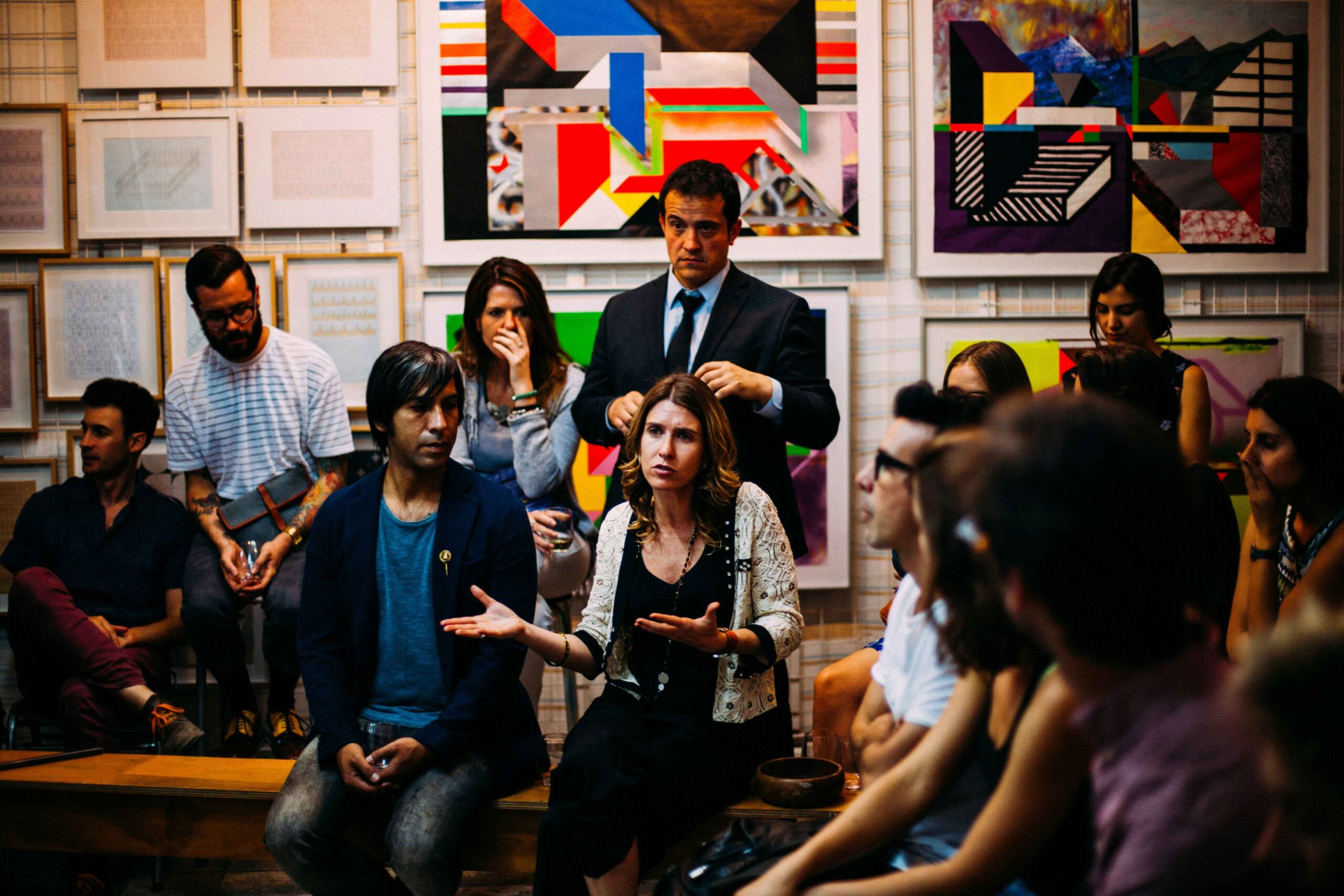
The traditional panel format places speakers at a table or in a row of chairs, facing the audience. This arrangement makes it harder, not easier, for panellists to talk to each other. They are oriented towards the room, and conversation naturally flows through the moderator rather than between participants.
A simple change in configuration can shift this significantly. Placing panellists in a tighter semicircle, or around a table where they can make natural eye contact with each other, encourages lateral conversation. It signals to the panellists that they are expected to engage with each other, not just respond to questions.
This is a small intervention with a disproportionate effect on the quality of dialogue. When people can see each other properly, they listen differently.
Shorten the opening statements for panel discussions
Many panels begin with a round of introductions in which each panellist gives a two-to-three minute summary of their background and current thinking. By the time the last person has finished, eight to twelve minutes have passed and the audience has received four pieces of information they could have read in the event programme.
If context-setting is necessary, do it briefly and selectively. One focused question to each panellist, designed to establish their particular angle on the topic, is more efficient and more interesting than a full biographical introduction. Better still, have a short pre-recorded or written introduction for each speaker and give the opening minutes to a provocation or a point of genuine disagreement rather than to scene-setting.
The conversation is the content. Get to it faster.
Use the audience differently
The standard approach to audience participation is to reserve ten minutes at the end for questions. This rarely produces the best questions, because the audience has spent the preceding forty minutes as passive observers rather than active participants.
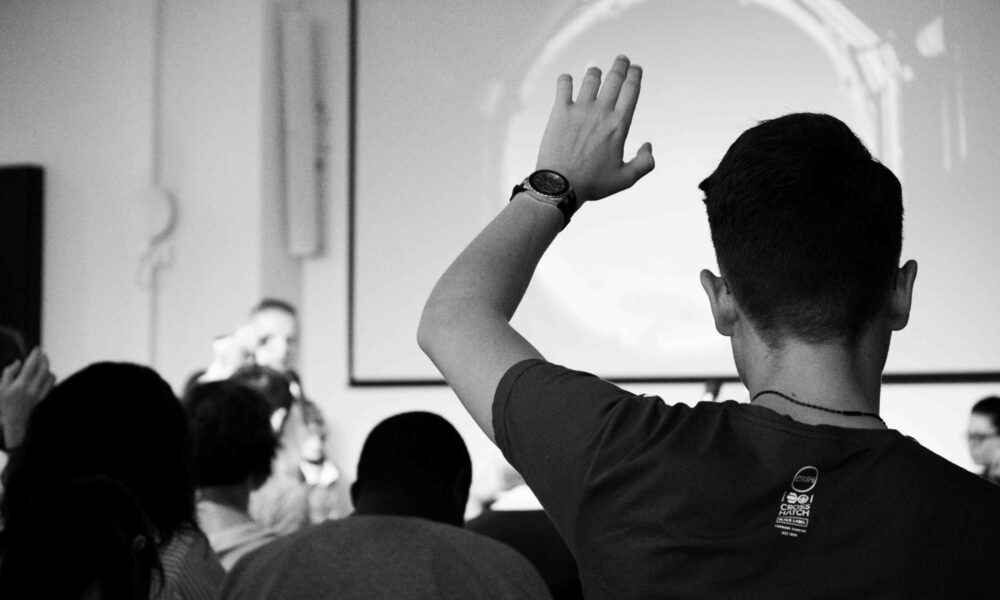
There are more effective models. Polling the audience before the panel begins, on the central question under discussion, gives the moderator live data to work with and signals to delegates that their views are part of the conversation. Inviting brief reactions from the floor at a mid-point in the session, rather than only at the end, maintains energy and prevents the audience from mentally checking out. Small group discussion among delegates for two or three minutes before questions open tends to surface better, more specific questions than cold individual contributions.
The principle is the same in each case: the more the audience is engaged as participants rather than spectators, the better the quality of what comes back into the room.
Brief your panellists properly
Most panellist briefings are informational: here is the topic, here is the format, here is how long you have. Very few briefings are conversational: here is what we are hoping to provoke, here is where we think the most interesting tension lies, here is what the audience most needs to leave with.
A proper briefing should include a conversation between the moderator and each panellist, not just a document. It should surface any areas of genuine disagreement so that panellists arrive prepared to engage with them rather than surprised by them. It should also be honest about what the session is for: if the organiser wants a robust, candid discussion, the panellists need to know that is what is expected of them.
Panellists who feel well prepared and well briefed take more risks in the room. They are more likely to challenge, more likely to concede a point, and more likely to engage with the discussion rather than retreat to rehearsed positions.
When is the format is the wrong choice for a panel discussion?
The panel discussion is not always the right tool. If the goal is to transfer a significant body of knowledge, a well-structured keynote or a facilitated workshop will do it more efficiently. If the goal is to reach a collective decision or recommendation, a structured working session will produce better outputs. If the goal is to showcase a single person’s expertise, a fireside chat or interview format is more focused and often more compelling.
The panel format is at its best when there is a genuinely contested question, a group of people with meaningfully different perspectives on it, and an audience that stands to benefit from watching those perspectives tested against each other in real time.
When those conditions exist, a well-designed panel is one of the most powerful formats available. When they do not, the format tends to expose its weaknesses rather than its strengths.
The standard worth holding for successful panel discussions
The test of a panel discussion is simple: did the conversation go somewhere that none of the participants could have predicted at the start? Did the audience hear something they will still be thinking about tomorrow? Did the panellists themselves learn something from each other?
If the answer to those questions is yes, the format has done its job. If the answer is that it was fine, broadly informative, reasonably well-managed, and finished on time, there is room to do better.
Most events can afford a panel that is merely adequate. The best events treat the format as an opportunity to model exactly the kind of thinking they want their delegates to take back into the world.
Final Thought: Rethinking the Event Planning Timeline
The question is no longer just how long does it take to plan an event.
A better question is: how effectively can you deliver impact within the time available?
Because in today’s environment, the ability to work within a compressed event planning timeline is not a contingency skill. It is a competitive advantage.
And those who master how to plan an event quickly will not just keep up with demand, they will set the standard for what modern events look like.
This article summarises some of the key themes from our Event Clinic Webinar.
Get in touch with the Live Group team to discuss how we can support your next event, whatever the timeline.
Get the latest report on what’s causing the attention recession, and how to win it back.
Ready to take the stress out of event planning?
Live Group helps organisations design and deliver personalised event experiences that engage audiences and achieve results. Contact us to discuss your next event.