
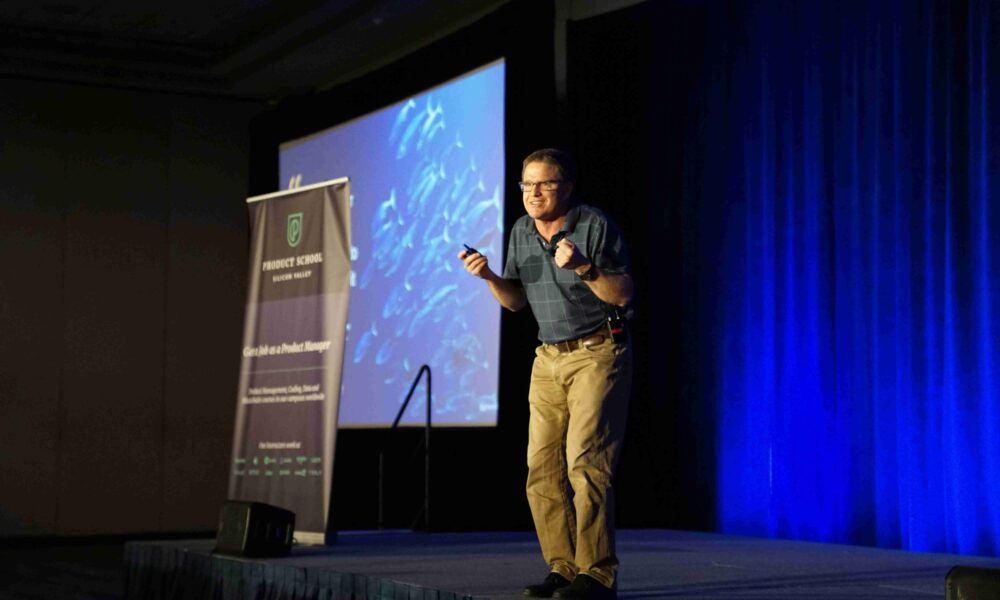
Behind every successful public speaker is a set of practical presentation skills that turn attention into real connection and control of the room.
At a leadership summit at ExCeL London, a first-time C-suite keynote speaker walked to the lectern in front of 800 delegates and went blank. Not slightly fuzzy. Completely, terrifyingly blank.
Five seconds passed. Then she stepped away from the lectern and said: “I’m terrified. This is my first time up here and I’ve forgotten my opening line. But I remember why I’m here, so let’s start with that instead.”
The room laughed with her, not at her. The CFO in the front row leaned forward. The tension dissolved. She delivered one of the best sessions of the day, not because she was perfect, but because she was real.
That moment captures something important: the most powerful thing a speaker can do is not perform flawlessly. It is to connect genuinely. This guide gives you the practical tools to do both.
The Core Principle: Space Is Everything
The single most important concept in live delivery is space.
Think of a presentation like music. The notes matter, but it is the spaces between the notes that create emotion, anticipation, and meaning. The same sentence delivered without pause is a wall of words. Delivered with deliberate space, it carries weight.
This is the foundation of the Two-Second Rule. At the end of each major point, pause properly. Count it internally: one second, two seconds. In the moment, with adrenaline running, it will feel like an eternity. To the audience, it reads as confidence. It signals ownership of the stage, the moment, and the message.
The pause also breaks what can be described as the panic cascade: one filler word leads to faster speech, which leads to more fillers, which leads to breathlessness, which produces the thin, high voice that signals distress to any audience. The deliberate pause is the reset. It costs nothing and changes everything.
The Attention Economy & Modern Audiences: How to Cut Through the Noise
Download the Attention Economy Report 2026
Your Body Is Part of Your AV Kit
Presenters routinely check their slides, test their microphone, and confirm their clicker is working. Far fewer treat their physical presence with the same rigour. Yet body language communicates before a single word is spoken.
Foundation stance
Feet hip-width apart, weight evenly balanced. The detail that actually makes a difference: press your big toes gently into the floor. This small physical cue prevents the unconscious swaying that adrenaline produces. The result is a speaker who looks rooted rather than rigid.
The shoulder roll reset
Roll the shoulders back once, then consciously drop them. This opens the chest, which invites deeper breathing, which slows the heart rate, which tells the nervous system that the situation is safe. Done in the wings before walking on, this is a reliable physiological reset.
Eye contact: the Lighthouse Method
The common advice to look over heads or find a single friendly face produces either disconnection or uneven engagement. A more effective approach is to sweep deliberately: left section, hold for a complete thought; centre, deliver a point; right, land a conclusion. Then cycle back. Each person in the room experiences the sensation of a direct, personal conversation. The technique is systematic, but the effect is intimate.
The Gesture Box
Imagine an invisible frame from the shoulders to the hips. Keep 80% of gestures within this frame. It reads as controlled and intentional on stage, and it also stays within camera frame for recorded or hybrid events.
The advanced application of gesture: move before the word, not during it. Show “huge” with your hands, then say “huge.” The gesture primes the brain; the word lands with double the impact. The body becomes a living visual aid rather than background noise.
Three Levers for Vocal Control
Most speakers use their voice on a single setting. The professionals who consistently command rooms use three levers consciously.
Pitch creates emotional colour
A low pitch establishes authority and serves as the foundation. Building pitch generates energy and momentum. Landing back low signals resolution and weight. A sentence that begins in a low register, builds through the middle, and lands low again has a natural shape that audiences follow instinctively.
Pace is the emotional controller
Rapid delivery creates energy: “Ideas were flying, whiteboards were filling, nobody wanted to go home.” Slowed delivery creates gravity: “And then we made a decision that changed the entire quarter.” Both are tools. Varying between them prevents monotony and signals meaning.
Volume creates intimacy through contrast
Modern PA systems handle projection; shouting is never necessary and sounds out of control. Clear projection reaches the back row. Deliberately dropping the volume at a significant moment draws the audience in: “Let me share what this really means for your teams.” The contrast is the emphasis.
A reliable pre-presentation warm-up: hum for thirty seconds at varying pitches. It finds your vocal resonance, warms the cords, and prevents the voice crack that cold cords and adrenaline produce on the first line.

How to Structure a Presentation That Sticks
Brilliant content without structure is quickly forgotten. Structure is not a constraint on creativity; it is the framework that lets ideas travel from speaker to audience and stay there.
Opening with intent
Great openings do not begin with twenty minutes of credits. They start in the middle of action, with a mystery, or with a character the audience immediately cares about.
Three proven approaches:
An action opening: “At 03:47 this morning, our servers crashed. Twenty million users locked out. What happened in the next four hours changed how we think about system architecture forever.”
A mystery opening: “There’s a company you’ve probably never heard of making more profit per employee than Apple, Google, and Microsoft combined. In the next fifteen minutes, I’ll show you exactly how they do it.”
A character opening: “Meet Katie. She’s our graduate project manager who everyone thought was too quiet for client meetings. Last month, she identified a £2 million budget leak using one spreadsheet and a dangerous amount of coffee.”
Immediately after the opening, tell the audience exactly what is coming. This is the Preview Paradox: by telling people what they will discover, you open cognitive loops that the brain needs to close. They must keep listening to resolve them.
A journey framework for any presentation
Eight elements, applicable from product launches to financial updates: Problem, Evidence, Insight, Solution, Proof, Application, Urgency, Action. Each element flows into the next, creating a complete arc with a beginning, middle, end, and a clear takeaway.
In practice: “Last year, our flagship event was haemorrhaging energy. Thirty-six sessions in two days; people were exhausted. Footfall was thin. Our NPS dipped below 70 for the first time in five years. When we ran heatmaps on actual attendance, not registration figures, we found that traffic clustered around just three content types. We were spending budget on rooms and content that added complexity without adding value. So we cut six traditional breakouts and doubled workshop space. Dwell time jumped 40%. The question for you: where are your zombie sessions? Your Q2 budgets are being set right now. Start with a session heatmap this week.”
The Memory Palace method
Ancient orators mapped speeches to physical locations they knew intimately. The principle works as well now. Map your talk to your venue: registration desk equals your opening; expo hall equals the problem; main plenary equals the solution; coffee stations equal supporting points; stage door equals your close. Walk through the building mentally as you present. You cannot get lost in your own building, and the technology failing cannot take that map away from you.
The Rule of Three
At every level of a presentation, three is the optimal number. Three main sections: four feels overwhelming. Three supporting points: two feels thin. Three examples: more becomes a shopping list. The brain recognises patterns, and three is the minimum that creates a pattern while remaining the maximum that holds focus.
Commanding the Physical Stage
Most speakers treat a stage like a hire car: careful not to adjust anything, hoping to return it exactly as found. Leaders treat it like they own it.
Arrive before the room fills. Walk the entire stage, corner to corner. Touch the lectern. Test the microphone height. Stand exactly where you will stand. Then go and sit in the back row, and in the front row, to see and feel what the audience will experience. This is not superstition; it is psychology. The nervous system registers: “I have been here before. This is my space.”
Stage positions carry meaning
Centre stage is the authority position: declarations, announcements, key points. Move here to say “this matters.” Stage right (the audience’s left) is the storytelling position: narratives, examples, advice. It reads as consultative and collaborative. Stage left (the audience’s right) is the challenge position: problems, tension, what is being contested.
The Triangle of Trust: open at centre, move between the thirds during the main content, return to centre for the close. Move on transitions, not mid-sentence. When delivering a key line, plant and deliver it completely still. Stillness pulls attention. Nervous pacing disperses it.
The counterintuitive truth about stage presence: the more space a nervous speaker tries to fill with movement, the smaller they look. The more calmly a confident speaker inhabits their chosen spot, the larger their presence becomes.
Keeping an Audience Engaged
Every person in an audience has three questions running on repeat: Is this relevant to me specifically? Can I follow this? Why should I care? Miss any of them for more than three minutes and you have lost the room to email and internal monologue.
Address relevance directly: “For those of you running hybrid events, this means…” Address clarity: “Let me put this in plain terms…” Address meaning: “The impact on your attendee experience is…”
Room energy follows a predictable pattern. The first three minutes peak from uncertainty and curiosity. Do not waste this on housekeeping or acknowledgements. Land value immediately. At ten minutes, attention settles as the audience relaxes; plan a pattern break here. At twenty minutes, you hit the biological attention limit; this is where your best content belongs, your biggest reveal or most engaging story. After that wall, energy returns around twenty-five minutes as people sense progress toward the end, then rises again in the final five minutes. Your strongest call to action belongs in those final minutes, not logistics.
Change something every four minutes. Pace, position, volume, medium: it does not matter what changes, only that something does. The brain wakes up when patterns break.
Create curiosity gaps: “There are three reasons this works. Two are obvious. The third will surprise you, and it’s the one that actually matters most.” The brain cannot leave an open loop unresolved. They will keep listening.
For quick audience interaction without destroying the run of the programme, use the Pulse Check: ask for a show of hands on a relevant question, scan the room, acknowledge what you see, ask a follow-up, scan again. Twenty to thirty seconds maximum, but it converts passive observers into active participants.
What to Do When Things Go Wrong
In live events, things will go wrong. The clicker will die mid-build. The microphone will develop feedback at the worst possible moment. The fire alarm will find your climactic reveal irresistible.
When something fails, you are not experiencing a disaster. You are demonstrating leadership under pressure. The FACE protocol provides the structure:
Fail gracefully
One acknowledgement, with light humour if appropriate: “Technology clearly wants to join the conversation today.”
Adapt immediately
Your real backup is not a USB stick. It is your knowledge of the content. Switch to pure delivery.
Continue confidently
Apologise once, then move forward as though this was always the plan.
Engage more deeply
Technical failures frequently create the strongest human connections. Use them rather than fighting them.
Always be ready to deliver a Core Three version of your presentation in ten minutes if time collapses: two minutes on the problem and why it matters to this audience; five minutes on the solution with one concrete example; three minutes on the specific next step. Everything else is decoration. When time is short, decoration goes first and substance survives.
A Four-Week Implementation Plan
Knowledge without practice does not transfer. A structured four-week approach builds the habits that make these techniques automatic.
Week one
Pick one fundamental only. Pausing, eye contact, or gesture control. Apply it in every conversation, meeting, and call during the week. Repetition in low-stakes environments builds the habit that holds under pressure.
Week two
Build one story using the journey framework. Tell it to five different people and notice what lands and what does not. Refine based on actual response, not assumption.
Week three
Command one room deliberately, whether a team meeting or a client pitch. Apply the Triangle of Trust, own your positions, and notice the difference in how the room responds.
Week four
Create one pattern break, a curiosity gap, a demonstration, or a micro-interaction. Watch what happens to the energy in the room when the pattern changes.
After four weeks, combine the elements. Do not chase perfection. A presentation delivered with genuine connection consistently outperforms one executed flawlessly but without warmth.
Final Thought: Rethinking the Event Planning Timeline
The question is no longer just how long does it take to plan an event.
A better question is: how effectively can you deliver impact within the time available?
Because in today’s environment, the ability to work within a compressed event planning timeline is not a contingency skill. It is a competitive advantage.
And those who master how to plan an event quickly will not just keep up with demand, they will set the standard for what modern events look like.
This article summarises the key themes from our webinar on presentation skills and stage presence.
Get in touch with the Live Group team to discuss how we can support your next event, whatever the timeline.
Get the latest report on what’s causing the attention recession, and how to win it back.
Ready to take the stress out of event planning?
Live Group helps organisations design and deliver personalised event experiences that engage audiences and achieve results. Contact us to discuss your next event.
Nerves cannot be eliminated, but they can be managed and redirected. Physical techniques including the shoulder roll reset, pressing your big toes into the floor, and deliberate slow breathing activate the parasympathetic nervous system and reduce the physical symptoms of anxiety. The Two-Second Rule breaks the panic cascade by interrupting the pattern of rushing that nerves produce. Arriving early and walking the stage before the audience enters removes the unfamiliarity that amplifies anxiety.
Trying to fill every second with sound. Silence is interpreted as incompetence by nervous speakers and as confidence by audiences. The instinct to keep talking through transitions, to apologise for pauses, and to speed up under pressure all work against the speaker. Learning to use deliberate silence is the single change that most quickly improves perceived authority on stage.
The biological attention limit for a single content block without a pattern break is approximately twenty minutes. The most effective presentations plan a significant engagement point at or before that mark, whether a story, a question, a demonstration, or an interaction. Presentations longer than twenty minutes without a pattern break lose a significant proportion of the audience’s attention regardless of content quality.
Use the eight-element journey framework: Problem, Evidence, Insight, Solution, Proof, Application, Urgency, Action. This structure works for any professional context because it maps to how audiences naturally process information. It establishes why something matters before presenting what to do about it, and it closes with a specific next step rather than a vague conclusion.
Vary pace, volume, position, and medium every four minutes. Each change resets the audience’s attention. Deliberate movement between stage positions, not nervous pacing, creates physical energy without exhaustion. Interaction with the audience, even in its briefest form, distributes the energy load and prevents the vocal and physical fatigue that comes from sustained solo performance.