
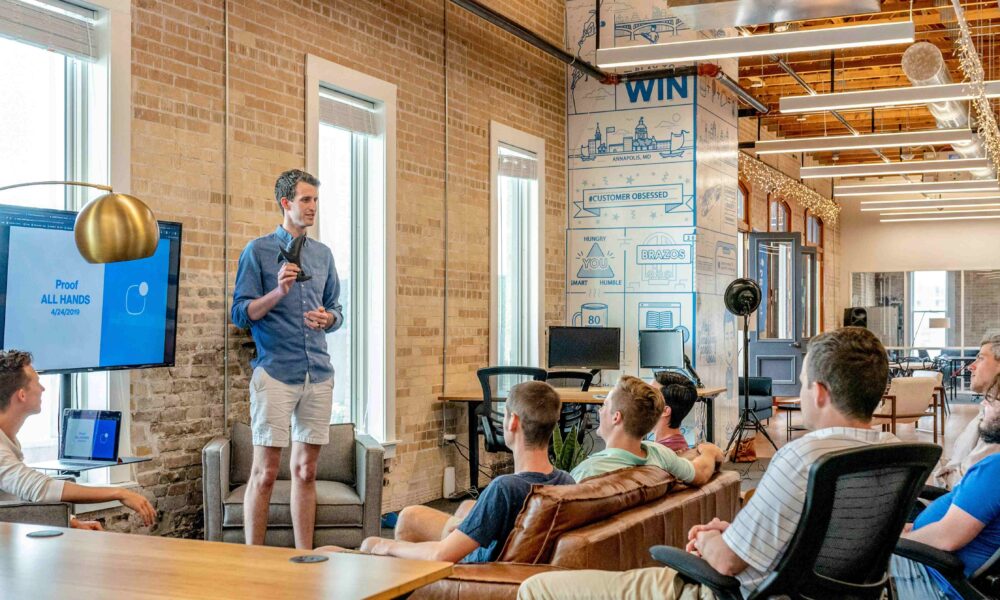
If your leadership team rarely gets in a room together, how can you expect alignment, clarity, or momentum?
Let’s begin with the most glaring question: what actually is a leadership conference?
A leadership conference (or leadership summit, leaders conference – you’ll hear all sorts of variations but they’re ultimately the same thing) is where decision-makers step out of the day-to-day and focus on the bigger picture. Strategy, direction, culture, risk, growth. The things that don’t fit neatly into one call.
You’ll usually find a mix of formats:
- Keynotes and presentations
- Small-group discussions
- Executive meetings or workshops
- Informal conversations that somehow become the most valuable part
Some are large-scale, like global leadership summits. Others are more focused, an executive meeting offsite, a leadership dinner, or a quarterly strategy session. The scale can depend on company size and objective of the event.
Despite the variety of shapes and sizes leadership conferences can take, the purpose is consistent: to create space for better thinking and better decisions.
It’s important to get the right people in the room, it’s even more important that the event changes what happens after they leave.
In short: a leadership event gives leaders the time and structure to think clearly, together.
Why do so many executive meetings fall flat?
A lot of leadership time is already spent in meetings, but the problem is a lot of it goes nowhere.
Research shows senior leaders spend more than two days a week in meetings. Across organisations, meetings can swallow up at least 15% of total working time – and you may find, in your organisation, that figure is far higher.
That is a huge strategic problem when many meetings feel like:
- Meetings that drift
- Conversations that repeat
- Decisions that don’t quite land
- Energy that drops instead of builds
It’s not that meetings don’t matter, because they do. There’s even evidence linking meeting quality to things like innovation and market performance. The issue is how they’re structured.
Most executive meetings focus on running the business: status updates, performance reviews, reporting. This is all necessary to successful business operations. But these meetings seldom create the conditions for meaningful change within the organisation.
That’s where a well-designed leadership conference steps in. It deliberately shifts the focus from reporting to thinking and growing.
Put simply: day-to-day meetings keep the engine running. Leadership events decide where the car is going.
The Attention Economy & Modern Audiences: How to Cut Through the Noise
Download the Attention Economy Report 2026
What do leadership conferences actually do for an organisation?
The value of leadership summits isn’t always obvious on a spreadsheet.
A strong leadership event can:
1. Create strategic clarity
When leaders step away from operational noise, priorities can sharpen. Decisions get made faster, and with more confidence. It’s the difference between reacting and choosing.
2. Strengthen trust
You can’t build real trust over back-to-back video calls. It happens in the gaps, between sessions, over dinner, during honest conversations. A leadership dinner or informal session often does more for alignment than a dozen formal updates.
3. Encourage better, deeper thinking
Being in physical space and having time and presence changes how people engage. Fewer distractions, more depth and less performative behaviour. It means leaders get the space to think and start asking better questions.
4. Connect teams that rarely interact
In larger organisations, departments operate in silos. A leadership summit is chance to break that pattern by getting department leaders, maybe from different regions, in the room together. Someone from finance hears directly from operations. Marketing understands product challenges. New ideas surface because different perspectives finally meet.
5. Build momentum that carries forward
Finally, a good leadership meeting doesn’t end when people leave. It creates a sense of direction and urgency. People go back knowing what matters, why it matters, and with plenty of good ideas for driving business interests forward.
In essence: leadership conferences turn scattered thinking into shared direction.
How do you organise a leadership conference?
Planning a leadership conference is more than just logistics. You need a venue, travel, speakers, agendas – but that’s not the hard part.
The real question is: what is this leadership event meant to achieve?
Before anything else, define:
- Is this about running the business or changing it?
- What decisions need to come out of it?
- What should people do differently afterwards?
Once that’s clear, you’ll have a clearer direction for everything else.
A few principles that make a difference:
Mix the format.
Back-to-back presentations will drain attention. Combine large sessions with small-group work, workshops, and informal discussions.
Give people a voice.
Not everyone wants to speak on stage. Some prefer roundtables, others written input. Your leadership event should offer multiple ways to contribute.
Share material in advance.
Leaders are famously time-poor, so don’t waste valuable time reading out slides. Use pre-reads so the event focuses on discussion, rather than information transfer.
Design for natural energy fluctuations.
Even for senior leadership, attention dips. Change pace, vary formats, build in space to reset.
End with clear actions.
No ambiguity. People should leave knowing what happens next, who owns what and when things are moving forward. There’s a surprising amount of discipline behind a relaxed, high-impact leadership event.
The takeaway: structure creates freedom. Without it, even the best intentions drift.
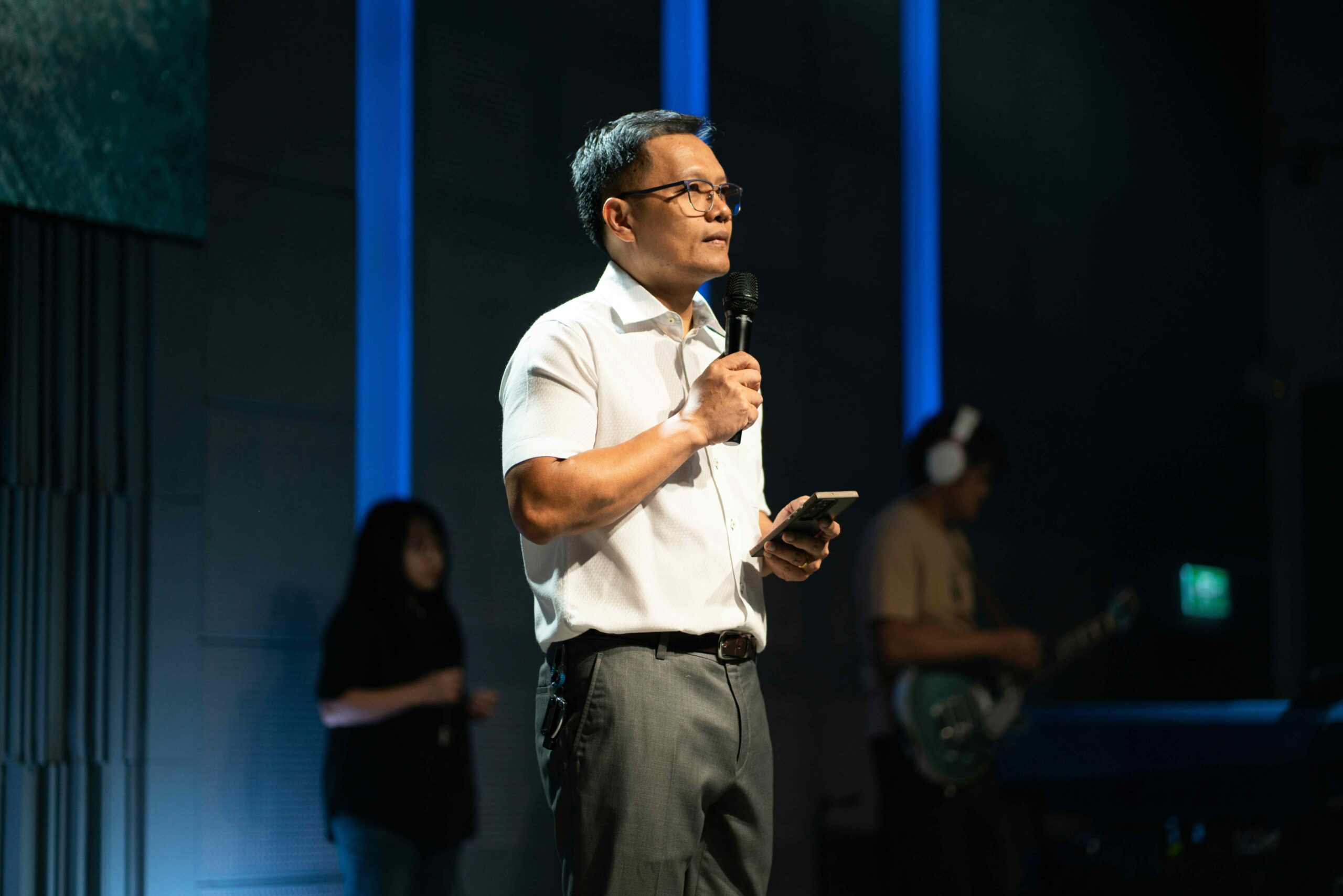
How do leadership styles influence a leadership meeting?
Different leadership styles shape how people engage at events:
- Analytical leaders want data and structure
- Vision-driven leaders look for ideas and direction
- Collaborative leaders thrive in discussion
- Reserved leaders may prefer written input
A strong leadership conference doesn’t favour one style. It accommodates all of them. That might mean:
- Balancing presentation with discussion
- Allowing time for reflection
- Encouraging input from quieter voices
- Avoiding dominance from a few individuals
If only a handful of the louder voices are contributing, you’re not getting the full value of the room.
Ultimately: the more inclusive the format, the stronger the outcome.
Do in-person leadership events still matter in a digital world?
The argument isn’t that virtual meetings aren’t efficient, but efficiency isn’t always the goal.
When the stakes are high, strategy, culture, long-term direction, presence is essential.
- You’re less distracted
- Conversations go deeper
- Relationships build faster
- Decisions feel more real
Leadership summits bring a change in how people commit to conversations. When people travel, step away from daily tasks, and dedicate time to a leadership summit, they show up differently.
That doesn’t mean everything has to be in person. Hybrid formats work well. But anchor moments, like key leadership conferences, benefit from being physical.
Digital is great for keeping things moving. But in-person moments change direction.
How do you turn a leadership conference into real business impact?
What separates a good leadership from a wasted one is whether it leads somewhere. Otherwise, could just be a well-organised pause.
Here’s what ensures your leadership conference will turn into measurable change.
Link discussions to outcomes.
Every major conversation should connect to a decision, action, or next step.
Track progress afterwards.
Use simple tools: project trackers, follow-up meetings, accountability owners.
Revisit decisions regularly.
To avoid momentum fading, build in checkpoints to keep things moving.
Measure what matters.
Not just attendance or feedback scores. Look at:
- Decisions made
- Initiatives launched
- Cross-team collaboration
- Business impact over time
The impact can feel less tangible, things like stronger trust or clearer direction, but that doesn’t mean it can’t be measured.
Post-event surveys capture sentiment in the moment, while tools like biometrics and heatmapping offer a more objective view of engagement across sessions and spaces. Event management platforms such as Envoku bring it together, tracking behaviours, interactions, and patterns over time.
In simple terms: the event is the starting point, not the finish line.
Visibility at leadership summits (and why it matters more than you think)
A leadership conference, more than being just an internal moment, can also shape how your organisation is seen externally.
Announcements, key themes, speaker insights, these can all become content. Stories, signals to the market.
And this is where working with a full-service events agency becomes valuable. As well as event planning and delivery, they’ll often:
- Write your press release
- Shape the narrative
- Distribute it to relevant media outlets
- Use their contact base to extend reach
So the impact doesn’t stop with the people in the room, but carries beyond it.
That’s when a leadership event starts influencing perception as well as performance.
Final thoughts: are leadership conferences worth it?
It’s true that leadership conferences can take time, effort and budget. They can feel like a lot to organise. Especially when diaries are full and priorities are competing.
But when done well, a leadership conference creates moments and conditions for bringing about meaningful organisational change:
- Space to think
- Clarity on direction
- Stronger relationships
- Momentum that lasts
This all turns conversation into decision, and decision into action.
Not every organisation gets it right the first time, but the ones that commit to improving how they bring leaders together tend to move faster and with more confidence.
Get the latest report on what’s causing the attention recession, and how to win it back.
Ready to take the stress out of event planning?
Live Group helps organisations design and deliver personalised event experiences that engage audiences and achieve results. Contact us to discuss your next event.