
There’s a quiet frustration running through offices and event teams alike. Amidst the endless flurry of e-mails and meetings, somehow people still say, “I didn’t get the message.”
If you run conferences, manage internal communications, work in government, or handle events alongside your “main” role, you’ve likely felt it. You’re communicating constantly. But are your communications connecting with people?
To improve communication, more tools are seldom the answer. What organisations and events need are refined communication methods, clearer thinking, and a bit of discipline.
This article explores how to improve your communication through fewer, sharper messages, whether in internal communications or at events, without turning your workplace into a monastery of silence.
What Do We Really Mean When We Define Communication Skills?
Before we leap into communication strategies, we must ask: what do we mean when we define communication skills in a professional context?
It’s not simply writing well, nor is it speaking confidently in a townhall.
Communication skills are the ability to shape a message so that the right people understand it, act on it, and remember it. That includes:
- Choosing the right channel
- Structuring the message clearly
- Timing it well
- Being explicit about what happens next
In events, this matters twice as much. You’re not only managing internal business communication methods but you’re also shaping delegate experience. One unclear instruction can derail registration and a vague briefing can throw a supplier off track. The consequences of nebulous communications reach farther than a few confused faces.
At its core, communication is precise, and precision starts with message design.
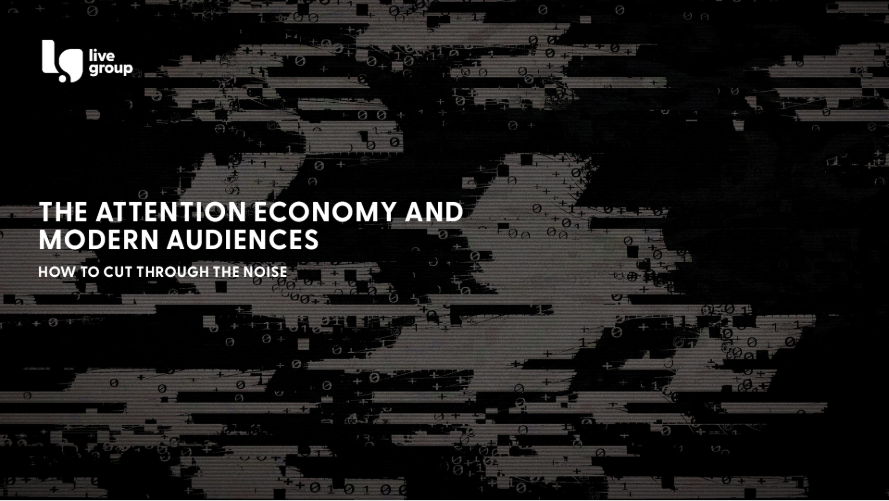
The Attention Economy & Modern Audiences: How to Cut Through the Noise
Download the Attention Economy Report 2026
Are Your Communication Methods Designed for Attention?
Experts and commentators are arguing that in the Attention Economy, we are in an Attention Recession. In other words, attention is a valuable but scarce resource.
If your subject line reads “Update” or “Quick question,” don’t be surprised when it’s ignored. Smart message design is one of the simplest strategies for effective communication (and one of the most overlooked).
Here’s what sharp communication looks like:
1. Front-load the value.
Put the key point or request in the first sentence. Not paragraph three. Not hidden in a bulleted list. If someone only reads the first line, they should know why the message matters.
2. One topic per message.
Mixing venue changes, catering updates, and budget approvals into a single email is tempting. It feels efficient, but it isn’t. It overloads the reader. Separate topics mean clearer action.
3. Clear calls-to-action.
Spell out what you need and by when. “Please confirm your attendance by 5pm Friday.” Not “Let me know your thoughts.”
4. Add context and shelf life.
If information expires, say so. “Relevant until end of Q2” tells readers how long it matters.
Here’s what this looks like when we put it all together:
Subject: Action Required: Confirm Room Change for Leadership Conference
We need approval tomorrow to move the main plenary to the Riverside Suite due to capacity limits.
The current room no longer meets fire regulations for our final delegate count. The Riverside Suite is available at no additional cost and supports our AV setup.
Please confirm approval by 3pm tomorrow (Tuesday).
Relevant until venue contract is reissued (this week only).
Strong message design reduces confusion, increases response rates, and cuts follow-up emails in half. This is based on lived experience across corporate and government teams.
In short: improve communication by respecting the reader’s time.
Is Your Event Communication Plan Overwhelming People?
An event communication plan, more than just a timeline of emails, is a sequence of touchpoints that guide attendees from save-the-date to post-event follow-up.
Too many plans rely on abundance. More reminders, posts and updates. Surely your message will land if they’re so frequent that they’re impossible to miss? Nope – this just intensifies the white noise that attendees are already dealing with.
A solid event communication plan should answer three questions at every stage:
- What does the audience need to know right now?
- What do we want them to feel?
- What action should they take?
For example:
- Pre-event: Build anticipation and clarity around logistics.
- During the event: Reinforce key themes and reduce friction.
- Post-event: Sustain momentum and prompt next steps.
If every email tries to achieve all three at once, none of them land properly.
Good event communication is like good stage lighting. You highlight what matters and dim the rest. That restraint is powerful.
Summary: A focused event communication plan improves both engagement and operational calm.

Are Notifications Running Your Team?
Let’s talk about the tyranny of the ping.
Email, Teams, WhatsApp groups, calendar invites. It’s a digital drumbeat that never quite stops. And while collaboration tools are essential, constant interruption fragments attention.
One of the most practical communication methods for modern teams is timeboxing.
Instead of reacting to every notification, schedule dedicated windows to process messages. For instance:
- Morning: 30 minutes to clear email
- Early afternoon: 30 minutes to respond to messages
- Late afternoon: 30 minutes for follow-ups
The time outside those windows should be dedicated to deep focus.
Some organisations have introduced “quiet hours” or even No Meeting days. Others establish response-time expectations – emails answered within 24 hours, chats within two hours.
And if you ask anyone who has trialled these changes, none of them will tell you it slows them down.
When teams adopt batching collectively, something interesting happens. Stress drops, clarity rises. People stop expecting instant replies at 9pm.
To improve communication, you sometimes need to communicate less frequently, but more intentionally.
Have You Audited Your Business Communication Methods Recently?
It may be uncomfortable, but it’s necessary for improved communications. Most organisations haven’t reviewed their communication flows in years.
A communication audit doesn’t need to be complex. Start by tracking:
- How many internal messages are sent weekly
- Which channels are used most
- How employees feel about volume and clarity
You might discover that project updates go to 100 employees when really only 15 need them. Or that the same announcement is shared across email, intranet, and three chat groups.
You may think over-communication is harmless, but the reality is it dilutes impact.
Some firms now treat attention as a finite resource and create an “attention budget.” That might mean limiting all-company emails to a set number per week or requiring approval for mass broadcasts. For some, this sounds draconian, but it works.
By introducing governance to communication volume, you protect clarity. You also send a subtle message: attention is valuable.
Summary: measure your communication before you try to improve it.
What Do Effective Communication Strategies Look Like in Practice?
We’ve looked at principles, here’s how we ground them in reality.
Here are examples of communication strategies that work across workplaces and events:
- Response-time contracts: Clear expectations reduce anxiety.
- Focus signals: Teams status, desk indicators, even headphones to signal deep work.
- Channel clarity: Define what belongs on email versus chat versus project boards like Trello or Asana.
- Leadership modelling: Senior leaders avoid late-night emails unless critical.
There’s a cultural layer here. If leaders say “disconnect after hours” but send midnight updates themselves, the signal is mixed. If you want to improve communication, consistency matters.
Improved communication strategies can feel bureaucratic at first. But once embedded, they reduce friction dramatically.
How Do You Improve Communication at Events Specifically?
Events amplify everything. A minor miscommunication in an office might cause mild irritation. At a live conference? It can cause queues, confusion, or reputational damage.
Here’s where event-specific communication strategies come into play:
Brief suppliers clearly and early.
Ambiguity in production schedules or speaker requirements creates chaos on-site.
Use layered messaging.
Combine signage, app notifications, and verbal announcements. People absorb information differently.
Test instructions.
If registration wording confuses one colleague, it may confuse 500 delegates.
Reinforce key themes repeatedly.
Repetition isn’t redundant when attention is divided. It’s reinforcement.
And don’t forget post-event communication. A well-crafted follow-up email, press release, or LinkedIn summary extends impact beyond the closing remarks.
Summary: improving communication at events requires clarity before, during, and after the live moment.
Where Does External Support Fit In?
Here’s a mild contradiction: sometimes the best way to improve communication internally is to bring in external perspective.
An experienced, full service events agency does more than manage logistics. They shape messaging. They refine your event communication plan. They ensure the story flows from invitation to aftermath.
And when the event closes, they’ll write the press release for you and distribute it to relevant outlets using their wide contact base – extending your message far beyond the room.
That matters for government bodies, corporate brands, and professional associations alike.
Partnering with specialists doesn’t replace internal communication skills. It strengthens them.
How Do You Start Improving Communication Today?
It doesn’t have to be with a sweeping overhaul – that can also be destabilising. Start small:
- Rewrite your next email with a sharper subject line.
- Remove one unnecessary recipient.
- Define response expectations in your team meeting.
- Review your event communication plan for clarity and timing.
Don’t look at communication as a one-off project, look at it as a gradual habit. And habits, as we know, compound.
When you improve communication at work and events, you reduce friction, build trust and create space for deeper focus. That space is where real work and meaningful engagement happens.
In the end, communication is about intention more than it’s about volume. Clear messages, clear expectations, clear outcomes.
No one’s saying that improved communication methods are easy, but they should be simple.
Get the latest report on what’s causing the attention recession, and how to win it back.
Ready to take the stress out of event planning?
Live Group helps organisations design and deliver personalised event experiences that engage audiences and achieve results. Contact us to discuss your next event.