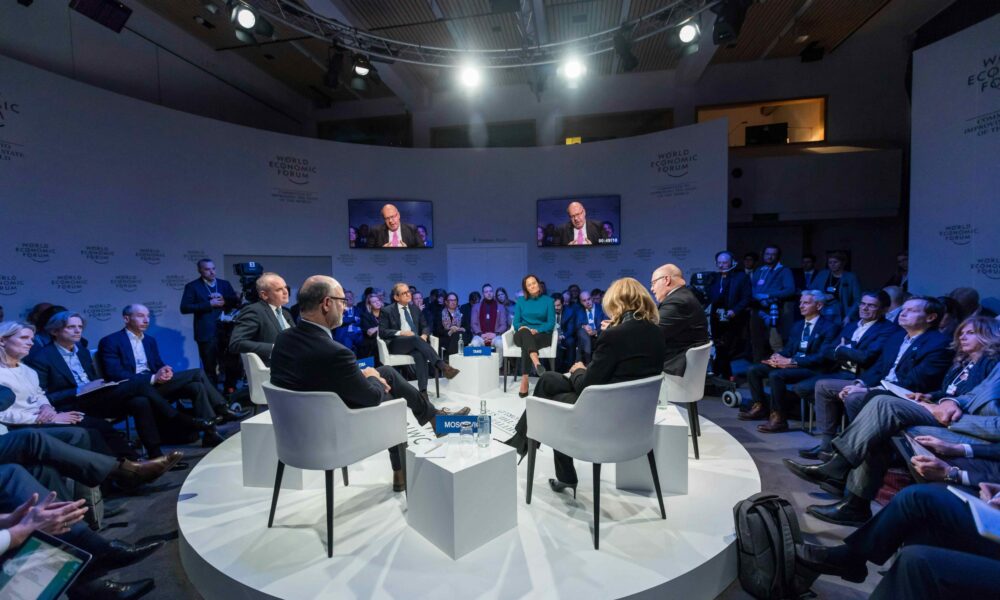
For some, it’s hard to escape the notion that hybrid events are just ‘live events with a camera’. Remote attendees watch. In-person attendees experience. And everyone pretends that’s the same thing. That version of hybrid is outdated.
A proper hybrid event doesn’t need to compromise between physical and virtual. Hybrid is a deliberate format where both audiences matter by design. When it works, remote attendees become participants with agency, visibility, and a reason to stay engaged through the whole agenda.
That’s the real challenge. Attention is fragile. Remote audiences can disappear with a single browser tab. Instead of tighter rules, the fix is structure, shared moments, and a unpredictability.
This article breaks down exactly how your event can achieve that.
B2B Event Planning Guide 2025
Download the 2026 B2B Event Planning Guide
What makes hybrid events feel equal rather than split?
A strong hybrid format treats the room and the screen as one ecosystem. Both sections of the audience can see each other. Both can speak and influence what happens next.
Visibility matters more than most planners expect. If one audience is invisible, they will feel invisible. Engagement drops quietly. Cameras, live chat walls, and moderated interaction are social proof that everyone is in the same experience.
Technology helps, but intention matters more. Every interaction has to be planned, explained, and easy to enter. Yet if everything is too scripted, the event feels clinical. Good hybrid design leaves room for small surprises, casual chats, and moments that feel unscripted.
The summary is simple: equality in hybrid events is built, not assumed.
1. Can shared networking rooms bridge both audiences?
Instead of running separate networking tracks, create hybrid networking spaces where digital and physical attendees can meet on purpose.
Set up on-site “connection booths” where in-person guests log into the platform and video chat with remote attendees. Tools like vFairs or Envoku support matchmaking based on interests and roles, which removes awkward guesswork. Both sides arrive expecting a productive conversation.
Add light structure: timed rotations, prompts, or themed rooms. Enough guidance to start a conversation, but not so much that it feels like speed dating with a stopwatch.
This format works because hybrid networking becomes mutual.
Summary: Shared networking rooms turn hybrid into a two-way street instead of two separate corridors.
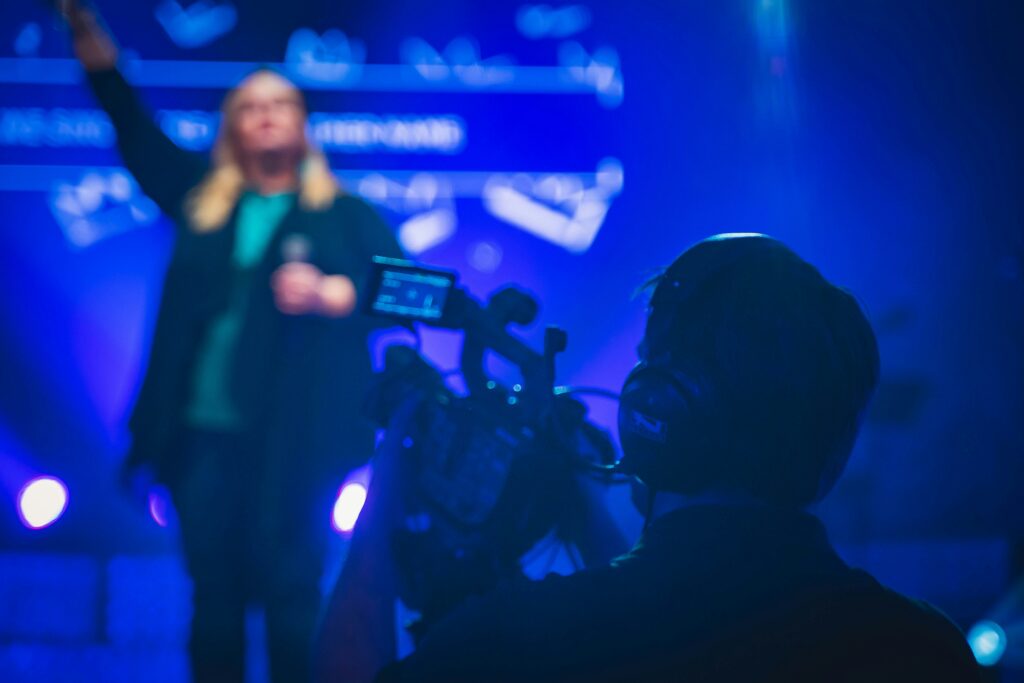
2. What happens when both audiences can see each other live?
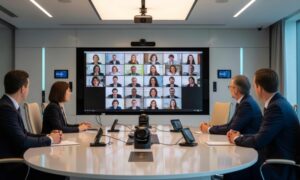
Put remote attendees on the stage visually: Large chat walls, live video mosaics, or rotating audience feeds make virtual participants visible in the venue. In-person guests see reactions, questions, and faces. Remote guests see the room responding back.
Moderators should pull questions from both sides in equal measure. A hybrid Q&A where only the room speaks is theatre, rather than meaningful interaction.
When visibility is balanced, attention follows.
Summary: Mutual visibility reinforces that both audiences are present and counted.
3. Can a persistent group chat replace hallway conversations?
Hybrid events often lose the casual corridor chat. A persistent event-wide group chat recreates some of that social glue.
Platforms like Slido, Hopin-style event chats, or integrated event apps let everyone talk in one shared stream. In-person attendees join from their phones. Remote attendees stay connected throughout sessions.
Project key moments from the chat onto venue screens. It signals that digital voices influence the room.
The chat becomes a running commentary, a help desk, and a social space all at once.
Summary: A shared chat keeps conversation alive between sessions and across locations.
4. Should breakout rooms mix virtual and in-person attendees?
Yes, as long as the tech is ready.
Hybrid breakout sessions can mix participants or run paired rooms that collaborate. A table group in the venue works with a remote group on the same task and shares outcomes live.
Simple games help: scavenger hunts, trivia, collaborative whiteboards using Miro or Mural. These activities lower social friction and create shared wins.
The key is audio clarity and facilitation. Without that, hybrid breakouts feel chaotic fast.
Summary: Mixed breakout rooms create teamwork instead of audience silos.
5. What if gifts weren’t just physical?
Sending matching welcome kits to remote attendees levels the emotional playing field. Badges, printed materials, or activity props make them feel expected, not incidental.
If the session includes exercises, ship the tools. If there’s a tasting, send samples. If there’s a game, send the kit.
Physical objects anchor digital experiences. That tactile link is surprisingly powerful.
Summary: Shared physical elements give remote attendees a sense of belonging.
6. Can gamification connect both sides naturally?
Friendly competition is a social shortcut. Create cross-audience teams where success depends on collaboration. Leaderboards, live scoring, and timed challenges keep energy high. Apps like Kahoot or custom event platforms handle scoring seamlessly.
The trick is designing goals that require input from both sides. A remote-only game splits attention, but a shared mission builds it.
Summary: Games work best when victory depends on hybrid cooperation.
7. What does hybrid-first stage design look like?
Hybrid-first staging treats the camera as another audience seat.
Speakers address the lens directly at times, not just the room. Graphics are designed for screens. Moderators reference remote reactions in real time.
Consider remote speakers alongside live ones. When both groups present and question each other, the format feels intentionally blended.
The stage becomes a shared interface.
Summary: Hybrid-first staging makes the camera a participant, not an observer.
8. Should content live beyond the event?
On-demand access is a quiet advantage of hybrid events.
Recording sessions, tagging topics, and hosting content hubs extends the life of your event. Platforms like Envoku allow gated libraries that support lead capture and long-term engagement.
For attendees, this removes pressure. They don’t have to choose between sessions or time zones.
Summary: On-demand access stretches value far beyond the live schedule.
9. How can hybrid event tools personalise the experience?
The strongest hybrid event examples adapt to their audience instead of broadcasting blindly.
Live Group uses its AudienceDNA framework to profile both in-person and remote attendees. By understanding preferences, communication styles, and engagement habits, they adjust formats in real time. Some audiences want fast interaction, while others prefer reflective sessions. The event should flex accordingly.
Hybrid doesn’t mean everyone has an identical experience, but it does mean everyone gets an appropriate one.
Summary: Personalisation ensures hybrid design matches the people attending, wherever they are.
10. Can spontaneity exist in a structured hybrid event?
It’s no longer a question of ‘can my hybrid event be spontaneous, it has to be. Surprise guest appearances, pop-up networking rooms, or informal “digital bar” spaces mimic the randomness of real events. Remote attendees should have somewhere to wander, not just somewhere to watch.
Structure creates safety, while spontaneity creates memory. Both are essential.
Summary: Planned unpredictability keeps hybrid events human.
Hybrid Event Success: Final Thoughts
Long gone are the days of hybrid events acting as temporary workarounds. They’re a format with their own grammar, rhythm, and social rules. When designed properly, they reach further, collect better data, and reduce environmental impact without shrinking the experience.
And if you’re working with a full service events agency, you gain another layer of support. They won’t just design and run the hybrid format, they’ll write the press release, position the story, and distribute it to relevant outlets through their media network. That extra visibility often matters as much as the event itself.
Hybrid succeeds when nobody feels like a backup plan. The screen and the room become one shared stage, and the event feels whole.
Download the B2B Event Planning Guide for the complete playbook to planning events in 2025-26
Ready to take the stress out of event planning?
Live Group helps organisations design and deliver personalised event experiences that engage audiences and achieve results. Contact us to discuss your next event.