Personalisation has shifted from a nice-to-have perk to a defining feature of successful events. Here’s what changed in 2025 and what it means for corporate and government event planners.
The events landscape underwent a fundamental shift in 2025. Attendees stopped settling for generic, one-size-fits-all conferences and began expecting personalised events that adapt to individual preferences, from the content they consume to the connections they make. This transformation, fuelled by evolving audience expectations and rapid advances in event personalisation technology, has made personalisation not just desirable but essential.
What Is Event Personalisation — and Why Did It Become Essential in 2025?
Not long ago, personalisation in events meant little more than addressing someone by name or offering a few session choices. By 2025, that paradigm had flipped entirely, giving rise to hyperpersonalisation in events, where experiences are dynamically shaped around attendee behaviour, preferences, and needs. Industry surveys showed that nearly two-thirds of event planners now view event personalisation as extremely or very impactful for their events.
The shift stems from two converging forces. First, attendees have grown accustomed to personalised experiences in daily life. Streaming platforms and online retailers serve up hyper-personalised recommendations finely tuned to individual preferences, and this has raised the bar for events. If a conference feels irrelevant or generic, participants notice immediately. They disengage, or skip the event entirely in favour of event experiences that feel more relevant.
Second, generational change is reshaping expectations. With digitally savvy Millennials and Gen Z comprising a growing segment of attendees, the demand for personalisation has intensified. This cohort values experiences over things and seeks authenticity. They prefer events that acknowledge their individual goals and values. An event that treats everyone the same simply won’t cut it for a generation used to curating their own experiences online.
B2B Event Planning Guide 2025
Download the 2026 B2B Event Planning Guide
Why Are Audiences Demanding Hyper-Personalised Events?
The phrase “gone are the days of one-size-fits-all events” became something of a mantra when discussing hyper-personalised events in 2025. But what does this mean in practice? What do modern audiences expect from an event?
Tailored Content and Flexible Agendas
Attendees want to choose sessions and topics that resonate with their interests or job function, rather than sit through predetermined tracks that may or may not be relevant. Industry research found that personalised agenda plans rank among the very top desired elements of an event experience, cited by 45% of attendees. Allowing participants to curate their own schedule gives them a sense of control and reinforces the value of event personalisation. It’s no surprise that 45% of attendees say they’re more likely to attend a live event if they can customise their experience.

Relevant, Targeted Communications
Personalisation begins long before anyone arrives at a venue. Modern attendees expect event communications to be personalised. Savvy organisers now segment their audience and deliver content accordingly, sending different email campaigns to senior leaders versus junior attendees, highlighting the aspects most pertinent to each. Attendees respond better when they feel the messaging speaks to them, not to a broad, faceless crowd.
Interactive, Two-Way Experiences
Audiences in 2025 showed a strong preference for being participants, not passive spectators. They expect opportunities to interact, provide input, and shape the event as it unfolds. Live polling, Q&A sessions, and crowdsourced topics have become common. Some events now allow attendees to select discussion topics for roundtables or vote on which panel questions should be addressed next, ensuring event content is personalised and aligns with what the specific audience in the room actually cares about.
Curated Networking Opportunities
Networking has always been a draw for events, but attendees now look for meaningful connections, not just volume. They expect organisers to facilitate introductions that matter. This has driven the rise of personalised networking features, including event apps that suggest people to meet based on shared interests or complementary goals. Attendees value networking that connects them with peers and experts around shared challenges, rather than superficial meet-and-greets. Personalising networking makes the often-daunting task of meeting new people more approachable and effective.
Choice and Flexibility in Format
Attendees appreciate events that offer choices in how they engage. Hybrid events with both in-person and virtual options represent one manifestation of this, but flexibility extends further. Some conference-goers prefer intimate workshops while others enjoy high-energy keynotes. Forward-thinking organisers now design personalised events with multiple formats running in parallel, letting attendees pick the style of experience that suits them.
How to use Technology to Make Event Personalisation Possible at Scale
Delivering hyper-personalised event experiences to hundreds or thousands of people might sound like an organiser’s nightmare. The saving grace has been the event technology revolution, with AI, data analytics, and intuitive platforms making it efficient to personalise at scale.
How Can AI be an Event Personalisation Engine?
AI-driven tools can analyse attendee profiles and behaviour to recommend relevant sessions, suggest networking connections, and curate content in real time. If an attendee spends time at certain booths or attends sessions on particular topics, AI can suggest similar content or networking opportunities. The result is an attendee who feels the event is actively guiding them, almost like a personal concierge.
AI has also powered accessibility and inclusion. Automated translation and captioning services enable events to personalise content for attendees who speak different languages or have hearing impairments. A session spoken in English can be live-translated into other languages, making the same content feel personalised to individuals with different needs.
Perhaps the most striking development has been AI’s ability to gauge attendee sentiment and adjust events dynamically. Using sensors and computer vision, AI can track crowd energy levels and trigger on-the-fly changes. If an audience seems fatigued, organisers can insert a break or redirect attendees to quieter spaces. This real-time responsiveness creates a feedback loop where the event adapts to the audience.
Data as the Foundation
Modern event platforms collect behavioural and preference data that underpins effective event personalisation, from registration information and session selections to on-site movements and post-event feedback. By integrating registration data with CRM systems, planners can segment attendees into personas and deliver targeted content to each group. During events, live data enables real-time adjustments. If a workshop is overflowing while another sits half-empty, the schedule can be modified to meet demonstrated demand.
How to Balance Privacy with Personalisation
With greater use of personal data comes responsibility. Attendees expect personalised service, but they also expect their information to be handled ethically and securely. Successful personalisation strategies are transparent about data use and respect opt-in preferences. Trust is the foundation: if attendees trust an organiser with their data, they’re willing to share the preferences that enable better, more personalised events.
What is the Business Case for Personalisation?
Why invest in event personalisation? Because it works. 2025 demonstrated that meeting audience expectations for personalisation yields significant returns in both attendee satisfaction and event objectives.
Higher Engagement and Attendance
Personalised content draws people in because it aligns with what they care about. When an attendee’s agenda is filled with relevant topics, they’re far more likely to be alert, ask questions, and participate actively. Events that offer custom experiences consistently see improved turnout and longer dwell times.
Better Outcomes for Hosts
Engaged attendees lead to better results for event hosts. For corporate events, higher engagement translates to better lead generation and deeper brand loyalty. Attendees who feel “this company really gets me” form stronger connections with the brand behind the event. For internal or educational events, personalised agendas help attendees learn what’s most relevant to them, improving knowledge retention and application.
Stronger Community
Personalisation can foster a greater sense of community. When attendees are grouped by interest or matched with like-minded peers, they often discover a stronger sense of belonging. A personalised track for public sector professionals at a larger conference, for instance, creates a mini-community where those attendees bond over shared challenges.
Valuable Data for Future Events
By tracking what each segment of attendees chose or enjoyed, event planners gain insights to refine future content. You learn far more about your audience’s preferences through a personalised programme where choices indicate interest than through a one-size agenda where you can only guess.
Making Event Personalisation Work: Practical Considerations
While the case for event personalisation is strong, execution presents challenges. Several key hurdles emerged in 2025, along with proven approaches to overcome them.
Managing Resource Demands
Creating multiple content versions, catering to various segments, and implementing new technology requires time, effort, and budget. The solution lies in leveraging technology and strategic partners. Automation handles many personalisation tasks that would be unrealistic manually. Algorithms can pair networking partners in moments. Dynamic email platforms insert different content blocks per audience segment in a single send. Many organisers find value in partnering with agencies experienced in personalisation, accessing dedicated expertise and tools to design tailored experiences efficiently.
Integrating Data Sources
Personalisation relies on data that often lives in silos across registration systems, CRM platforms, and social media. The key is to start small. Even simple data points like job title or past attendance history, used smartly, enable meaningful personalisation. Identify the most impactful data you have and use it. Over time, build more integrated systems to amplify your capabilities.
Maintaining Authenticity
As events become more data-driven, maintaining human connection remains essential. Personalisation should make events more human-centric, not less. The goal is intimate scale: making large events feel intimate through thoughtful curation. The technology serves the experience, not the other way around.
Event Personalisation: What This Means for 2026 and Beyond
The experiences of 2025 make clear that personalised events are not a passing trend. Audience expectations have been permanently raised. Event organisers across corporate, government, and nonprofit sectors will need to embed personalisation into the DNA of their planning. Those who don’t will quickly find their events struggling to attract and engage participants who now know better.
We anticipate continued advances in AI that predict attendee needs before they articulate them. Personalisation in hybrid and virtual environments will mature, with preferences travelling seamlessly across formats. And the focus on scaling personalisation without losing human touch will define the art of event design in the coming years.
The message from 2025 is clear: audiences expect events to be about them. Hyper-personalisation is now central to modern event design. Meeting that expectation is now the key to delivering value and staying relevant. The technology and techniques are ready. The era of personalised events is here to stay, making our industry more effective, inclusive, and genuinely meaningful for every attendee.
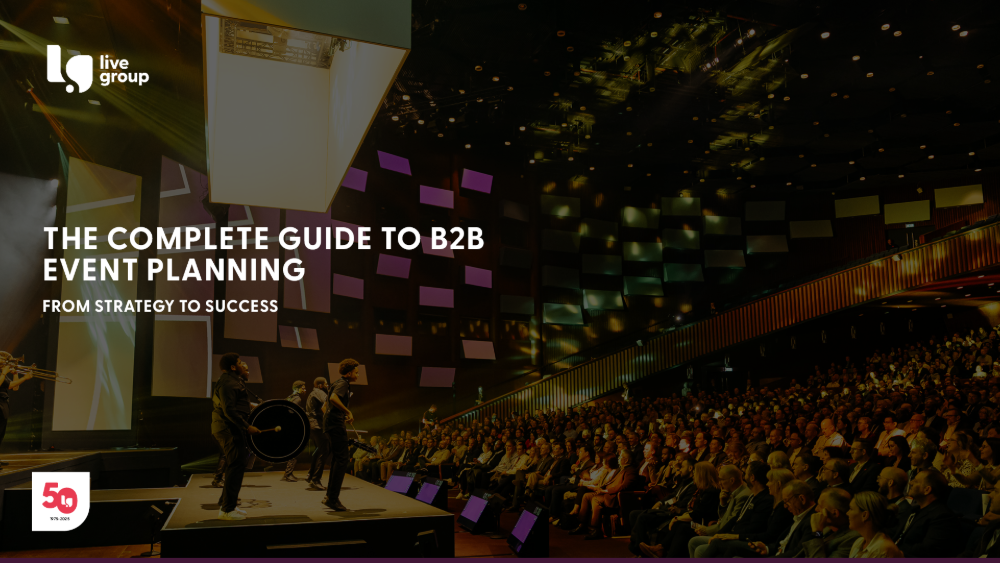
Download the B2B Event Planning Guide for the complete playbook to planning events in 2025-26
Ready to take the stress out of event planning?
Live Group helps organisations design and deliver personalised event experiences that engage audiences and achieve results. Contact us to discuss your next event.