
A no-nonsense guide that breaks down how to write an effective event press release, complete with examples and a reusable template.
Press releases for events are both incredibly simple and oddly intimidating. Most event professionals know they should write one, but when the moment comes to start writing, the mind goes strangely quiet. What exactly do you include? How long should it be? How formal should it sound? And why does everyone else’s press release seem sharper than yours?
A strong event press release isn’t complicated, but it should be deliberate. It’s a short, structured story that tells journalists (and the public) why your event matters, why it’s timely, and why it deserves space and attention.
In a landscape where inboxes overflow and attention dips fast, a good press release is still one of the most reliable tools for getting noticed. It sparks interest, boosts credibility, and can even lift your search engine visibility if written and distributed well.
This article breaks the event press release process down into something clear, natural, and manageable.
What’s the purpose of an event press release?
A press release serves one goal:
make your event appear newsworthy to someone who has zero obligation to care.
Journalists need three things: clarity, relevance, and a reason to believe your event story is worth running. Attendees, meanwhile, want to know whether this is something they should give time to. A good press release bridges both needs.
At its core, an event press release should:
- Tell the “who, what, when, where, and why” quickly.
- Provide journalists with ready-made material: quotes, context, and imagery.
- Create a sense of momentum around the event.
In short, a good press release helps your event travel.
B2B Event Planning Guide 2025
Download the 2026 B2B Event Planning Guide
What should an event press release include? (And why?)
Press releases may look different across industries, but most follow the same skeleton. Think of it like staging a venue: readers should know exactly where to look and what matters most.
1. A clear headline that does more than “announce”
This is your first impression. It should be factual, yes, but it should also earn curiosity.
A few playful but credible formats:
- “London Summit Returns with New Speakers and Bigger Audience Focus”
- “UK FinTech Leaders to Gather for Annual Industry Forecasting Event”
- “Community Health Awards Celebrate Unsung Heroes Across Central London”
Avoid vague lines like “Exciting New Event Coming Soon!” — it gives journalists nothing to work with, and no reason for readers to care.

2. The opening paragraph: the essential five
Your opening paragraph should answer the basics in one compact swoop:
- Who is organising it?
- What is happening?
- When is it taking place?
- Where will it be held?
- Why does it matter?
A well-written first paragraph allows even skim-readers to ‘get’ it.
3. The body: depth without dragging
This is where you round out the story. A few things you might include:
- Background on the event’s history or purpose
- Speaker highlights
- Key partners or sponsors
- Programme details
- Unique elements worth flagging
- Tangible takeaways for attendees
Keep paragraphs short. A journalist should be able to extract a quote-able line in seconds.
4. Quotes that genuinely demonstrate value
Press releases without quotes feel strangely hollow, but quotes that say nothing (“We’re thrilled…”) aren’t any better. Aim for something with viewpoint or personality.
For example:
“This event brings together the brightest minds in sustainability, but more importantly, it brings together people who are ready to work together on practical solutions,” says Maria Ellis, Programme Director.
Natural, specific, and useful.
5. Boilerplate: your company in a nutshell
The boilerplate sits at the end and remains the same across all your press releases.
It usually covers:
- A short overview of your organisation
- Your mission or purpose
- A nod to key achievements
- Website link
Two to three sentences is usually enough.
6. Contact details that don’t require detective work
A journalist should never have to hunt for a phone number. Include:
- Full name
- Job title
- Direct phone number
- Email address
A dedicated press inbox is also ideal if you have it.
How do you write a press release headline that grabs attention?
A good trick is to write your headline last.
Once the story is clear, the headline almost writes itself.
But if you want a starting point, these title structures also work well:
- [Location] to Host [Event Type] Focusing on [Key Theme]
- [Organisation] Announces [Event Name] Returning for [Year/Edition Number]
- [Industry/Community] Leaders Gather for [Event Purpose]
Think of your headline like the signage outside a venue: bold enough to notice, clear enough to trust.
What should the tone of my event press release be?
A press release is not a brochure. And it’s not your website homepage. It sits somewhere in the middle: professional, objective, but not stiff.
A few general rules of thumb:
- Write in third person.
- Keep sentences clean and active.
- Avoid flowery language i.e. “A once-in-a-lifetime spectacle that will whisk attendees away on a journey of inspiration and wonder.” Journalists dislike it.
- Keep emotions grounded in facts.
But don’t be afraid of a little warmth. You’re talking about an event, after all – something that gathers people, moves ideas, or celebrates achievement. Give your copy a pulse.
How do you distribute a press release effectively?
You can write the sharpest release ever, but if no one sees it, it’s a wasted effort.
Here’s what works in practice:
Send it out with enough lead time
Two to three weeks before the event is ideal. A month is even better for conferences, government programmes, and larger exhibitions.
Build a clean media list (don’t shotgun it to everyone)
Target journalists who cover:
- Your industry
- Your location
- Your theme
- Your sector (e.g., government, finance, health, arts)
A personalised note goes a long way.
Use reliable distribution channels
A blended approach works best:
- LinkedIn and other social media (as long as your audience is likely to be there)
- Your website’s news section
- Industry newsletters
- Partner organisations or sponsors who can reshare it
Time it right
Midweek mornings work well. Generally you should avoid Fridays.
Follow up – but lightly
One follow-up email is fine. More than that can backfire. Journalists have long memories.
What mistakes should you avoid when writing press releases?
A few common traps:
- Unclear headlines that bury the story.
- Too much jargon that clouds meaning.
- No contact details (surprisingly common).
- Overly long paragraphs that no one will read.
- Forgetting SEO basics, like relevant keywords and a descriptive headline.
- Sending the release too close to the event, leaving journalists with no runway.
- Not including images, especially for visually-led events.
Avoid those, and you’re already ahead of the pack.
Event Press Release Template (Copy + Customise)
Feel free to use this structure for any event: conference, awards ceremony, product launch, webinar, community event, government programme, anything.
PRESS RELEASE
[FOR IMMEDIATE RELEASE]
[Date]
Headline: [Clear, specific, compelling title]
Subheadline: [Optional — adds context or value]
[City, Country] — Opening paragraph with the who, what, when, where, and why. One or two sentences max.
Second paragraph: Add background, programme detail, speaker highlights, or context about why the event matters now.
Third paragraph: Include a meaningful quote from a senior leader, host, or expert.
Fourth paragraph: Add optional supporting detail — partners, sponsors, research backing, community involvement, expected impact.
Images:
Note that high-resolution images are available on request or via a download link.
Boilerplate
About [Organisation Name]
Two to three sentences that explain who you are, what you do, and why your work matters. Include your website link.
Press Contact
Name
Role
Email
Phone Number
Website
A quick press release example (just to see it in action)
FOR IMMEDIATE RELEASE — 14 March 2026
London to Host Annual Sustainability Innovation Forum at Tobacco Dock
LONDON, UK — The 2026 Sustainability Innovation Forum returns on 22 May, bringing together climate researchers, business leaders, technologists, and government officials to discuss practical pathways for a lower-carbon future.
“This year’s theme focuses on real-world solutions, not slogans,” says Dr Hannah Patel, Executive Chair. “We’ll be spotlighting people who are driving meaningful change in their sectors.”
High-resolution images, the full programme, and speaker bios are available at [website URL].
Ends.
One last thing: you don’t have to do this alone
Press releases can feel like yet another thing on already packed event timelines. If you partner with a full-service events agency, this work is usually handled for you — writing the release, shaping the story, gathering quotes, and distributing it to relevant outlets through their much wider network of contacts. It can save days of effort and often results in better coverage.
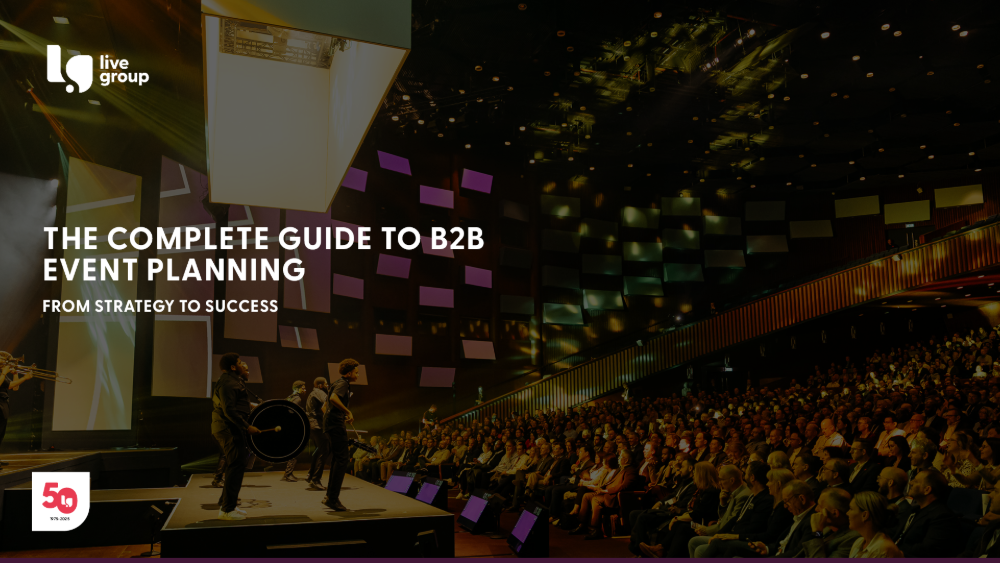
Download the B2B Event Planning Guide for the complete playbook to planning events in 2025-26
Ready to take the stress out of event planning?
Chat to us today about how our delegate management services can help bring your next event to life – on time, on budget, and beyond expectations. Whether you need full-scale delivery or targeted support, Live Group is here to help.