
The engagement recession explained.
The engagement recession describes the widespread decline in employee connection, motivation and active participation across modern workplaces. It is not a temporary dip. It is a structural shift driven by information overload, digital fatigue and the erosion of meaningful human connection at work.
The numbers tell a stark story. Nearly 40% of employees report feeling genuinely overwhelmed by workplace communications. Six in ten workers cite excessive digital messaging as a major contributor to burnout. And 58% of employees considering leaving their jobs point to poor internal communication as a deciding factor.
This is not simply about people feeling tired. It is about organisations losing the discretionary effort, creativity and commitment that drive performance. When employees disengage, productivity falls, innovation stalls and turnover rises. The engagement recession is costing businesses billions.
What is causing the engagement recession?
Information overload
The average employee now receives over 120 emails and 150 chat messages every day. Research shows workers are interrupted roughly every two minutes, approximately 275 times per day, by incoming communications. Each interruption carries a cognitive cost. Studies indicate it takes 23 minutes to regain full concentration after a disruption, and frequent task-switching can reduce productivity by up to 40%.
B2B Event Planning Guide 2025
Download the 2026 B2B Event Planning Guide
Digital fatigue
The proliferation of workplace tools has compounded the problem. The average worker now juggles 11 different applications just to do their job. Nearly half of employees say they struggle to find the information they need amid fragmented systems. The result is scattered attention, duplicated effort and a persistent sense of being overwhelmed.

Loss of human connection
Remote and hybrid working patterns have delivered flexibility, but they have also reduced the spontaneous interactions that build relationships and trust. Video calls have become the default, yet research confirms that participants frequently multitask during virtual meetings. The richness of face-to-face communication, the body language, eye contact and shared energy, has been diluted.
Why traditional communication is failing
Organisations have responded to engagement challenges by communicating more. More emails. More updates. More channels. But this approach is backfiring.
When everything is broadcast as important, nothing stands out. Employees have learned to skim, filter and ignore. The inbox becomes a graveyard for unread announcements. Town hall webinars play in the background while people answer emails. The message is sent, but it is not received. It is certainly not acted upon.
The attention economy operates on a simple principle: human focus is finite. You cannot demand attention. You must earn it. And earning attention requires a fundamentally different approach to communication.
How events cut through the noise
Live events, whether in-person conferences, workshops or interactive sessions, offer something digital communication cannot replicate: presence.
The power of face-to-face engagement
Research on persuasion found that making a request in person is 34 times more effective than making the same request via email. Face-to-face communication demands attention in ways that screens do not. Multitasking becomes difficult when you are in the same room as the speaker. The social dynamics of physical presence create accountability and focus.
Studies confirm that in-person interactions yield significantly better attention, comprehension and cooperation than virtual alternatives. When a message truly matters, delivering it live ensures it is not just heard but felt.
Events create moments that matter
The most effective organisations understand that not all communication is equal. Routine updates can flow through digital channels. But moments of change, inspiration, alignment or commitment require something more.
A well-designed event creates a break from the daily digital deluge. It signals importance. It gives people permission to step away from their inboxes and be fully present. And it creates shared experiences that build connection and memory in ways that emails never can.
Designing events for maximum engagement
Simply gathering people in a room is not enough. The design of the experience determines whether it cuts through or becomes just another meeting.
Change the format regularly
Attention spans are limited. Research suggests changing the delivery format every 10 to 15 minutes to reset focus. Mix presentations with discussions, polls, Q&A sessions or video content. Variety sustains engagement.
Make it interactive
Passive audiences disengage. Build in opportunities for participation: table discussions, live polling, workshops or collaborative exercises. When people contribute, they invest. When they invest, they remember.
Tell stories
Facts inform. Stories transform. The human brain is wired for narrative. Content wrapped in a compelling story, with characters, tension and resolution, generates stronger emotional responses and better retention than data alone.
Consider the environment
Practical details matter. Natural light improves focus. Regular breaks prevent fatigue. Comfortable spaces encourage participation. Even the decision to go screen-free for portions of an event can dramatically improve attention and connection.
Real-world results: events as instruments for change
Consider the experience of a large pharmaceutical company that had run the same annual sales training conference for years. In theory, it was an opportunity to align and energise the entire sales force. In practice, it had become an overwhelming information dump where attendees retained little and engaged less.
The solution was to reimagine the format entirely. Instead of one massive event, the company moved to a series of smaller, localised workshops spread across a month. Each session was tailored to regional teams, kept intimate enough for genuine interaction, and designed around hands-on case studies rather than lectures.
The results were significant. Knowledge retention improved markedly. Attendees reported higher engagement and lower fatigue. The feedback from leadership was clear: by breaking content into focused, human-scale forums, they finally broke through.
When to choose live engagement
Events are not the answer to every communication challenge. They require investment, planning and the right context. But for certain objectives, they are unmatched:
- Major announcements or changes that require discussion, emotional nuance or immediate feedback
- Building alignment around strategy, values or direction
- Training and development where retention and application matter
- Celebrating milestones and reinforcing culture
- Launching initiatives that need visible commitment and momentum
The principle is straightforward: use digital for breadth and efficiency, use live engagement for depth and impact.
Addressing the engagement recession: a strategic imperative
The engagement recession will not fix itself. Sending more emails will not reconnect a disengaged workforce. Adding another collaboration tool will not restore focus. The organisations that reverse the trend will be those that recognise attention as a strategic asset and communication as a discipline that requires intention, craft and, at critical moments, human presence.
Events are not a luxury. They are an instrument for change. In a world where everyone is overwhelmed and distracted, the ability to bring people together, capture their attention and create genuine connection is a competitive advantage.
The question for every organisation facing the engagement recession is simple: are you adding to the noise, or cutting through it?
Download the B2B Event Planning Guide for the complete playbook to planning events in 2025-26
The engagement recession refers to the widespread decline in employee engagement, connection and active participation in the workplace. It is driven by information overload, digital fatigue and reduced human connection, resulting in lower productivity, higher burnout and increased turnover.
Key causes include excessive digital communication (the average worker faces 275 interruptions daily), fragmented technology systems, lack of meaningful human interaction, and a workplace culture that prioritises responsiveness over thoughtfulness.
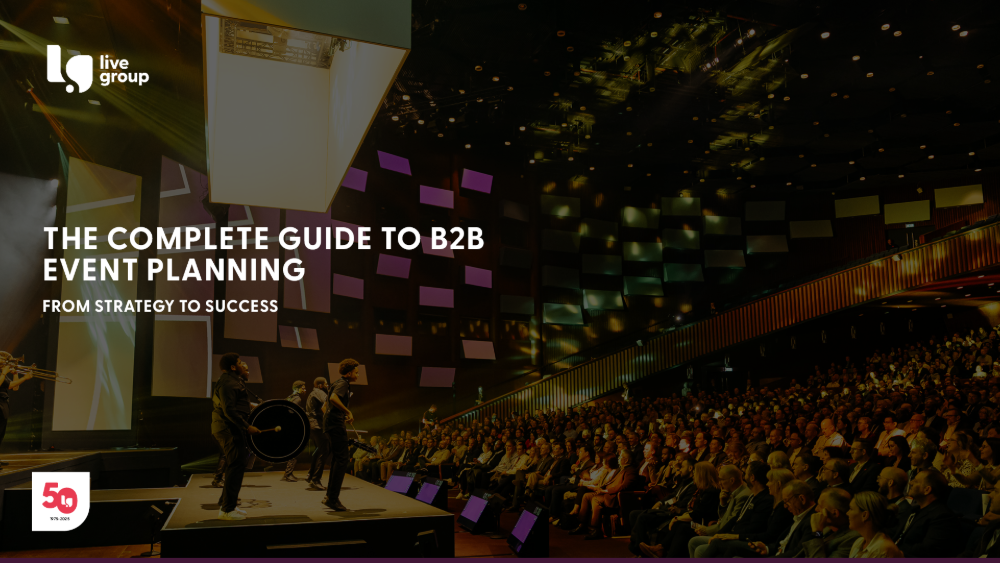
Live events cut through digital noise by demanding presence and creating shared experiences. Face-to-face communication is significantly more effective than digital messaging for building understanding, trust and commitment. Well-designed events create moments of genuine connection that emails and video calls cannot replicate.
Effective events change format regularly, incorporate interactive elements, use storytelling, and consider environmental factors like natural light and regular breaks. The goal is active participation rather than passive consumption.
Ready to take the stress out of event planning?
Chat to us today about how our delegate management services can help bring your next event to life – on time, on budget, and beyond expectations. Whether you need full-scale delivery or targeted support, Live Group is here to help.